

If you’re comparing wedding guest lodging options while planning a destination celebration, it helps to consider more than where you’ll sleep. Travel, lodging, and a multi-day schedule can make it hard to know what’s expected and how much you can comfortably take on. A clear plan can make the trip easier to manage and the celebration more enjoyable.
You want to celebrate the couple warmly without guessing about the itinerary, stretching your budget, or feeling pressured to attend every event. This guide covers how to respond clearly, plan around the schedule, and make considerate choices about gifts, plus-ones, attire, and communication. It also explains how to choose a stay that fits your plans. Suite-style accommodations with a kitchen and private space, for example, can make it easier to settle in at your own pace. From the first invitation to the final farewell, you’ll find practical ways to participate while respecting both the couple’s plans and your own needs.
Key Takeaways
- Destination-wedding etiquette starts with clear communication and realistic planning. Review the invitation before deciding which events you can attend.
- Respond by the requested date, then keep questions concise and relevant as plans take shape.
- Set a personal spending limit and consider travel, lodging, meals, and optional events as separate decisions.
- Before you travel, review the itinerary, plan transportation, follow attire guidance, and save key contact details.
- Choose lodging that suits your trip. A suite with a kitchen and private balcony can provide space to unwind between events.
What destination wedding guest etiquette means, and why clear expectations matter
Destination wedding guest etiquette means communicating clearly, respecting the couple’s plans, and making realistic arrangements for your own needs. Unlike a local invitation to a ceremony and reception, a destination celebration may involve travel, an overnight stay, and events spread across several days. Each detail calls for coordination, but guests aren’t expected to attend every activity unless the invitation says otherwise.
An invitation is an invitation to celebrate, not a demand to attend every gathering or spend beyond your comfort. Thoughtful participation means being honest about what you can manage, communicating kindly, and showing up warmly for the events you accept. You can be considerate without taking on more than works for you.
Read the invitation as the starting point
The invitation or accompanying wedding details should identify the celebration, its date, and how and when the couple would like you to respond. Read the full message before making plans, and save the details where you can refer to them easily. A welcome gathering or farewell meal may appear alongside the main event, but an activity on the itinerary isn’t automatically mandatory. Follow the wording and any guidance the couple provides.
If something is unclear, use the communication channel the couple specified and ask one concise, relevant question. For example, ask whether a listed gathering is part of the hosted celebration or an optional activity. Avoid sending the same question through several channels, which can make messages harder to track during wedding planning. For broader background on wedding traditions, see this Wedding Etiquette Overview.
Courtesy and personal boundaries can coexist
A timely, gracious response gives the couple clearer information as they plan. Before replying, consider your schedule, travel needs, and which parts of the celebration you can realistically attend. If you’re unsure about an event, don’t treat uncertainty as a commitment. It’s kinder to give an honest answer than to accept and withdraw later when plans become difficult.
You can decline without explaining private finances or sharing more than you’re comfortable with. A warm note might say, “Thank you for including me. I’m delighted for you, and I’m sorry I can’t join you for the celebration. I’ll be thinking of you both.” If you can attend some events but not others, say so clearly and follow the response instructions. A sincere message sent early helps preserve goodwill and gives everyone time to plan.
Once you know which events you’ll attend, make practical choices about travel and lodging without assuming the couple expects more than the invitation says. Clear expectations leave room for the best part: celebrating together at a pace that feels manageable.
How to respond, communicate, and make considerate wedding plans
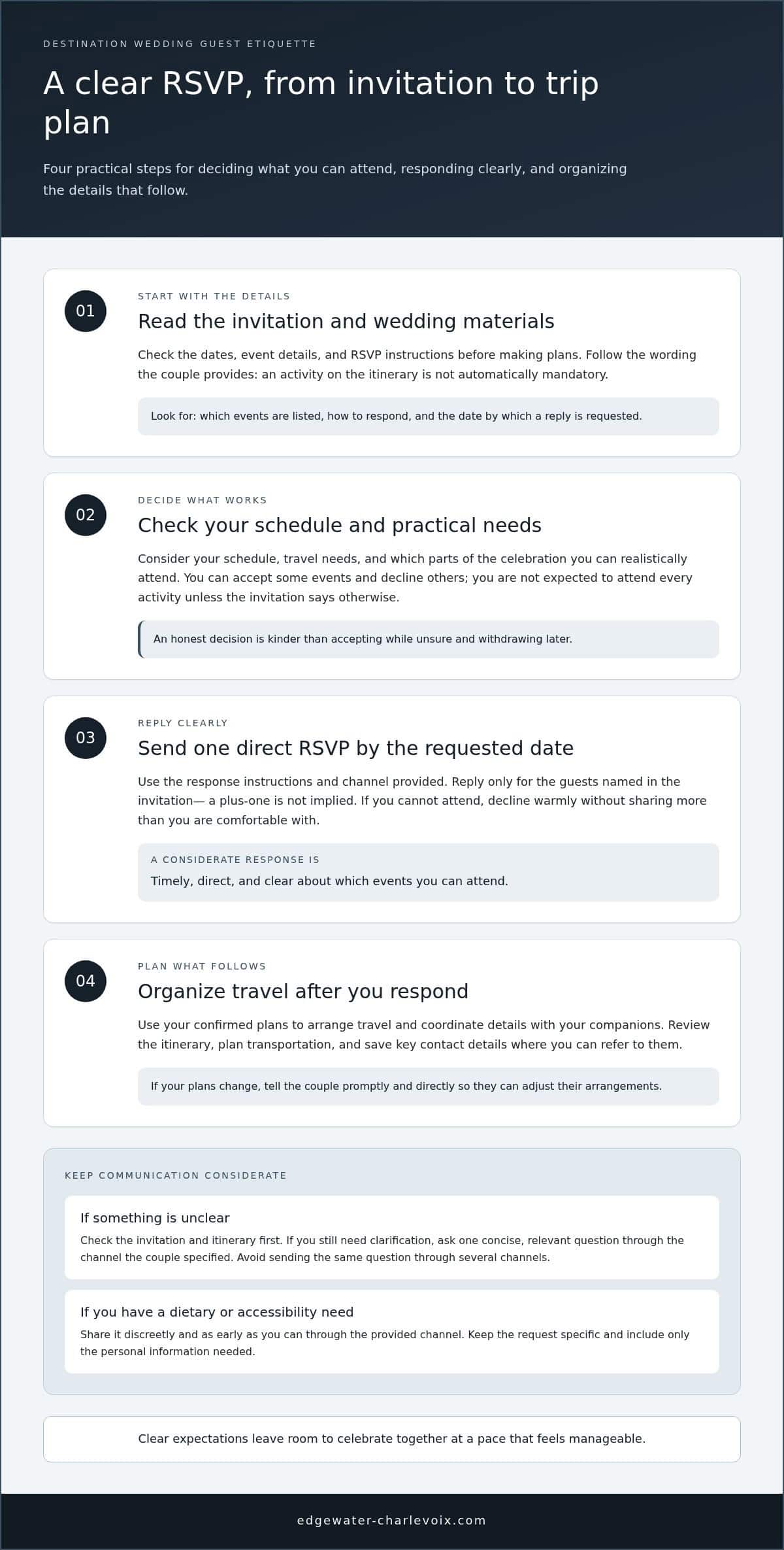
A clear RSVP is easier to manage when you move from the invitation to a decision in a few deliberate steps. Review the event details and response instructions, check your calendar and any travel constraints, then reply by the requested date. Once your plans are settled, use them to organize the rest of your trip.
- Read the invitation and wedding materials, including dates, event details, and RSVP instructions.
- Consider your schedule and practical needs before committing to any part of the celebration.
- Send one clear response through the requested channel by the stated date.
- After responding, plan your travel and coordinate details with your companions.
A considerate RSVP is a timely, direct answer that lets the couple plan without having to guess.
RSVPs, plus-ones, and changing plans
Follow the invitation’s RSVP instructions and respond only for the guests named there. A plus-one isn’t implied, so use the invitation details to understand who’s included. If you can’t attend, decline warmly without overexplaining or suggesting you might come if you’re not sure. If your plans change after you’ve replied, tell the couple promptly and directly so they can adjust their arrangements.
For example: “Thank you for including me. I’m so happy for you, but I’m unable to attend. I’ll be celebrating you from afar.” If you’re attending but need to update a detail, keep your message brief and share only what’s relevant. For questions about gift etiquette, The Knot’s Destination Wedding Gift Etiquette offers additional guidance.
Questions, requests, and wedding-week communication
Before asking a question, check the invitation, itinerary, and other wedding materials. The answer may already be there. Save messages to the couple for details that affect your attendance or require their input. Handle personal preferences that don’t change the plan independently when you can, rather than adding decisions to the couple’s list.
If you have a dietary or accessibility need that could affect your participation, share it discreetly and as early as you can through the channel provided. Keep the request specific and private, without including more personal information than necessary. For practical arrangements such as travel timing or what to bring, coordinate with your companions. During wedding week, avoid last-minute questions when the information has already been shared.
Organize lodging alongside your RSVP. If a suite-style stay would suit your trip, explore one- and two-bedroom vacation suites as you make your plans.
Destination wedding guest etiquette for travel, budgets, and gifts
A destination celebration can bring several decisions together, but they don’t have to become one all-or-nothing commitment. Consider travel, lodging, meals, gifts, and optional gatherings separately. You might attend the ceremony but skip an extra outing, or choose a shorter stay that fits your schedule. Before booking or agreeing to added activities, set a personal spending limit that reflects what feels manageable.
Think through the full trip: when you can travel, who’s coming with you, and how each choice fits the wedding schedule. Comparing the trade-offs can help you make decisions without treating every expense as a requirement.
| Planning choice | Trade-off to consider | Courtesy consideration |
|---|---|---|
| Travel timing | Arriving earlier or staying later may offer flexibility, but adds time away. | Plan around the events you’ve accepted and allow a realistic margin for getting there. |
| Lodging | Sharing a stay with companions can simplify coordination; private space may better suit your comfort or routine. | Agree on arrangements with travel companions before making plans. |
| Meals | Some meals may be part of the celebration, while others may need separate planning. | Use the itinerary to understand what’s scheduled instead of assuming every meal is hosted. |
| Extra activities | Joining an optional outing may add to the experience and the trip’s demands. | Take part if it works for you; don’t treat an optional invitation as a fixed obligation. |
| Gift | A gift is a separate gesture from the cost of attending. | Choose something thoughtful that fits your circumstances and any preferences the couple shared. |
Choose travel and lodging that suit your circumstances
Compare the event schedule with your available travel days and the needs of anyone traveling with you. Shared lodging may make it easier for companions to coordinate, while a private suite can offer more room to settle into your own routine. Edgewater Inn offers one- and two-bedroom rentals with fully equipped kitchens and private balconies. Explore one- and two-bedroom rental suites as you plan a comfortable stay.
Gifts and extra celebrations without pressure
Being present for the couple and choosing a gift are related gestures, but neither should require you to ignore your personal limits. Check whether the couple has shared gift preferences, then choose something sincere and suitable for your circumstances. A particular price or gift type isn’t a measure of affection. Welcome parties, excursions, and other added gatherings are invitations to consider, not automatic obligations. A warm celebration doesn’t depend on attending every event.
What to Do Before and During a Destination Wedding
With travel arranged, a little preparation can help you move through the celebration with ease. Review the itinerary and venue details before leaving, then keep essential information easy to reach. The couple’s wedding venue and event information can help you understand the setting and any guidance provided for guests.
Prepare for the schedule and shared arrangements
Use the wedding materials as your practical guide. Note start times, dress guidance, transportation details, and venue instructions, then plan your day around the events you’ve accepted. Leave flexibility for travel between activities and unexpected delays. If a group plan changes, communicate with your companions rather than making an unannounced adjustment that could leave others waiting.
A quick checklist can keep important details close at hand:
- Save the itinerary, event times, and venue directions somewhere accessible.
- Review attire guidance for each event and prepare suitable clothing.
- Plan how you’ll get to each gathering, including any transportation instructions provided.
- Keep key confirmations and relevant contact details available during the trip.
- Build in a reasonable buffer so you can arrive settled, rather than rushing into the celebration.
Arriving with flexibility is especially helpful when the schedule includes several locations or gatherings. Give yourself enough time for the plans you accepted, and let the couple or designated contact know promptly if a genuine delay affects your arrival. Don’t assume the group will wait or change shared transportation arrangements without agreement.
Be a gracious guest throughout the celebration
On the day, punctuality is a simple way to show consideration. Take your seat before the ceremony begins, silence your phone, and give your attention to the couple and the moment. Follow any stated preferences about photography and social sharing. If the couple asks guests to put phones away or wait before posting, respect that request and keep the focus where they want it.
At the reception, follow the flow of the event and be mindful of time-sensitive moments such as speeches, planned announcements, or group photographs. If you’d like to thank the hosts or venue staff, choose a natural pause rather than interrupting a ceremony, toast, or active service. Warm appreciation matters, but it doesn’t need to take the spotlight.
As you arrange lodging, keep the itinerary and venue details handy so you can coordinate your arrival and travel between events. When you’re ready to explore the celebration’s setting, view wedding venue details and use the event guidance to plan a smooth, considerate visit.
Lodging and next steps: make attending feel manageable
A destination wedding feels easier to plan when you take it one decision at a time. RSVP first, choose travel that fits your schedule, arrange lodging around the events you’ll attend, and follow the couple’s guidance as the celebration approaches. You don’t have to plan every detail at once or take on more than works for you.
Coordinate your stay with the wedding itinerary
Match your lodging dates to the events you’ve accepted and the travel time you need. A one-bedroom suite may suit a guest traveling solo or as a couple, while a two-bedroom arrangement may work for guests traveling together. Edgewater Inn offers one- and two-bedroom rentals with fully equipped kitchens and private balconies. Features can vary by unit. A kitchen can be useful for preparing simple meals, and private space offers a place to pause between celebrations.
As you compare wedding guest lodging Charlevoix MI, consider how much time you’ll spend at your accommodation, whether you value private space, and who will share the trip with you. Then explore wedding guest accommodation options and choose what fits your plans and comfort.
A simple, considerate guest checklist
Before the trip, bring your RSVP, travel, lodging, and event details together so the schedule is easy to follow. If plans shift, update the couple promptly. A clear message helps everyone adjust without confusion.
- Confirm which events you’ll attend and keep the itinerary accessible.
- Plan travel and lodging around your own needs and the shared schedule.
- Review venue directions, transportation notes, and attire guidance before departure.
- Follow the couple’s preferences during the celebration, including guidance about photos and social sharing.
- Celebrate warmly while respecting your own limits and the plans of other guests.
Once your stay is arranged, leave room to enjoy the moments that matter: a quiet morning, an unhurried arrival, or time together between gatherings. Thoughtful preparation isn’t about making the trip perfect. It’s about arriving ready to participate in the ways you’ve chosen and giving the couple your attention.
For a final look at the setting and celebration details, explore wedding information and venue details as you prepare for your stay.
Make room for a celebration that feels like yours
A destination wedding can be a meaningful chance to reconnect, share a new experience, and celebrate at a pace that feels comfortable. Let your plans reflect both the couple’s invitation and what works for you. As you consider wedding guest lodging Charlevoix MI, focus on the details that will help you feel prepared and present, rather than trying to make every part of the trip perfect.
For a stay shaped around a wedding celebration, Edgewater Inn offers wedding venue packages and accommodations for different guest groups. Explore wedding lodging and venue information to plan your stay. Thoughtful preparation leaves more space to enjoy the people and moments that brought you together.
Frequently Asked Questions
Is it rude to decline a destination wedding invitation?
No. Declining is not rude if you respond with care and give the couple a clear answer. A destination celebration may not fit every guest’s schedule or circumstances, and you don’t need to share private details to explain your decision. If you can’t attend, a sincere note of congratulations can make your message feel personal. You might also send a kind message after the wedding to let the couple know you’re thinking of them.
Can I bring a plus-one to a destination wedding?
Bring a plus-one only if the invitation includes that guest or clearly allows one. The fact that you’re traveling or sharing a room doesn’t automatically extend the invitation to another person. If the invitation is unclear, ask the couple privately before making plans that involve an additional guest. Don’t book or arrive with someone who wasn’t included, since the couple’s seating and event arrangements may be based on the invited guest list.
What should I wear to a destination wedding?
Follow the dress code and any attire notes the couple provides, then consider the setting and planned activities. For an outdoor ceremony, shoes that work on grass or sand may be more comfortable than narrow heels. Check the forecast close to departure and pack a layer if the celebration includes time outside. If the invitation gives no dress code, choose polished attire suited to the event and avoid outfits that could draw focus from the couple.
Do I have to attend every event during a destination wedding?
No, you don’t have to attend every event listed around the wedding. Decide which gatherings you can join, and make sure your RSVP accurately reflects your plans. If you’re attending the ceremony but skipping an optional group outing, use that time to rest or enjoy the destination at your own pace. Be considerate of shared plans you’ve accepted, but don’t assume every itinerary item requires your attendance.
Should I give a wedding gift if I travel to the wedding?
A gift is a personal gesture, not a condition of attending, so choose what feels thoughtful and manageable for you. Check the couple’s registry or shared preferences before selecting something. A note of congratulations can also make a modest gift feel personal. Give yourself time to choose rather than rushing a decision.
Can I post wedding photos on social media?
Post only in a way that respects the couple’s preferences. If they’ve requested an unplugged ceremony or asked guests to wait before sharing images, follow that guidance. When no preference is stated, consider waiting until the couple has shared their own wedding news before posting prominent photos. Be thoughtful about images that include other guests, especially candid moments, and avoid tagging people who may prefer to keep their attendance private.
How early should I book travel and lodging for a destination wedding?
There’s no single booking timeline that suits every wedding, so start planning once you have the confirmed dates and event schedule. Compare travel options and lodging plans early enough to choose dates that match the gatherings you’ll attend. Before finalizing, review the reservation terms and make sure your arrival gives you time to reach the first event without rushing. For wedding guest lodging Charlevoix MI, use the itinerary to guide your stay dates and transportation planning.


