Planning wedding room blocks starts with the people coming. Guests may have different budgets, room-sharing preferences, and ideas of a comfortable stay, so one lodging option may not suit everyone. A useful plan gives guests clear information and room to choose accommodations that fit their needs.
It’s understandable to wonder whether to reserve a block, share several room types, or combine both approaches. The right setup can make it easier for guests to settle in before the celebration and enjoy time together afterward. This guide explains how to weigh guest needs against the coordination involved, share clear booking details, and create a lodging plan that supports the experience you want. At Edgewater Inn, guests can view distinct one- and two-bedroom condominium suites online before choosing. A thoughtful plan puts fit before room count.
Key Takeaways
- Shape a wedding room block around likely guest needs, not just the size of the guest list.
- Understand how courtesy and guaranteed room blocks differ, including the potential implications of attrition and booking cut-off dates.
- Compare hotel-style rooms and condominium suites to see which format better suits guests’ preferences for space, privacy, and shared living.
- Use a simple planning sequence to estimate lodging needs, organize booking details, and communicate them clearly to guests.
- Learn how The Edgewater Inn’s 60 individually owned one- and two-bedroom units give wedding guests distinct lodging options.
Why Wedding Room Blocks Can Make Guest Lodging Easier
Wedding plans bring together people with different routines, budgets, and ideas of a comfortable stay. Giving guests a clear starting point for lodging can make planning feel less scattered, especially for those traveling with family or coordinating their arrival with other guests. A shared lodging plan offers direction without requiring everyone to choose the same room or stay in the same place.
A wedding room block is a group lodging arrangement that helps wedding guests find and book accommodations connected with the celebration. Its purpose is to make lodging easier to organize and explain, not to dictate where every guest must stay.
What a wedding room block is, and what it does not decide
A room block concerns guest lodging. It doesn’t choose the ceremony or reception venue, determine the event schedule, or mean every guest has to use the same property or room type. Couples can share accommodation options while leaving guests room to choose what suits their circumstances. Keeping those decisions separate also helps clarify what the lodging plan covers and what remains part of the wedding itself.
Accommodations and venues serve different needs. A couple may host a celebration in one setting and share lodging information for another. The broader work of coordinating a wedding is explored in this wedding planning overview, where guest arrangements are one part of a larger set of decisions. For celebration settings, wedding venue packages are a separate consideration from where guests stay.
Which couples and guests benefit most from coordinated lodging?
Coordinated lodging can be especially useful when guests are traveling from different places, are unfamiliar with the area, or need to plan around children, partners, or other family members. Instead of piecing together recommendations from several conversations, guests can use one clear set of lodging details as a starting point. They can then make individual arrangements based on their preferred room type, budget, and sharing needs.
The value is practical, but it can also shape how the celebration feels. Staying near other wedding guests may create natural opportunities to greet familiar faces before the ceremony or continue a conversation afterward, without adding a required group activity to anyone’s schedule. Some guests may appreciate a quiet, independent stay; others may enjoy being close to relatives or friends. A considerate plan makes room for both.
For couples, the first useful step is to think beyond the guest count. Consider who is traveling, who may want to share a room, and who could benefit from a different layout or clearer planning details. Then decide what information would help guests compare options. A well-explained lodging arrangement doesn’t need to control every choice. It simply makes the path to a comfortable stay easier to see.
How Wedding Room Blocks Work: Terms and Choices to Understand
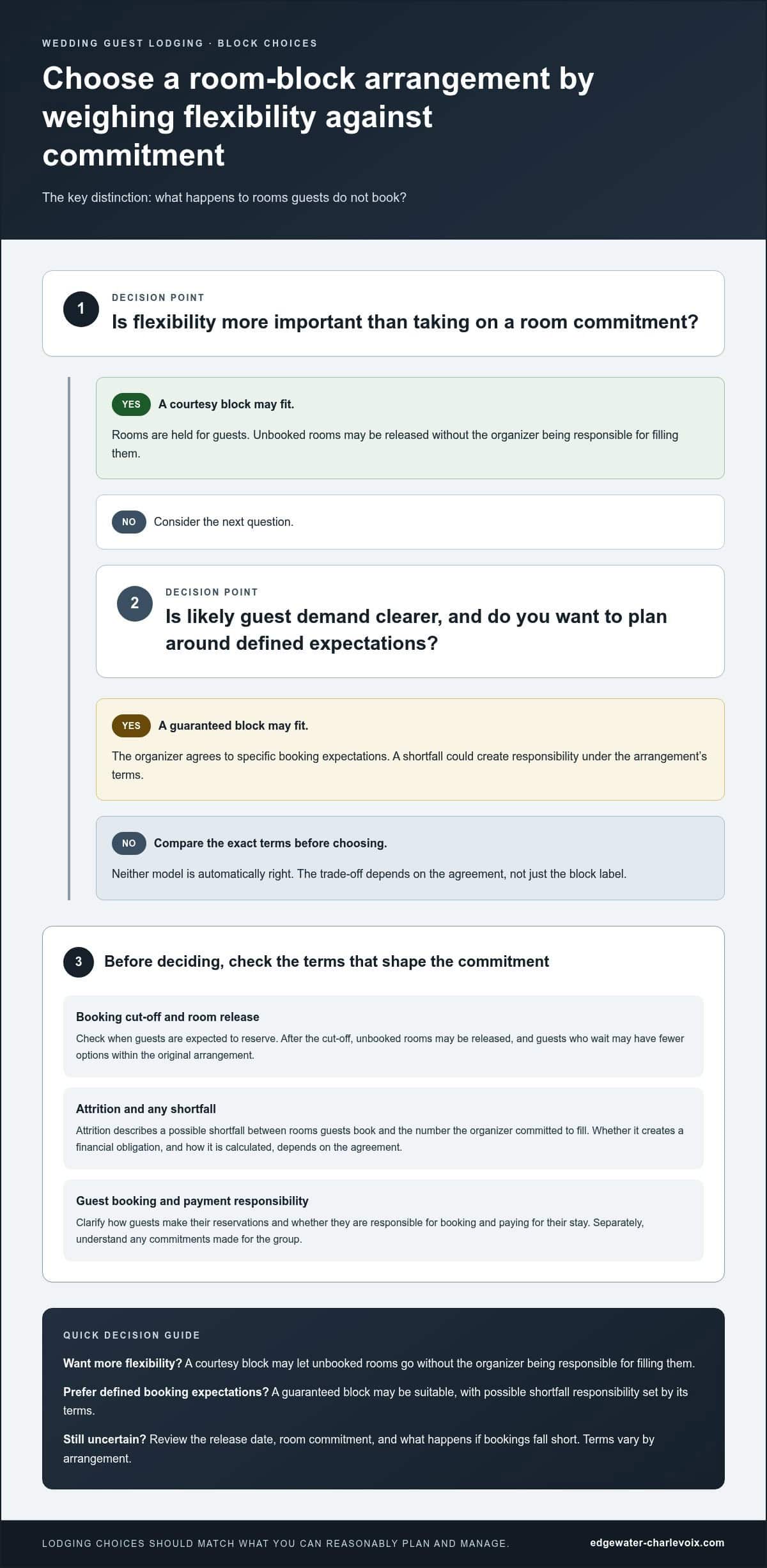
Once you’ve decided coordinated lodging could help, the next step is understanding the arrangement. Room-block labels can sound more complicated than they are. The key distinction is whether the organizer takes on a commitment for rooms guests don’t book. Terms vary, so use these models to understand the questions that matter rather than treating them as promises about any particular property.
Courtesy blocks and guaranteed blocks in plain English
A courtesy block is generally the more flexible model: a set of rooms is held for guests, and unbooked rooms may be released without the organizer being responsible for filling them. A guaranteed block involves a stronger commitment. The organizer agrees to specific booking expectations and could be responsible for a shortfall under the arrangement’s terms. In brief, a flexible block may let unbooked rooms go, while a guaranteed block can make the organizer accountable for meeting an agreed commitment.
Neither model is automatically right for every couple. Flexibility may suit a wedding where guest plans are uncertain or the couple wants to avoid taking on a room commitment. A more structured arrangement may suit organizers who have a clearer sense of likely demand and want to plan around defined expectations. The trade-off depends on the exact terms, not just the label. The Knot’s guide to wedding hotel blocks offers additional context on common block structures and contract considerations.
Cut-off dates, room release, and guest responsibility
A booking cut-off date is the date by which guests are expected to reserve rooms under the block’s terms. After that point, unbooked rooms may be released, leaving guests who wait with fewer options within the original arrangement. The date also gives organizers a point to review bookings and understand what happens next.
Attrition describes a possible shortfall between the rooms guests book and the number the organizer committed to fill. Whether that shortfall creates a financial obligation, and how it is calculated, depends on the specific agreement. Before choosing a block, read the terms for the number or share of rooms tied to the commitment, the release date, and what happens if bookings fall below expectations. Don’t assume a term from one arrangement applies to another.
Clear communication matters as much as understanding the terms. Tell guests how to make their own reservations, which date to keep in mind, and whether they are responsible for booking and paying for their stay. Separately, organizers should understand any commitments they make for the group. A concise lodging note can prevent confusion: identify the booking method, relevant deadline, and where guests can find the details.
As you compare wedding room blocks, weigh flexibility against the certainty of a commitment, then match the arrangement to what you can reasonably plan and manage. Reading the terms carefully can make the lodging details clearer for you and your guests.
Compare Wedding Lodging Options by Guest Comfort and Room Needs
A lodging choice can feel different depending on who’s traveling. A solo guest may want a restful place to return to after the celebration, while relatives traveling together may value room to spend time side by side. Comparing room formats by space, privacy, and shared living helps couples offer useful guidance without assuming that every guest wants the same stay.
Hotel-style rooms generally center on a private room for sleeping, while condominium suites offer a more home-like setting. Exact layouts and features vary, so guests should review individual accommodation details before choosing.
| Consideration | Hotel-style room | Condominium suite |
|---|---|---|
| Space | Typically focused on a private guest room. | A suite format may suit guests looking for a home-like stay. |
| Privacy | Can work well for a solo guest or couple seeking their own room. | Distinct units give guests a choice of accommodation and arrangement. |
| Time together | May suit guests who plan to spend most of their time outside the room. | May appeal to family or friends who want a shared living feel. |
When a one-bedroom suite may suit a wedding guest
A one-bedroom suite can be a comfortable option for a solo traveler or a couple who’d appreciate a home-like place to unwind between wedding events. This format may appeal to guests who want more than a simple room setting while choosing a space suited to a smaller travel party. Guests can view the individual units online and compare their distinct décor before deciding.
When a two-bedroom suite may suit families or shared stays
For family members traveling together, a two-bedroom suite offers another format to consider. It may suit relatives who value staying in one accommodation while having distinct sleeping arrangements, or parents traveling with children. Present it as an option, not a guaranteed way to reduce costs. Guests can explore the condominium vacation rentals to see the available unit styles.
At The Edgewater Inn, one- and two-bedroom suites are individually owned, decorated in each owner’s style, and include the amenities to make them feel like home. Since every unit is distinct, viewing them online can help guests choose what feels right for their stay. Couples can also consider how lodging fits alongside the celebration itself: wedding accommodations and venue packages are related planning considerations, but lodging and the event setting are separate decisions.
As you compare accommodations, focus on the people likely to use each format. Share the differences clearly, then let guests choose the amount of privacy, space, and togetherness that fits their plans.
Plan Wedding Guest Lodging with a Clear, Low-Stress Checklist
A calm lodging plan begins with a useful estimate, then turns it into clear options and guest-ready information. Keep likely interest separate from actual reservations. For each planning step, ask: who may need a place to stay, what room formats could suit them, and what should guests know to make their own plans?
Estimate the lodging mix without overcommitting
Start with the guest list and think in households, not just individuals. A family traveling together may look for a different setup than a solo guest, while a couple may prefer its own space. Treat these observations as planning clues, not confirmed room requests. Guests’ plans can change, and an informal count shouldn’t become a promise that rooms will be available.
Use a simple working note to group likely needs, such as families, couples, and guests traveling alone. Avoid collecting more personal information than you need to organize the options. If you ask guests about preferences, explain that their responses help with planning but don’t reserve a room for them.
Give guests the details they need to plan
Once you’ve considered the likely lodging mix, prepare one clear source of information guests can refer back to. Keep the wording direct and distinguish what you’re recommending from what each person needs to arrange independently. Wedding communications can introduce lodging choices and booking instructions, while invitations or a wedding website can point guests to the full details.
- Estimate interest. Review who may travel and how different households might approach their stay. Label the result as an estimate, not a list of bookings.
- Compare room formats. Consider which options may suit solo guests, couples, or families, and describe the differences in plain language. Let guests decide what fits their comfort and travel plans.
- Organize essential details. Gather the accommodation choices, booking instructions, relevant wedding dates, and any applicable reservation deadline. Include only details you can state accurately.
- Clarify responsibility. Explain who makes each reservation and who pays for the stay. If guests book individually, say so plainly; don’t leave payment responsibilities implied.
- Share and update. Send the information through the communication channels guests already use, then keep the details consistent if plans change. A brief reminder can help guests find the instructions again.
Give particular attention to dates. Guests may need to know when the celebration begins, which nights they’re arranging, and whether a booking deadline applies to the lodging option being shared. Avoid suggesting that an estimate guarantees a room or that every guest must choose the same accommodation.
As you organize the stay alongside the ceremony and reception, keep lodging information distinct from event details. The wedding offerings and venue information can help guests understand the celebration itself, while your lodging note focuses on where and how they can arrange their stay.
A thoughtful estimate and concise message make wedding lodging easier for guests to consider and simpler for you to communicate. Start planning with the wedding offerings.
Choose a Wedding Stay That Brings Comfort and Celebration Together
After comparing lodging formats and guest needs, look for a stay that gives people meaningful choices rather than expecting one room type to suit everyone. A solo guest, a couple, and a family may each picture comfort differently. The Edgewater Inn offers a condominium-hotel setting where individually owned suites bring a home-like feel to a wedding stay and give guests distinct spaces to consider.
A condominium-hotel stay with room to choose
The Edgewater Inn has exactly 60 individually owned one- and two-bedroom units. Each is decorated in its owner’s style and includes the amenities to make it feel like home, so the accommodations aren’t a row of identical rooms. Guests can view individual units online before choosing, making it easier to compare the available spaces and select a stay that feels right to them. Décor varies by unit, adding to the individual character of this lodging format.
One-bedroom and two-bedroom suites offer different options for wedding guests, without assuming a particular layout or that every traveler wants the same amount of space. A guest staying alone or with a partner may prefer to explore a one-bedroom suite; family members traveling together may consider a two-bedroom option. The best fit depends on each guest’s plans and preferences.
Wedding-party lodging and a thoughtful finishing touch
For couples hoping to keep the celebration’s lodging in one setting, The Edgewater Inn can accommodate an entire wedding party. Guests can stay within the same property while choosing from individually owned units. Everyone doesn’t need to share a room or choose the same suite type. Instead, each guest can consider the unit that best suits their needs.
The property also offers a wedding-night romance package that includes flower delivery. It’s a thoughtful detail for couples who want to add a celebratory touch to their stay, separate from the lodging choices available to other guests.
When sharing lodging information with wedding guests, make the online unit-viewing experience part of the plan. Invite them to look through the distinct suites and choose the space that suits their needs. This makes an accommodation recommendation useful without being prescriptive, especially for guests with different preferences for privacy, space, and time together.
Explore the individually presented suites and compare the one- and two-bedroom options through the vacation rental information. With room to choose and a shared setting for the wedding party, the stay can complement the celebration while leaving each guest space to make a comfortable decision.
Make the Guest Stay Part of the Welcome
The care you put into wedding room blocks in Northern Michigan can shape how guests feel before the celebration begins. A thoughtful lodging plan gives them space to make choices that suit their plans, while helping the gathering feel connected from arrival through the wedding day. Start by deciding what kind of stay reflects the welcome you want to offer, then share the options and booking details clearly.
For couples drawn to a more home-like stay, The Edgewater Inn offers individually owned suites guests can explore online and can accommodate an entire wedding party. The property has exactly 60 one- and two-bedroom units, each with its own character. Guests can browse the units before choosing, giving them a clearer sense of the stay they’re planning.
Explore wedding accommodations and picture a comfortable beginning to the celebration. A considered plan helps guests settle in and look forward to the moments you’ll share.
Frequently Asked Questions
What is a wedding room block?
A wedding room block is a lodging arrangement that connects accommodation planning with a wedding celebration. It gives guests a place to begin comparing stays, but it doesn’t require everyone to book there or determine where the ceremony and reception take place. Before sharing an arrangement, read its terms and make clear whether guests are being offered an option or whether the couple has made a commitment.
When should we arrange lodging for wedding guests?
Start considering lodging once your wedding date is set and you have a reasonable idea of who may travel. The right timing depends on your plans and the lodging arrangements available, so don’t treat a general timeline as a guarantee. Share settled information when it’s ready, and label early suggestions as options rather than confirmed reservations. For example, send a preliminary note first, then update guests when booking instructions are finalized.
What is the difference between a courtesy block and a guaranteed room block?
A courtesy block is generally more flexible, while a guaranteed block may require the organizer to commit to a specified number of rooms. The label alone doesn’t explain the full responsibility. Review the written terms for what happens to unbooked rooms, when rooms may be released, and who could be responsible for payment. Resolve unclear wording before presenting the arrangement to guests as settled.
Should wedding guests book their own rooms?
Often, guests arrange and pay for their own stays, but the couple’s plan should say so directly. If you’re covering lodging for particular guests or nights, identify exactly who and what the arrangement covers. For instance, distinguish a hosted stay for immediate family from the options shared with the wider guest list. Clear wording helps prevent guests from assuming that a recommendation means their reservation or payment is already taken care of.
Can a wedding party stay in condominium suites instead of hotel rooms?
Yes. Condominium suites can suit guests who prefer a more home-like setting than a conventional hotel-style room. The Edgewater Inn offers individually owned one- and two-bedroom units, and guests can view the accommodations online before choosing. The property can accommodate an entire wedding party, while each guest or household can select a unit that fits their plans. Review each unit’s details rather than assuming every suite has the same décor or features.
What should we include in wedding lodging information for guests?
Give guests the accommodation options, confirmed reservation instructions, relevant dates, and a clear note about who books and pays. Keep the message easy to scan, especially if you’re sharing more than one room format. A short example might read: “Review the lodging options at this link. Please make your own reservation and note the listed booking date.” Include only finalized details, and update the message if the information changes.
Can we arrange wedding-night flowers with a stay?
Yes. The Edgewater Inn offers a wedding-night romance package that includes flower delivery. Describe the package specifically, and keep it separate from guest lodging arrangements so guests don’t mistake it for part of a room reservation. Couples can consider it as a personal finishing touch for their wedding night, while sharing accommodation choices and booking information with guests in a separate, clearly labeled note. Explore the wedding offerings to plan a stay that complements your celebration.