

Effective discussions are shaped before meeting day, not improvised once everyone is in the room. A checklist for planning a business meeting should set the objective, identify essential attendees, and schedule the agenda, room setup, and follow-up. Ideally, begin planning 2-3 weeks in advance, adjusting the timeline to the meeting’s complexity.
A clear purpose and a well-prepared room help participants focus, contribute, and leave with agreed next steps. This checklist for planning a business meeting shows how to work backward from meeting day, prepare materials and technology, and keep discussion on track. It also covers practical ways to allocate time, draw out useful input, and record decisions so the meeting stays organized from the first agenda item through follow-up.
Key Takeaways
- Plan backward from meeting day, setting clear milestones for gathering updates, preparing the agenda, and sharing materials.
- Give each agenda item a time limit, make decision points clear, and guide discussion so the group stays focused.
- For hybrid or virtual meetings, schedule a technology check 24-48 hours ahead to test audio, video, and screen sharing.
- Prepare a room that suits the group and its tools, organize materials and refreshments, and arrive early to get everything ready.
How can effective discussions be facilitated during meetings?
Effective meetings start with a clear agenda, realistic time allocations, and a facilitator who keeps the group focused. Use this checklist for planning a business meeting to make each agenda item lead to an outcome, such as a decision, an update, or an assigned next step.
- Include the meeting date, time, location, duration, objectives, and agenda. Participants can prepare when the invitation and agenda clearly explain what the meeting needs to accomplish.
- Set a time allocation for each agenda topic and identify which items require decisions. An agenda template helps organizers assign time, discussion leads, and responsibilities before the meeting begins.
- Ask participants what they need to discuss, then organize the agenda around the meeting’s objectives. This helps separate essential decisions from updates that could be shared another way.
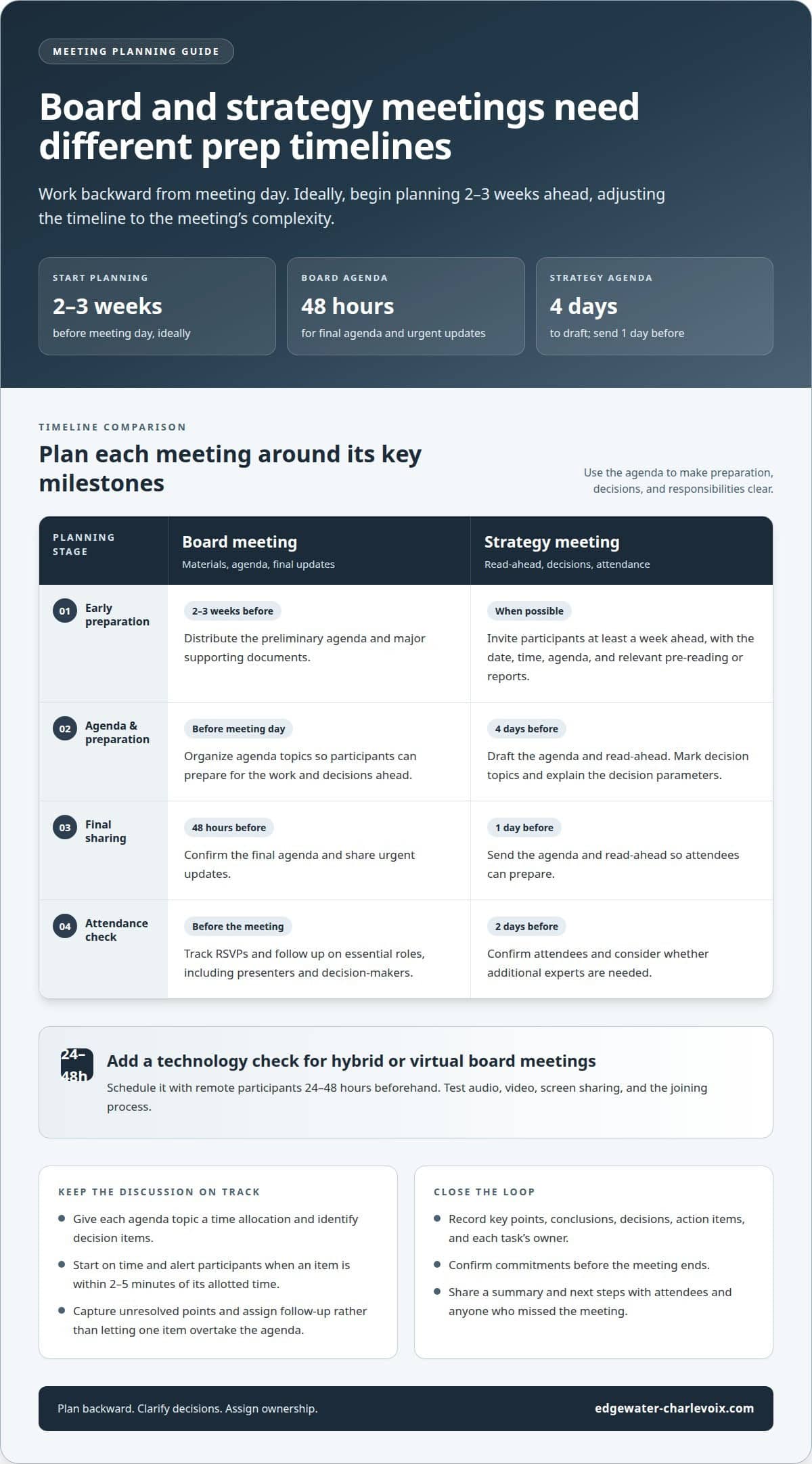
- For board meetings, distribute the preliminary agenda and major supporting documents 2-3 weeks before the meeting. Confirm the final agenda and urgent updates 48 hours before it begins.
- For strategy meetings, draft the agenda and read-ahead 4 days before the meeting, then send them 1 day before. Mark decision topics and explain the decision parameters so attendees can prepare.
- Start on time, follow the agenda, and alert participants when an item is within 2 to 5 minutes of its allotted time. A facilitator can then summarize the discussion or guide the group toward the next agenda item.
Meeting notes should capture key points, conclusions, decisions, action items, and the person responsible for each task. Before the meeting ends, confirm commitments. Afterward, share a summary and next steps with attendees and anyone who missed the meeting.
With this preparation, discussion can stay purposeful without rushing important decisions. If an agenda item needs more time, record the unresolved point and assign a follow-up rather than letting it overtake the remaining agenda.
What are key components of the pre-meeting preparation checklist?
Before sending invitations, connect each preparation task to the meeting’s objectives. A practical checklist for planning a business meeting tracks responses, materials, equipment, and the person responsible for each action.
- When possible, invite participants at least a week before the meeting. Include the date, time, agenda, and any relevant pre-reading or reports so attendees can prepare.
- Track RSVPs and follow up on essential roles, such as presenters and decision-makers. For a strategy meeting, confirm attendees and consider additional experts 2 days before the session.
- Match the equipment to the meeting format. List the presentation tools, collaboration materials, and supplies required, then assign someone to bring or set up each item.
- Test the meeting technology in advance. Checking the connection, presentation display, and shared files helps prevent setup from consuming the first 30 minutes.
- For a hybrid or virtual board meeting, schedule a technology check with remote participants 24-48 hours beforehand. Test audio, video, and screen sharing, and run through the joining process.
- Plan for common disruptions, such as a failed connection or an absent presenter. Designate a note taker and prepare a minutes template to maintain accountability if discussion moves quickly.
Start accessibility planning by identifying what participants need to take part. Consider an accessible route, suitable seating, readable materials, and ways to follow remote discussion. Include agreed accommodations in the room setup and technology plan.
Common risks include late RSVPs, missing reports, equipment problems, and unclear responsibility for meeting tasks. Assign an owner to each preparation step and run through the setup beforehand to catch issues before attendees arrive.
After the meeting, gather feedback on accessibility and technology alongside the minutes. This helps refine preparation for the next session and shows whether participants could contribute fully.
Preparing the meeting room and refreshments
Room setup supports the meeting before the facilitator and participants arrive. Use the agenda to match the space, presentation tools, printed materials, and refreshments to the work planned.
- Choose a room that fits the number of attendees, with seating arranged to support discussion. A small group reviewing slides may need a clear view of the screen, while a working session benefits from space to collaborate.
- Set out presentation tools suited to the meeting, such as a display for slides or a whiteboard for capturing ideas. Test the equipment before participants arrive so setup does not interrupt the opening.
- Prepare and copy required handouts and reports in advance. Arrange materials in agenda order, and avoid last-minute changes that could leave participants with outdated copies.
- For board meetings, send last-minute additions, updated reports, or supplementary materials 1 week before the meeting. A shared digital platform can keep the approved agenda and board materials together for easier preparation.
- Provide light refreshments or lunch to suit the meeting time. Place refreshments where participants can reach them without interrupting a presentation or obstructing movement around the room.
- Arrive early enough to prepare the room and yourself. Before the first session, make one final walk-through to check the seating, materials, presentation tools, and refreshments.
For a productive layout, consider how participants will present, listen, and work together. Keep the presenter visible, leave room to move, and place collaboration tools where the group can use them easily.
A meeting checklist can include a room diagram, equipment list, materials count, and refreshment plan. Assign an owner to each task and mark it complete before the meeting begins. This makes the move from agenda planning to execution clear and manageable.
How do you define meeting objectives and choose the right attendees?
Start with the decision or result the meeting must produce. A practical checklist for planning a business meeting connects that objective to the people who can contribute, decide, or carry out the next step.
- Describe the purpose as a specific outcome, such as approving a project direction or resolving a delivery obstacle. A defined result helps organizers decide whether an agenda item should involve discussion, a decision, or an update.
- Define success before choosing attendees. For a project decision, success might mean selecting an approach, recording the reasoning, and assigning someone to oversee implementation.
- Invite people whose knowledge or authority is needed to reach the outcome. A budget decision requires the people responsible for the relevant figures and the decision-maker who can approve the direction.
- Separate essential attendees from optional contributors. If a specialist only needs to explain one agenda item, invite them for that portion rather than asking them to attend the entire meeting.
- Ask participants what they need to resolve, contribute, or learn. Their input may reveal a missing perspective or show that a topic belongs in a separate session.
- For recurring strategy meetings, connect topics to long-term strategy, goals, and progress. This helps leadership focus on changes, barriers, and choices that need collective attention.
Before sending invitations, compare each proposed attendee’s role with the desired outcome. Remove anyone without a clear contribution, and assign people to facilitate, present, record decisions, and own follow-up actions. This creates accountability without making the meeting larger than necessary.
Keep the objective visible in the invitation and meeting materials. If the purpose changes during preparation, revise the attendee list and agenda together; a new decision may require different expertise. For a recurring strategy meeting, plan its preparation calendar backward from the meeting date, beginning 10 to 15 days beforehand.
Edgewater Inn
Edgewater Inn offers One Bedroom Suites and Two Bedroom Suites for travelers attending a corporate gathering or working away from the office. Each suite features a fully equipped kitchen and a private balcony with water views, providing a welcoming place to unwind after long discussions. The scenic waterfront setting on Round Lake harbor also places guests near local dining, shopping, and outdoor relaxation.
For a professional trip with a colleague or a small team, you can select the suite type that best fits your travel needs. Edgewater Inn provides comfortable accommodations rather than on-site meeting or conference planning services, making it an ideal lodging choice when you want a reliable place to stay while managing your own itinerary as part of any comprehensive checklist for planning a business meeting.
Contact Edgewater Inn to discuss accommodations for your upcoming corporate travel.
Make your next gathering easier to attend
A well-run meeting creates momentum beyond the room. Give each decision a clear path forward by carrying owners’ next actions into the work that follows. As you prepare for your next gathering, use your checklist for planning a business meeting to coordinate the purpose, attendee needs, and travel arrangements.
For a business trip in Charlevoix, Edgewater Inn offers One Bedroom Suites and Two Bedroom Suites. Wedding Venue Packages are available for a celebration connected to your gathering. Choose the stay that fits your plans, then enjoy a change of pace in a waterfront setting.
Ready to arrange accommodations for your upcoming trip? Contact Edgewater Inn about your stay, and take the next step toward a more settled visit.
Frequently Asked Questions
How can structured meetings enhance productivity and communication?
Structured meetings help teams turn conversation into coordinated work. For example, a product group can use a brief round of updates to surface a dependency, then clarify which team is responsible for resolving it. A clear structure also gives quieter participants time to prepare contributions before discussion begins. Afterward, concise notes give colleagues a shared reference and reduce confusion as work continues across teams.
How early should I start planning a meeting?
Begin planning 2-3 weeks in advance for a typical meeting, allowing more preparation for complex discussions. The lead time depends on how many people must contribute, how much material needs review, and whether decisions require advance analysis. For a straightforward check-in, the main task may be coordinating schedules; a strategy session needs time to gather and review relevant input.
How will this checklist help?
A checklist for planning a business meeting keeps preparation visible and connected, rather than scattered across messages and reminders. Use it to flag dependencies, such as a report that a presenter needs before preparing. A status column also shows what is complete, what is delayed, and who needs to act before the meeting.
Roles and responsibilities: who’s in charge?
The organizer coordinates preparation, the facilitator guides discussion, and the note taker records decisions. Presenters explain specific topics, while action owners complete agreed follow-up. In a small team, one person may take on several roles. Assign responsibilities in advance, especially who will record decisions if the facilitator is also presenting or leading discussion.
What should be included in the meeting agenda?
An agenda should include the meeting’s date, time, location, duration, objectives, and topics. It can also specify the contribution each item requires, such as an update, discussion, or decision. For example, label a proposal as a decision item and state what participants should review beforehand. This focuses preparation and clarifies how attendees can take part.
What should be included in a business meeting planning checklist?
A checklist for planning a business meeting can cover objectives, attendees, invitations, agenda development, materials, room setup, technology, and follow-up. Add task owners and completion status to clarify responsibilities. Include a final review of unresolved items, such as an unanswered RSVP or missing input from a presenter, and a post-meeting prompt to capture lessons for next time.

