Plan a wine trip from May to October for the recommended weather window, or choose September for regional tastings and the start of harvest season. Vineyard tour lodging works best when it fits your tasting route and arrival plans, so decide which wine region you want to explore before choosing where to stay.
It’s natural to focus on vineyard views and tasting-room stops, but the drive between them and your lodging can shape the pace of the whole visit. A little seasonal planning helps you make room for the experience you want, whether that’s a warm-weather day among the vineyards or a quieter seasonal excursion. Here, you’ll learn how the seasons differ, how driving routes and airport access influence where to stay, and which towns make useful bases for exploring wine country, including a featured stay at the Edgewater Inn.
Key Takeaways
- Match the season to the experience you want, from vineyard walks in warmer months to winter wine-trail events.
- Map your tasting region against your arrival route so your lodging choice makes the trip easier to pace.
- Compare Traverse City and Petoskey as potential bases, considering which wine country you plan to explore.
- For a waterfront stay in Charlevoix, explore Edgewater Inn’s One Bedroom Suites or Two Bedroom Suites as a comfortable home base.
Seasonal timing for Michigan wine tours
For Northern Michigan wine tour lodging, start by choosing a season that suits your preferred pace. May to October is the recommended weather window for touring Michigan wine country, with plenty of opportunity for vineyard visits and outdoor tasting. September is a highlight for Leelanau wine tasting, with Harvest Days running throughout the month. Michigan’s harvest season falls in September and October, giving autumn visits a distinct vineyard focus.
September is a practical choice if you want to pair tastings with harvest-season scenery. The Leelanau Peninsula offers a concentrated route through wine country, while Old Mission Peninsula provides another Northern Michigan option. Before choosing accommodations, decide which peninsula or trail you want to explore. Group nearby wineries into a day’s route, leaving time for meals, tasting appointments, and the return drive. This helps you enjoy the season without unnecessary backtracking.
Winter and early spring bring wine-trail events that can anchor a visit outside the warmer touring window. The Leelanau Wine Trail’s calendar includes these seasonal highlights:
- February: Snow on the Vines.
- March: Wine & Cheese.
These events offer a reason to plan around a specific month rather than wait for vineyard weather. Some Michigan wineries also offer winter excursions that include snowshoeing through vineyards. For a winter escape, build your itinerary around an event or excursion, then choose lodging that makes the return at day’s end unhurried. Keep winery stops close together, especially when seasonal activities are part of the plan.
Use this simple planning sequence in any season: choose the month, select a wine trail, then shape each day around its stops. If September is your priority, consider Leelanau Harvest Days and the region’s tasting opportunities. For February, center your plan on Snow on the Vines. A March trip can revolve around Wine & Cheese, while late January brings Sips & Soups. Matching lodging to the calendar helps make the visit feel considered, whether you’re after autumn color, a winter activity, or a spring tasting escape.
Once you’ve chosen a month, give each day a manageable shape instead of trying to fit in every possible stop. Leave time between tastings for a meal, a break, or a change of plans, and choose lodging that makes the return straightforward. A relaxed schedule lets a seasonal event take center stage instead of becoming one item in an overpacked day. Before booking, make sure your dates align with the activity you want to attend.
For a February visit, the Leelanau Wine Trail’s Snow on the Vines event offers a clear focus for the day. In March, Wine & Cheese can serve the same purpose. Keep the route simple and allow enough time to enjoy the experience without rushing between places. If you’re traveling with others, agree on the month and main activity first. That makes it easier to choose a trail, coordinate tasting stops, and find lodging suited to your pace.
Driving and airport access
Northern Michigan’s wine regions are described as a 4- to 5-hour drive from Detroit or Chicago. That distance makes the starting point important: a long road journey can shape your arrival day, tasting schedule, and choice of overnight base. Rather than planning winery stops immediately after reaching the region, leave room to settle in and map the first route from your accommodations.
For a drive from Detroit or Chicago, choose your wine area before settling on lodging. Old Mission Peninsula and Leelanau Peninsula create different route patterns around Grand Traverse Bay. A base near the peninsula you plan to explore can reduce backtracking. If your itinerary includes both, group stops by area and plan the drive between them, rather than treating each tasting as an isolated destination.
If you’re flying in, first identify the airport that fits your flight, then plan how you’ll travel between the airport, your lodging, and the wineries. Ground transportation shapes how freely you can plan a tasting day: a rental vehicle offers route flexibility, while planned transfers require coordination of pickup and return locations. Keep the airport journey separate from winery visits so arrival logistics don’t crowd the day’s tasting plans.
Before booking Northern Michigan wine tour lodging, sketch the trip in three stages:
- Mark your arrival point, whether you’re driving from Detroit or Chicago or flying.
- Choose the wine region, such as Old Mission Peninsula or Leelanau Peninsula.
- Place your overnight base in relation to the route, then group nearby wineries into each touring day.
This simple map shows whether a resort or retreat works as a convenient base, or whether another location better fits your route. It also helps you balance travel and tasting without relying on one drive-time estimate for every stop. For example, if you’re focusing on Old Mission Peninsula, choose a base that supports that plan rather than one selected only for airport convenience.
For a Charlevoix stay, consider how a harbor-side base fits into your wider Northern Michigan route. Explore waterfront lodging in Charlevoix as you compare arrival logistics with the wine region you want to visit.

What are the best towns to stay in for a Northern Michigan wine tour?
Traverse City and Petoskey are recommended bases for exploring Northern Michigan wine country. Both offer lodging options ranging from bed and breakfasts to resorts, with different settings for a tasting-focused stay. The best fit depends on your chosen wine region, arrival route, and preferred atmosphere. Mark the wineries you most want to visit, then compare each town’s location with those stops.
Traverse City makes sense for itineraries centered on Grand Traverse Bay and nearby peninsula routes. The Leelanau Peninsula Wine Trail features 25+ wineries, while Old Mission Peninsula stretches 19 miles and has 11 wineries. Those figures help you understand the scale of each touring area, but they don’t make the routes interchangeable. Choose the peninsula you want to explore, then use Traverse City as a base if its location fits your daily plan.
Petoskey offers another base for visitors exploring farther north. The Tip of the Mitt region may be worth considering when planning northern tasting stops. Compare the town’s position with your planned route and arrival point before choosing accommodations. A well-matched base can make it easier to group nearby wineries together and return to town without adding unnecessary cross-region driving.
Use these steps to narrow your town choice:
- Choose your primary wine area: Leelanau Peninsula, Old Mission Peninsula, or Tip of the Mitt.
- Mark the wineries you’d like to visit and group nearby stops into the same touring day.
- Compare Traverse City and Petoskey against those routes and your arrival plan.
- Select lodging that suits your preferred setting, from a bed and breakfast to a resort.
If your plans include more than one region, don’t assume one town will be equally convenient for every stop. Map the full itinerary first, then decide whether one base suits the route or splitting the stay would make for a more relaxed pace. A Northern Michigan wine tour is easier to plan around your priorities when you choose the tasting area before the town.
If your plans include Charlevoix, explore its waterfront accommodations as another option for your regional stay.
Edgewater Inn: One Bedroom Suites
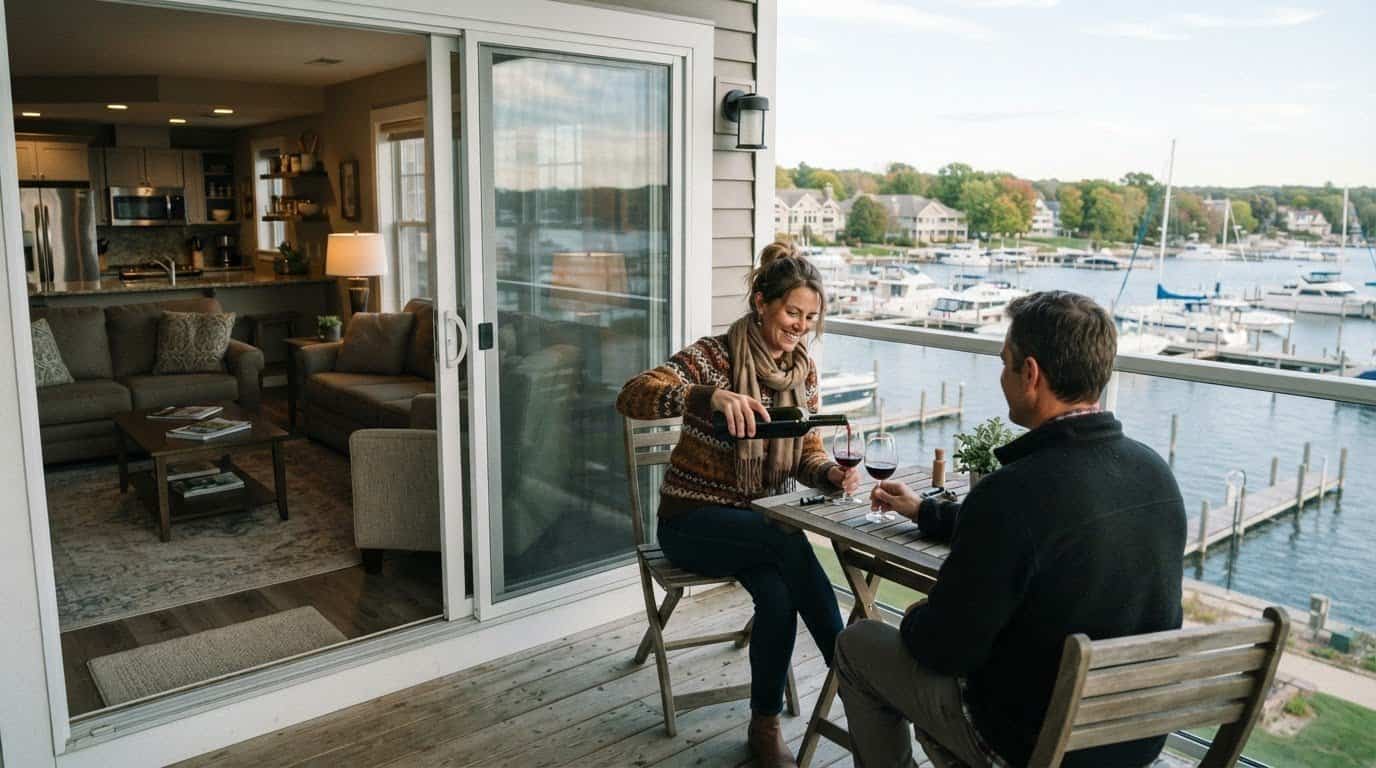
Edgewater Inn offers One Bedroom Suites for travelers seeking a comfortable Charlevoix base between wine-country outings. Each suite offers a private residential feel with the home amenities of a waterfront condominium-hotel, along with a private balcony overlooking the water. After a day of tasting, unwind beside Round Lake harbor.
For companions who need more space, Two Bedroom Suites offer another accommodation option. The right fit depends on your group and how you want to spend time between vineyard visits. With downtown Charlevoix, shops, dining, and beaches nearby, your stay can complement a wine itinerary with time along the waterfront.
Explore Edgewater Inn’s One Bedroom Suites for your seasonal Northern Michigan visit, and visit the Edgewater Inn website to learn more.
Make Your Wine-Country Visit Your Own
A memorable wine-country escape includes more than time among the vineyards. Think about the moments around each tasting: an easy morning, a scenic pause by the water, or a peaceful evening after exploring. Choosing Northern Michigan wine tour lodging with that wider rhythm in mind can turn a series of stops into a restorative getaway. Let your preferred pace guide the details, from how much time you leave between outings to the setting you want to return to.
As you refine your plans, consider whether Charlevoix belongs in the experience. A waterfront stay adds a change of scene to a wine-country itinerary, while Edgewater Inn’s Wedding Venue Packages may suit couples planning a celebration. Choose the seasonal mood and daily pace that feel right, then leave room for a little discovery along the way.
Connect with Edgewater Inn about your stay and start shaping a Northern Michigan visit that feels unmistakably your own.
Frequently Asked Questions
What are the best lodging options near Leelanau Peninsula wineries?
Traverse City is a practical base to consider for a Leelanau Peninsula tasting itinerary. Lodging choices include bed and breakfasts and resorts, so decide whether you prefer an intimate stay or a resort setting. Before booking, plot your planned winery stops and return route. Then compare lodging locations with the day you intend to spend on the peninsula.
What are the best lodging options near Old Mission Peninsula wineries?
For an Old Mission Peninsula visit, consider lodging in Traverse City and map your outings around the peninsula’s wineries. A bed and breakfast or resort may suit different travel styles; the best choice depends on your preferred atmosphere and itinerary. If your trip includes other routes, plan those as separate outings rather than assuming one location will simplify every drive.
When is the best season for a Northern Michigan wine tour, and when should lodging be booked?
May to October is the recommended weather window, while Leelanau’s Harvest Days and harvest season make autumn appealing. Winter wine-trail events offer reasons to visit, too. Choose your dates around the experience you want, then arrange lodging once your dates and wine-trail plans are set. For an event-focused trip, use the event date as your anchor and build your stay around it.