What if a home could grow from the earth as naturally as a weathered cedar tree or a glacier-sculpted boulder? For those who wander the quiet, canopy-shaded streets near the shores of Round Lake, the Charlevoix mushroom houses offer a rare glimpse into a world where stone and mortar mimic the organic flow of the surrounding landscape. It is easy to feel a sense of deep wonder when first encountering these blueprint-free masterpieces, yet many visitors find themselves hesitant, unsure of where the public path ends and a private residence begins. You should be able to explore these legendary sites with absolute confidence, fully immersing yourself in the whimsical, stone-clad vision of Earl Young without the stress of navigating outdated maps.
This 2026 guide serves as your definitive companion to discovering the history, locations, and most respectful ways to experience these 31 unique structures. We will provide a clear itinerary for the most celebrated clusters and share the fascinating story of the self-taught builder who transformed local limestone and fieldstone into living art. By the end of this journey, you will know exactly where to find the most iconic rooftops and how to pair your architectural tour with a stay in a refined waterfront suite that places you just steps from the most famous clusters. Prepare to see Charlevoix through the eyes of a local authority, finding peace and inspiration in every curve of the stone.
Key Takeaways
- Delve into the fascinating history of Earl Young, the self-taught master builder who bypassed traditional blueprints to let the natural shape of Lake Michigan boulders dictate his designs.
- Navigate the three distinct geographic clusters of Charlevoix mushroom houses using our curated itinerary to ensure you see the most iconic structures without missing a single detail.
- Understand the modern 2026 etiquette for viewing these private residences, including how to book guided GEM car tours for a seamless and respectful exploration.
- Identify the best high-end lodging options, such as one and two bedroom suites on Round Lake, which offer the luxury of a private balcony just a short walk from the architectural clusters.
What are the Charlevoix mushroom houses and why are they famous?
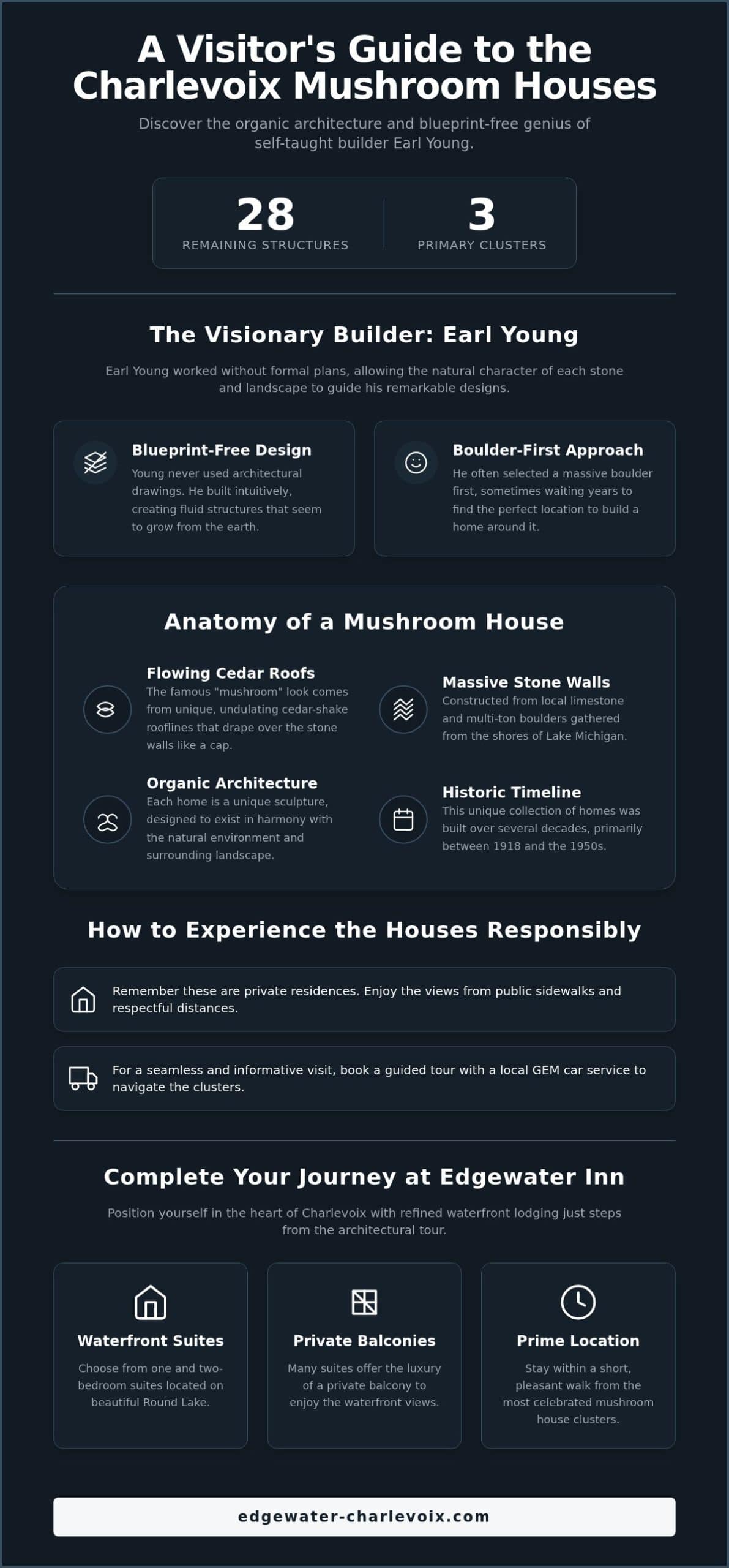
Built between 1918 and the 1950s, the Charlevoix mushroom houses represent a radical departure from the rigid lines of traditional American architecture. These organic stone dwellings don’t rely on the standardized materials of their era; instead, they emerge from the northern Michigan soil as if they were part of the glacial landscape itself. Earl Young, the visionary behind these structures, was a self-taught master of stone masonry who never used a single blueprint. According to Earl Young’s biography, his process was guided entirely by the character of the materials he gathered from the Lake Michigan shoreline. Massive boulders, some weighing several tons, and local limestone were meticulously placed to create walls that feel more like geological formations than human habitations. He didn’t see stones as mere building blocks, but as individual personalities that dictated the flow of every room.
The origin of the mushroom house nickname
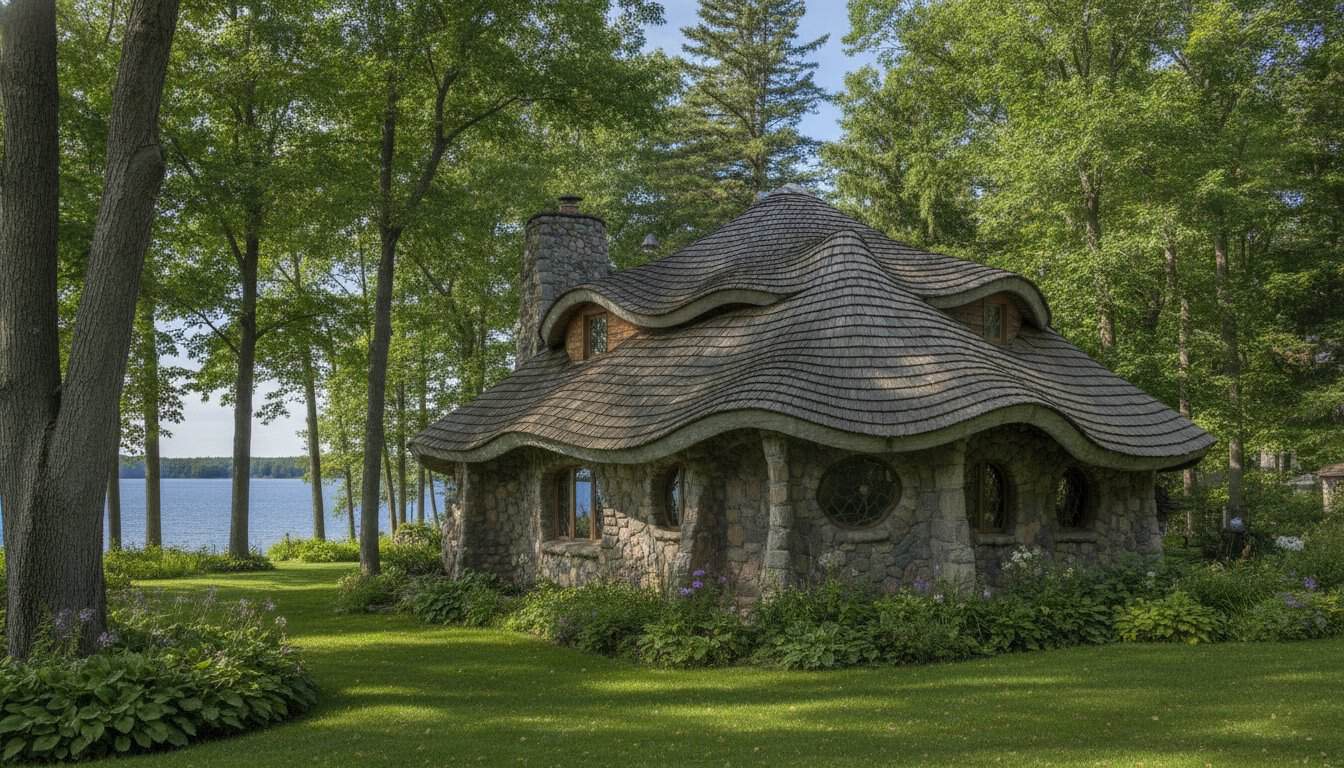
While Young himself might have preferred more formal descriptions, the community and travelers alike quickly adopted more whimsical titles. The name mushroom house comes from the unique, undulating cedar-shake rooflines that drape over the stone walls like the cap of a forest fungus. These heavy, flowing roofs give the homes their signature appearance, leading many to refer to them as Gnome Homes or Hobbit Houses. One specific structure, the Mushroom House on Clinton Street, originally served as the catalyst for the entire collection’s identity. Its deep, drooping eaves and rounded silhouette perfectly encapsulate the organic architecture movement, where buildings are designed to exist in harmony with their natural environment. This fluidity creates a sense of movement in the stone, making the heavy materials appear light and soft.
A national treasure in Northern Michigan
Drawing architecture enthusiasts from across the country, these 28 remaining structures offer a stark contrast to the cookie-cutter residential designs often found in the Midwest. Each home is an individual sculpture, reflecting a time when craftsmanship was dictated by the earth rather than a factory. Because they are nestled within the quiet residential neighborhoods of Charlevoix, they provide an immersive experience that feels both exclusive and deeply personal. Visitors often remark on the sense of peace these homes evoke, especially when viewed against the backdrop of the local waterways. In 2026, these masterpieces remain a testament to a builder who believed that a house should not merely sit on the land, but belong to it. This philosophy of integration makes the collection a national treasure, preserving a rare moment in history where art and shelter became one. For those seeking a deeper connection to this legacy, staying nearby in one and two bedroom suites at the Edgewater Inn allows for a leisurely exploration of these historic treasures.
The blueprint-free genius of master builder Earl Young
Unlike modern construction where every nail and beam is accounted for on a digital map, Earl Young worked with a spontaneity that defied his era. He was a self-taught builder who relied entirely on the raw materials of the earth to dictate his designs. He often stood on a vacant lot, gesturing to masons where a wall should curve or where a massive boulder should sit. This lack of formal architectural drawings allowed the Charlevoix mushroom houses to evolve organically, shifting in response to the specific topography of each site. Instead of forcing a site to comply with a rigid vision, he allowed the natural rise and fall of the earth to determine the placement of every window and doorway.
The boulder-first approach to organic design
Young spent decades scouring the northern Michigan shoreline for the perfect specimens to anchor his creations. He looked for boulders with specific colors, textures, and shapes. Sometimes, he would find a stone and let it sit for years until he found the perfect home for it. According to the Charlevoix Historical Society, he used simple pulleys and sheer human strength to position stones weighing several tons. This wasn’t just building; it was a slow, deliberate conversation with the land. He refused to blast or level a site, choosing instead to tuck foundations into hillsides and wrap walls around existing trees. His fifty-year career was defined by this unwavering commitment to materiality, ensuring that no two structures would ever look the same.
Signature features of an Earl Young masterpiece
Walk past these homes and you’ll notice the “melting” chimneys, where stones seem to flow like liquid against the sky. The wide wavy eaves and exposed rafter tails are not just decorative; they create deep shadows that emphasize the horizontal lines of the structures. Young frequently used Onaway stone and local northern Michigan limestone, materials that grounded the houses in the regional geography. Inside, low ceilings and large, frosted-glass windows create an intimate, cave-like atmosphere that feels both protective and connected to the outdoors. The weight of the stone is balanced by the delicate curves of the cedar roofs, creating a visual rhythm that mimics the waves of the nearby lake. After a morning spent admiring these intricate details, returning to the comfort of a one bedroom suite with a private balcony provides the perfect sanctuary to reflect on Young’s enduring stone legacy.
Navigating the three primary clusters of stone dwellings
Positioned between the shimmering waters of Lake Michigan and the tranquil expanse of Round Lake, the Charlevoix mushroom houses are thoughtfully distributed across three distinct geographic areas. To truly appreciate these organic structures, it’s essential to group your visit into clusters rather than wandering aimlessly. This geographic strategy allows you to witness the evolution of Earl Young’s architectural style as it matured from rustic experimentation to polished mastery. Planning your route around these clusters is a highlight for many enjoying summer activities in the area, as the lush greenery of the 2026 season provides a vibrant frame for the heavy stone walls. By focusing on one neighborhood at a time, you can absorb the subtle details of the stonework without the fatigue of a hurried schedule.
The Boulder Park experimental phase
Located on the southern edge of the city, Boulder Park serves as the foundational site where Young first tested his stone-on-stone philosophy. This neighborhood feels like a hidden stone village, tucked away from the main tourist corridors. Here, the designs are rugged and heavy, showcasing the builder’s early obsession with multi-ton fieldstones and unrefined limestone. While exploring this district, look for the Enchanted Cottage and the Boulder Manor, which stands as a monumental tribute to Young’s ability to manipulate massive materials. These early works lack some of the refinement of his later downtown projects but possess a raw, earthy energy that is undeniably powerful. It’s a quiet area, perfect for a slow morning drive where the only sounds are the rustle of the canopy and the distant rhythm of the lake.
The Park Avenue and downtown clusters
Moving toward the heart of the city, the Park Avenue cluster contains some of the most photographed homes in Michigan. The Half House and the Thatch Roof House are standout examples of Young’s late-career genius, where the stone seems to soften and flow into the surrounding landscape. These structures interact beautifully with the Pine River Channel, offering views that change with the shifting northern light and the passing of local vessels. Because these houses are clustered closely together, the walking distances between major downtown stone structures are remarkably short. You can easily stroll from the downtown marinas to the primary stone structures in under ten minutes, making it a delightful way to spend a sun-drenched afternoon. This proximity makes it effortless to transition from a morning of architectural discovery to a relaxing rest in a waterfront suite, ensuring that the most important details of your trip remain accessible and unhurried.
How to experience the mushroom houses in 2026 responsibly
To witness the Charlevoix mushroom houses in the 2026 season is to step into a delicate balance between public art and private living. While these structures draw visitors from across the globe, they remain cherished personal homes for local residents. Engaging with these architectural gems requires a thoughtful approach that prioritizes quiet observation and environmental care. By choosing modern, sustainable methods of exploration, you can ensure that your visit contributes positively to the preservation of this unique neighborhood character. Respect is the priority. You’ll find that the community is most welcoming when visitors move through the streets with a gentle footprint and a quiet voice.
Choosing between GEM car tours and walking routes
Guided tours in electric GEM cars have become a preferred choice, starting at $29 per person. These quiet, zero-emission vehicles provide a comfortable way to see the houses while hearing curated stories from knowledgeable guides. They are particularly well-suited for groups of up to 15 people, offering an accessible alternative to long walks under the summer sun. If you prefer a more tactile experience, a slow walking tour allows you to appreciate the intricate masonry details that a vehicle might pass too quickly. You can find the latest 2026 tour schedules and meeting locations at the local visitor center downtown. For those who prefer a self-guided journey, mobile apps and digital maps now offer real-time GPS routing to ensure you stay on public paths while learning about each structure’s history.
Architectural photography tips and resident privacy
Capturing the undulating rooflines requires patience and a respectful distance. To protect the privacy of those who live within these stone walls, the golden rule is to remain on the public sidewalk or street at all times. Trespassing onto lawns or porches is strictly prohibited and disrupts the serene atmosphere of the neighborhoods. For the best architectural lighting, aim for the early morning or the late afternoon golden hour. These times emphasize the deep textures of the limestone and the soft curves of the cedar shingles without the harsh glare of midday. In 2026, drone photography is heavily restricted in these residential clusters, so it’s best to rely on a quality telephoto lens to capture details from the street. After a day of exploring these quiet streets, you can retreat to the luxury of your own One Bedroom Suites or Two Bedroom Suites to review your photos in total peace.
Completing your journey at the Edgewater Inn
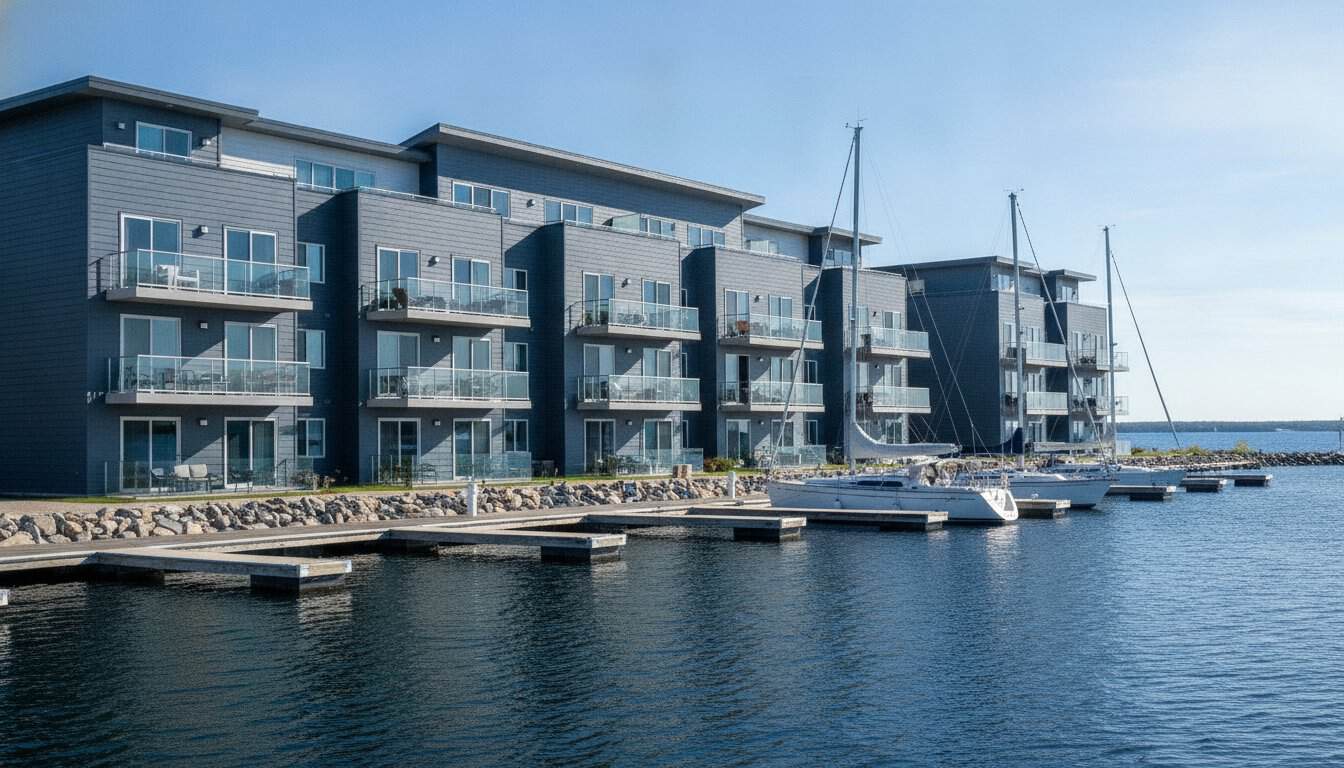
After a day spent tracing the undulating rooflines of the Charlevoix mushroom houses, the transition to a restful evening should be as organic as the stone walls themselves. Located on the serene shores of Round Lake, the Edgewater Inn serves as a sophisticated gateway to architectural discovery. It positions you perfectly within walking distance of the Park Avenue houses and the downtown clusters, allowing you to revisit your favorite stone structures as the light changes throughout the day. By choosing a lodging experience that mirrors the private, residential spirit of the local community, you can fully immerse yourself in the unique atmosphere of northern Michigan. Our condo-hotel model ensures that every stay feels personal, offering a blend of professional hospitality and the quiet intimacy of a home.
Waterfront suites with views of Round Lake
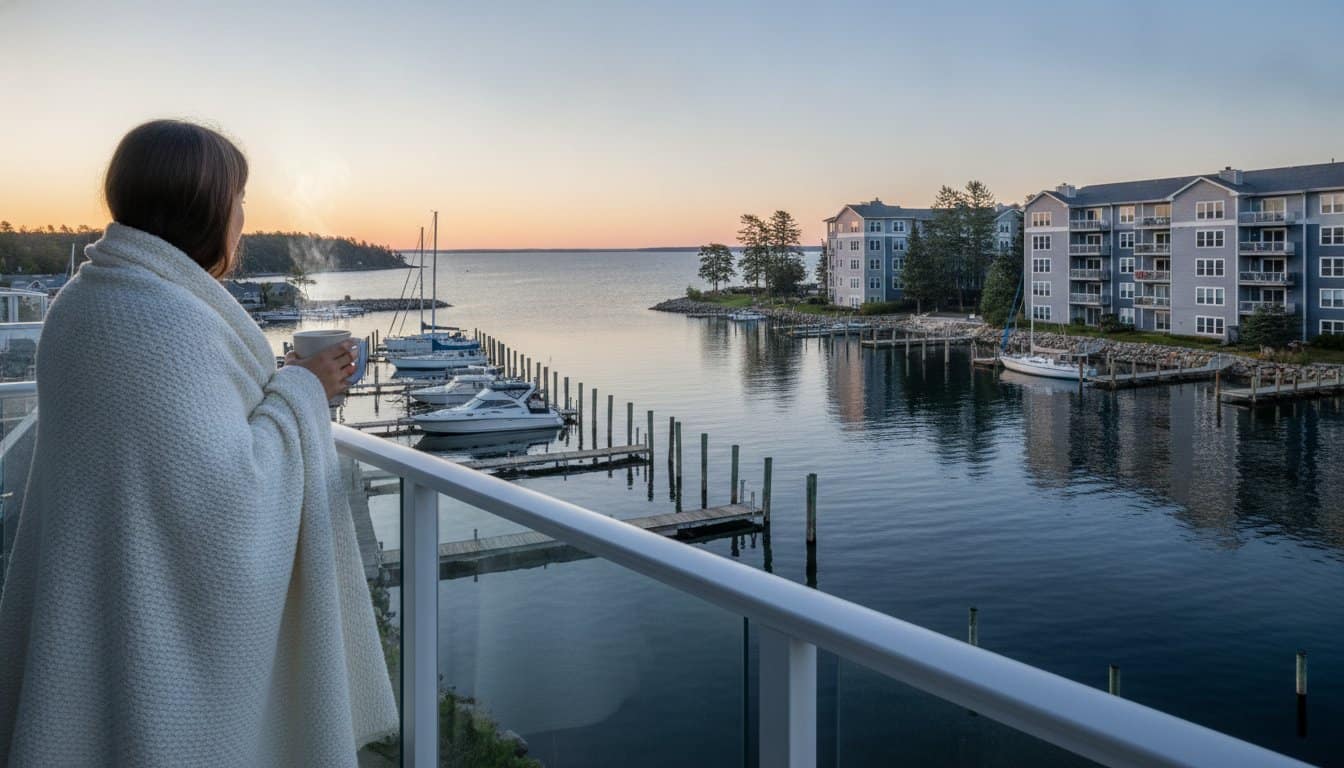
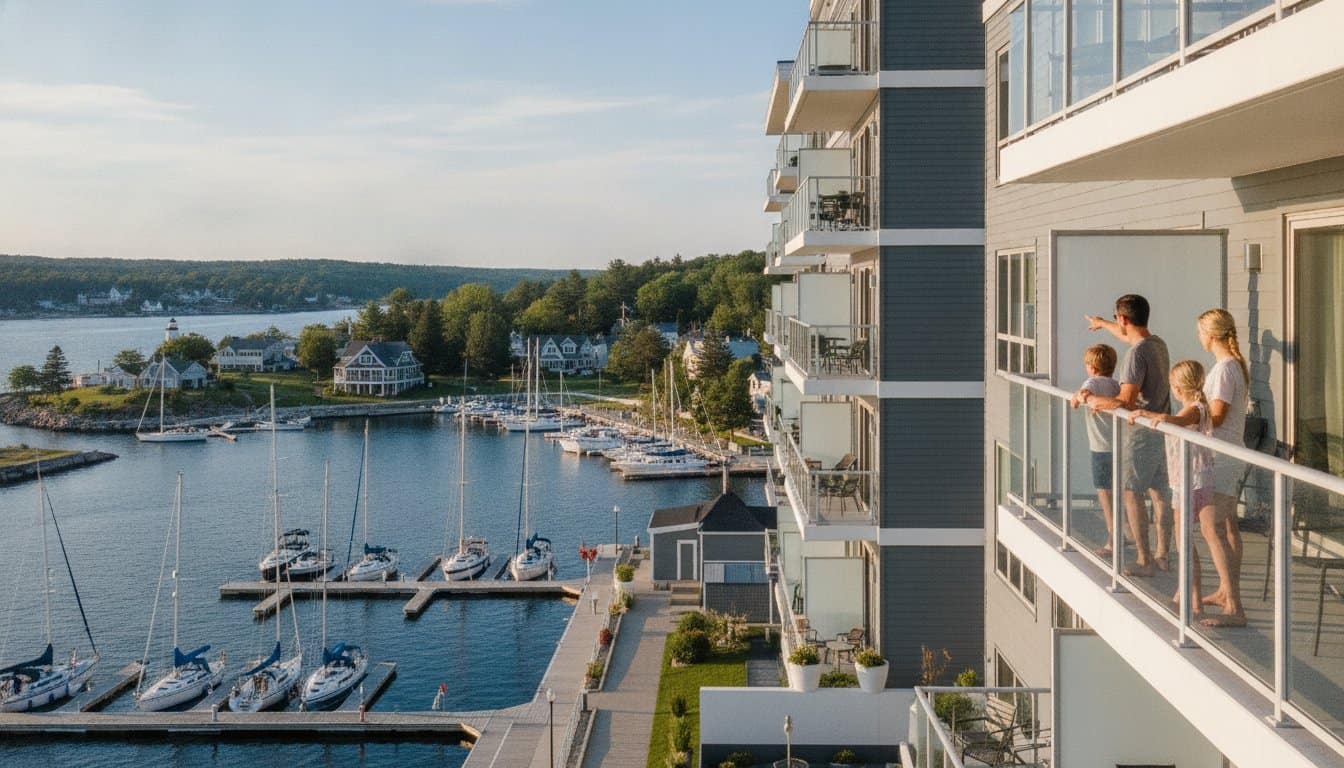
Nestled along the vibrant waterfront, our vacation rentals and suites provide a front-row seat to the rhythmic movement of the harbor. After exploring the heavy masonry of Earl Young’s masterpieces, there is nothing quite like watching the local fleet return to the marina from your own private balcony. Each of our One Bedroom Suites and Two Bedroom Suites features a full kitchen and a spacious living area, allowing you to prepare a local meal while you review your architectural photography. The expansive windows invite the changing northern light into your living space, creating a sense of peace that lasts long after the sun sets. It is the ultimate sanctuary for those who value both exclusivity and the simple pleasures of a waterside retreat.
Amenities designed for a restorative retreat
To ensure your visit is as relaxing as it is educational, our facilities are curated to provide a complete, year-round vacation experience. Slipping into the indoor/outdoor pool is a restorative ritual for many guests after a long morning of walking through the Boulder Park district. For the modern traveler or digital nomad visiting for the season, high-speed internet ensures you stay connected while enjoying the quiet confidence of a premier destination. You can explore our full range of hotel amenities and guest services to see how we balance luxury with a genuine sense of hospitality. Every detail is designed to slow you down, encouraging you to envision a lifestyle that remains deeply connected to the natural beauty of the local waterways.
Begin Your Architectural Discovery in Charlevoix
As you plan your journey through the winding streets of northern Michigan, the legacy of Earl Young stands as a testament to the beauty of organic design. You’ve discovered how these blueprint-free masterpieces emerged from local stone and how to navigate the distinct neighborhoods that house them. Whether you choose a guided GEM car tour or a quiet morning stroll, experiencing the Charlevoix mushroom houses in 2026 requires a blend of curiosity and respect for the residents who call these sculptures home. This thoughtful approach ensures that the whimsical charm of the stone dwellings remains preserved for every traveler who wanders our shores.
To truly capture the spirit of this region, your home base should be as inspiring as the architecture you seek. By staying at the Edgewater Inn, you enjoy the convenience of being within walking distance to major mushroom house clusters. Our suites offer the luxury of private balconies with Round Lake views and fully equipped kitchens, providing a refined residential feel that mirrors the local character. We invite you to book a waterfront suite for your architectural getaway and experience the serene elegance of our harbor setting. We look forward to hosting your next lakeside retreat.
Frequently Asked Questions
Can you stay inside one of the Charlevoix mushroom houses?
While a select few of the structures are occasionally available as private vacation rentals, the vast majority remain occupied residential properties. Most visitors find it more convenient to book a stay in a one or two bedroom suite at a premier waterfront hotel nearby. This allows you to enjoy modern amenities and professional hospitality while remaining within a short walking distance of the primary Charlevoix mushroom houses clusters.
How many mushroom houses are there in total?
There are 31 unique mushroom houses in the area designed and constructed by master builder Earl Young. These homes were built over a span of several decades, from 1918 through the early 1950s. While some sources reference a smaller number of remaining structures, the total collection includes various stone dwellings and commercial buildings that showcase Young’s signature organic style and his innovative use of local glacial boulders.
Who was the builder of the mushroom houses?
The Charlevoix mushroom houses were the life’s work of Earl Young, a self-taught builder who lacked formal architectural training. Young was a visionary who worked without blueprints, choosing instead to let the natural shapes of local stones dictate the flow of his designs. His career spanned over fifty years, during which he transformed the regional landscape with his whimsical stone masonry and deep commitment to integrating homes into their natural surroundings.
Are the mushroom houses based on the Hobbit or Lord of the Rings?
Although they are frequently called Hobbit Houses or Gnome Homes, these structures weren’t inspired by J.R.R. Tolkien’s works. Earl Young’s unique architectural style began to emerge in 1918, decades before the widespread cultural popularity of the Lord of the Rings. The resemblance is purely coincidental, resulting from Young’s desire to create organic shapes and undulating rooflines that mimic the natural curves found in the local forest and shoreline environments.
What is the best way to tour the mushroom houses in 2026?
The most immersive way to experience these stone masterpieces in 2026 is through a guided electric GEM car tour. These excursions start at $29 per person and provide expert historical context while ensuring you remain on public paths. For those who prefer a slower pace, a self-guided walking tour is an excellent alternative. Walking allows you to study the masonry details closely while enjoying the fresh air of the northern Michigan waterfront.
Are the mushroom houses open for interior tours?
Most of these iconic homes are private residences and aren’t open for interior public tours. To respect the privacy of the homeowners, visitors should view the structures from the public sidewalks and streets. While you can’t step inside, the exterior stonework and fascinating rooflines provide plenty of visual interest. You can learn more about the interior craftsmanship by visiting the local historical society’s exhibits or attending their specialized programs.
How long does it take to see all the mushroom houses?
A comprehensive tour of all the primary clusters generally takes between 90 minutes and two and a half hours. This timeframe allows you to explore the Boulder Park district and the Park Avenue cluster at a leisurely pace. If you’re walking, you might want to dedicate a full morning to the experience. This ensures you have ample time to capture photographs and appreciate the unique stone placement of each individual dwelling.
Is there a map available for the mushroom house tour?
Detailed maps for self-guided tours are available at the local visitor center and through the historical society. These maps are essential for navigating the different neighborhoods without accidentally trespassing on private property. Digital versions and mobile apps are also common in the 2026 season, providing real-time GPS locations for each house. Having a reliable map ensures you don’t miss hidden gems like the Half House or the Thatch Roof House.