The best reason to choose a balcony may be the view you’ll remember long after the trip. The benefits of a balcony on vacation include fresh air, private outdoor space, and an unhurried place to enjoy the scenery. Whether it’s worth it depends on how you like to spend your time away.
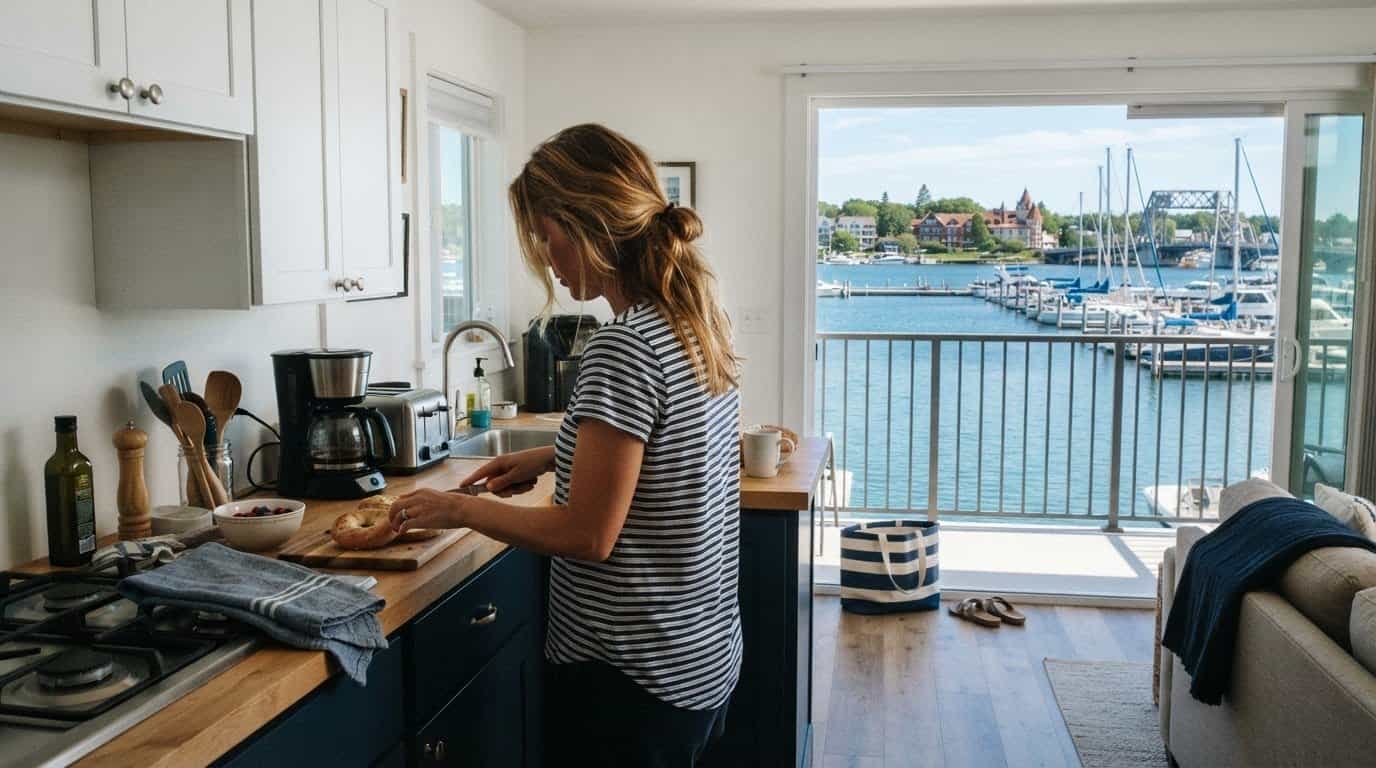
A balcony makes it easy to start the day with coffee outdoors or pause between plans for a quiet moment in the open air. It also offers a private vantage point for photos and changing views, whether you’re watching the water brighten at sunrise or settling in as evening falls. If you spend most of your trip exploring, swimming, or dining out, you may use it less. On a longer stay, those small pauses can become part of the pleasure.
This guide explains how destination, trip length, fresh air, privacy, and the view can shape your decision. Weigh the moments you hope to enjoy against the time you’ll spend away from your room to decide whether a balcony belongs in your vacation plans.
Key Takeaways
- Match a balcony to your itinerary: it may matter more when you’ll have time to enjoy it between outings or during a longer stay.
- Consider the view as part of the experience, especially if you enjoy quiet moments outdoors or taking photographs.
- Before booking, look for clear details about whether the balcony is private, usable, and included with the accommodation.
- For a waterfront stay in Charlevoix, Edgewater Inn’s One Bedroom Suites and Two Bedroom Suites feature private balconies with water views.
1. Balcony benefits: fresh air, views, and private outdoor space
A balcony brings fresh air and a private outdoor view, making a room feel more open. Instead of watching through glass, step outside to hear the water, feel a breeze, and notice the changing light. For a couple, morning coffee outdoors can make a quiet pause part of the trip. At sunset, that same spot offers time together between plans.
Private outdoor space also gives you somewhere to pause without leaving your accommodation. You might read while a travel companion rests inside, or enjoy a drink after a full day of sightseeing. Those small moments make a balcony useful beyond the view. The benefits of a balcony on vacation often come from how easily it fits into your day.
On a cruise, a balcony can offer a private place to watch coastal scenery. You can take in the passing landscape without competing for space at a public rail. Settle outside as the ship moves past the coastline, then head indoors when you’re ready. The view stays close, even between planned activities.
A balcony may also help some cruise travelers feel more comfortable with the ship’s motion. When the ship is moving, focus on the horizon from your seat. Keeping it in view can help minimize feelings of motion by keeping what you see in sync with the ship’s movement. Try this outdoors during a quiet stretch instead of tracking nearby objects moving across your view.
Think about the experience you want, not just the room feature. If fresh air matters, picture opening the balcony door after spending the day indoors. If scenery is the draw, imagine where you’ll sit to watch the water or changing light. These examples can reveal whether a balcony will become part of your routine or remain an occasional view.
To make the most of a balcony, choose a simple use before your trip: coffee outside, a few minutes with a book, or a pause to watch the horizon. You don’t need to fill it with activities. Its value may simply be the freedom to step outside, breathe, and enjoy the view on your own terms.
2. Choosing a balcony by destination and trip length
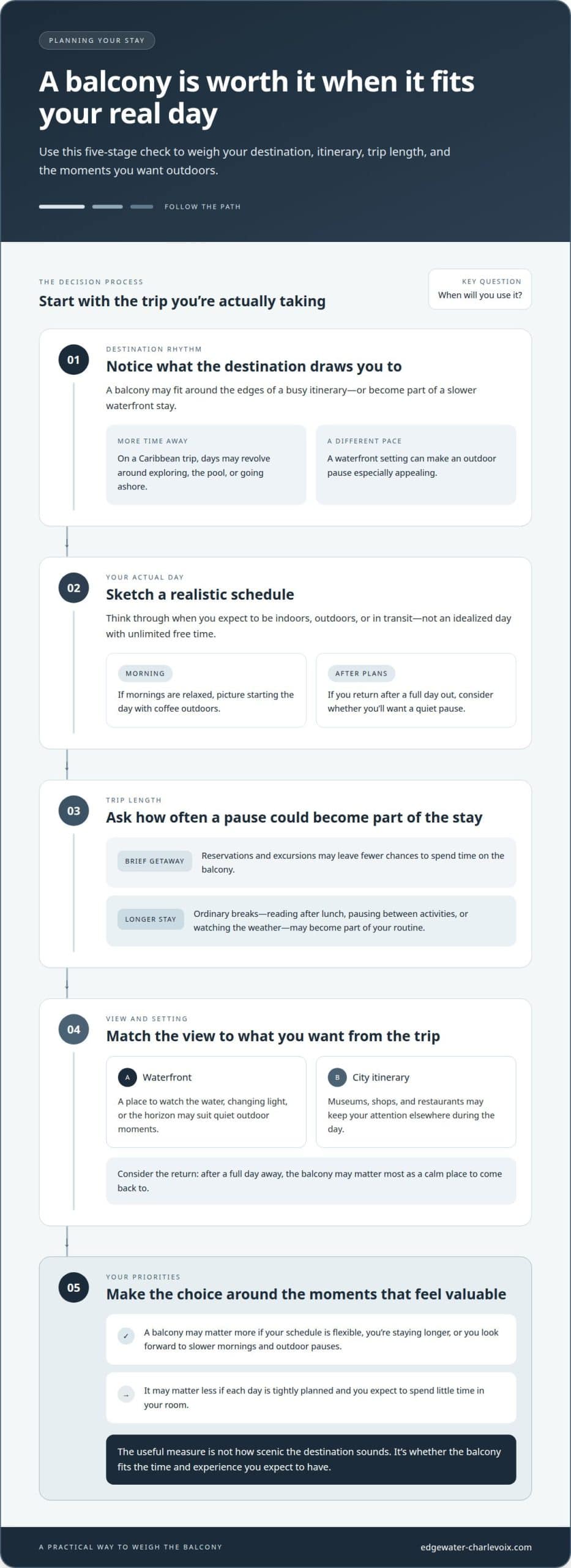
Start with your destination’s daily rhythm. On a Caribbean trip, travelers may spend much of the day exploring, relaxing by the pool, or going ashore. A balcony may fit best around the edges of that itinerary, such as enjoying breakfast outside before an excursion or unwinding after dinner. For a stay centered on nearby summer activities, consider whether you’ll have time between outings to enjoy your accommodation.
Next, sketch a typical day rather than imagining an ideal one. Note when you expect to be indoors, outdoors, or in transit. If your mornings are usually relaxed, a balcony could be a pleasant place to begin the day. If your plans keep you away from your room until evening, consider whether you’ll want a quiet outdoor pause when you return. The useful question is how a balcony fits your actual schedule.
Trip length changes the calculation. On a brief getaway packed with reservations and excursions, you may have fewer chances to spend time on the balcony. During a longer stay, ordinary breaks can become part of your routine: reading after lunch, pausing between activities, or watching the weather change before heading out. Think through a realistic day for your trip, rather than assuming you’ll spend every free hour outside.
Then match the view and setting to your plans. A waterfront destination may make outdoor pauses especially appealing, while a city itinerary may keep your attention on museums, shops, and restaurants. If you’ve planned a full day away, the balcony may matter more as a calm place to return to than as a daytime base. Choose it when those likely moments feel valuable, not simply because the destination sounds scenic.
Finally, weigh the balcony against your trip’s priorities. If your schedule is flexible, or you’re staying long enough to enjoy slower mornings, it may be worth choosing. If every day is tightly planned, prioritize the features you’ll use most while you’re actually in your room.
4. Balcony views and photography
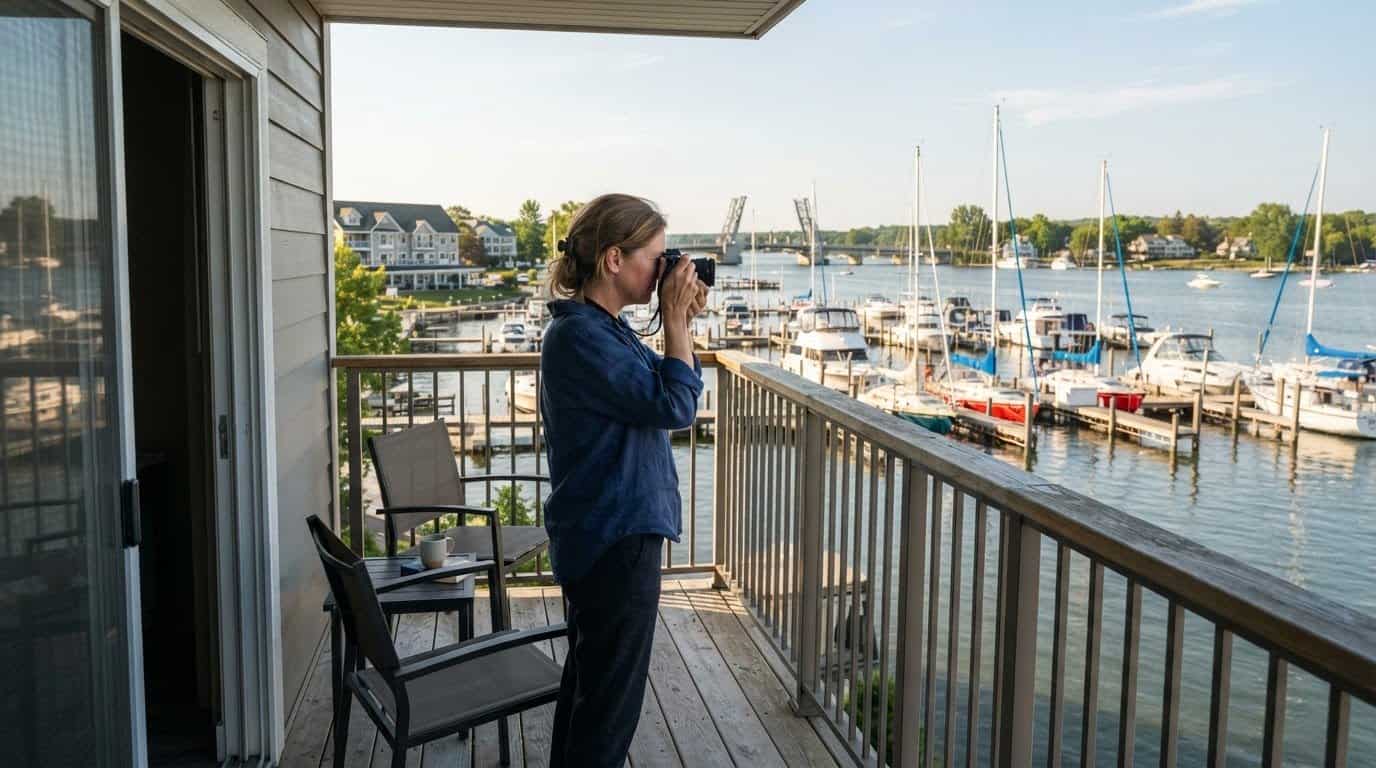
A balcony can turn a passing view into a scene you can frame at your own pace. At the waterfront, compose a photo with the water as the subject and a railing, chair, or open doorway in the foreground. That nearby detail gives the image a sense of place. Shift your position and compare the view with and without foreground elements. A small change may reveal a cleaner line across the water or bring a distinctive shoreline feature into focus.
Light changes the character of the same view throughout the day. In the morning, notice how soft light falls across the water; near sunset, watch the reflections and shadows shift. Take a few photos from the same spot, then compare them. If the sky looks too bright, try adjusting your camera settings or changing your angle. This can balance the sky with details closer to the balcony.
For a more layered photograph, include a foreground object without letting it dominate. A cup on a table can suggest a quiet morning, while an empty chair can frame the landscape. Keep the horizon level, and avoid placing it directly through the center of every image. Try one wide composition, then move closer to a detail, such as boats, shoreline buildings, or changing clouds. These perspectives tell a fuller story than repeated views from one angle.
Privacy and comfort matter when you take pictures. Keep the frame focused on the scenery, not neighboring balconies or guests. If glass separates you from the view, move close to it and angle your phone to reduce reflections. Wipe the lens before shooting, especially after carrying your phone outdoors. The takeaway is simple: a balcony’s photographic value depends on what you can see, how the light changes, and whether you enjoy noticing those details.
4. How can travelers confirm a balcony is private, usable, and included in the booking?
Start with the exact room description, not a general property summary. Look for wording that identifies a private balcony attached to the room you’re booking. A listing that mentions outdoor space elsewhere may describe a shared terrace instead. Compare the room name, written features, and photos, then check that those details match your reservation confirmation before finalizing plans.
Next, assess privacy in the photos and room details. Look for a divider between neighboring balconies, a separate entrance, or a direct sightline into another guest’s space. A balcony beside a shared walkway, for example, may feel less secluded than one screened from passersby. Photos help you understand the layout, while captions and descriptions clarify whether the space belongs to your room.
Usability depends on more than having an outdoor door. Check how the balcony is accessed, whether furniture is shown, and whether the space seems large enough for your intended use. A small standing area may suit a quick look outside, while a table and chairs suggest room to sit. If a wall, roof, or nearby structure partly blocks the view, consider whether it still suits your plans.
Finally, confirm that the balcony is attached to the specific room category in your booking. Read the room-level description and compare it with your confirmation instead of relying on a property-wide feature list. If the booking names a balcony but the photos show different layouts, match the images to the room description. Keep the relevant details handy while reviewing your reservation.
For families traveling with children, include balcony safety in your decision. The Centers for Disease Control and Prevention says adults traveling with children should inspect accommodations for inadequate balcony railings. Look closely at railing height and gaps in photos, and consider whether the space suits your family’s needs. These steps help distinguish a practical private balcony from an outdoor feature that only appears in the listing.
Edgewater Inn
Edgewater Inn offers a waterfront setting where a private balcony can make the view part of your stay. Its One Bedroom Suites and Two Bedroom Suites feature private balconies with water views, giving you a place to step outside and enjoy the scenery between outings. Choose the suite size that fits your trip, then consider whether time by the water is part of the experience you want.
For a waterfront getaway, indoor comfort and private outdoor space can suit travelers who value a relaxed pace and a view close at hand. Edgewater Inn also offers Wedding Venue Packages for couples planning a celebration.
To discuss a stay or celebration, contact Edgewater Inn.
Choose the moments you want to remember
Before settling on a room, picture one moment you’d love to make room for on your next trip. Perhaps it’s stepping outside before the day begins, pausing between plans, or watching the evening sky change. The benefits of a balcony on vacation feel most meaningful when they suit the kind of stay you want, rather than simply adding another feature to a list.
Let that image guide your choice. Think about the pace you prefer, the setting you hope to wake up to, and how you want your time away to feel after the day’s plans are over. A thoughtful room choice can make space for quieter moments in your itinerary, too.
If a waterfront stay fits the trip you’re imagining, contact Edgewater Inn to explore your next step. Here’s to a vacation with room for the views and moments you’ll carry home.
Frequently Asked Questions
So… is it worth it?
A balcony is worth considering if you’ll use it during your trip, not just admire it in the room description. Picture a typical day and identify a moment you’d genuinely spend outside, such as a quiet breakfast or a pause after returning from an outing. If that moment matters to you, the feature may add value. If your plans leave little room for it, prioritize other room features.
What are the main benefits of having a balcony on vacation?
A balcony gives you direct access to outdoor space without leaving your room. That can be welcome when you want a change of scenery without planning another outing. You could step outside briefly while a companion gets ready, or sit with a book while waiting for a dinner reservation. The value is having an easy, private option for a small break.
Do hotel rooms with balconies cost more than rooms without them?
They can, but the difference depends on the property, travel dates, room category, and view. Compare rooms for the same dates and guest count, then weigh the total cost against how often you expect to use the balcony. Also compare what each room includes, since a view, layout, or other feature may affect the rate independently of outdoor space.
How does a balcony improve views, fresh air, and outdoor relaxation on vacation?
A balcony lets you experience the setting directly rather than through a window. Open the door when the weather is comfortable, pause outside, and notice how the scenery changes with the light. If you’re traveling with someone, it can offer a separate place to sit while they rest indoors. That flexibility can make downtime feel more connected to the destination.
Are balcony rooms worth it for families, couples, or longer stays?
It depends on who’s traveling and how the room will be used. Couples may value a quiet place to share a pause, while longer-stay guests may appreciate another place to sit. For families, inspect the balcony and railings when choosing suitable accommodation. The Centers for Disease Control and Prevention advises adults traveling with children to inspect accommodations for inadequate balcony railings.
Which destinations or climates make a vacation balcony most useful?
A balcony is most useful when the destination offers scenery or outdoor conditions you’ll enjoy. A waterfront, garden, or mountain setting can make a short break feel connected to the landscape. Comfortable weather can also encourage outdoor use. If rain, strong winds, or heat are likely during your stay, consider whether you’d still value the view from indoors.