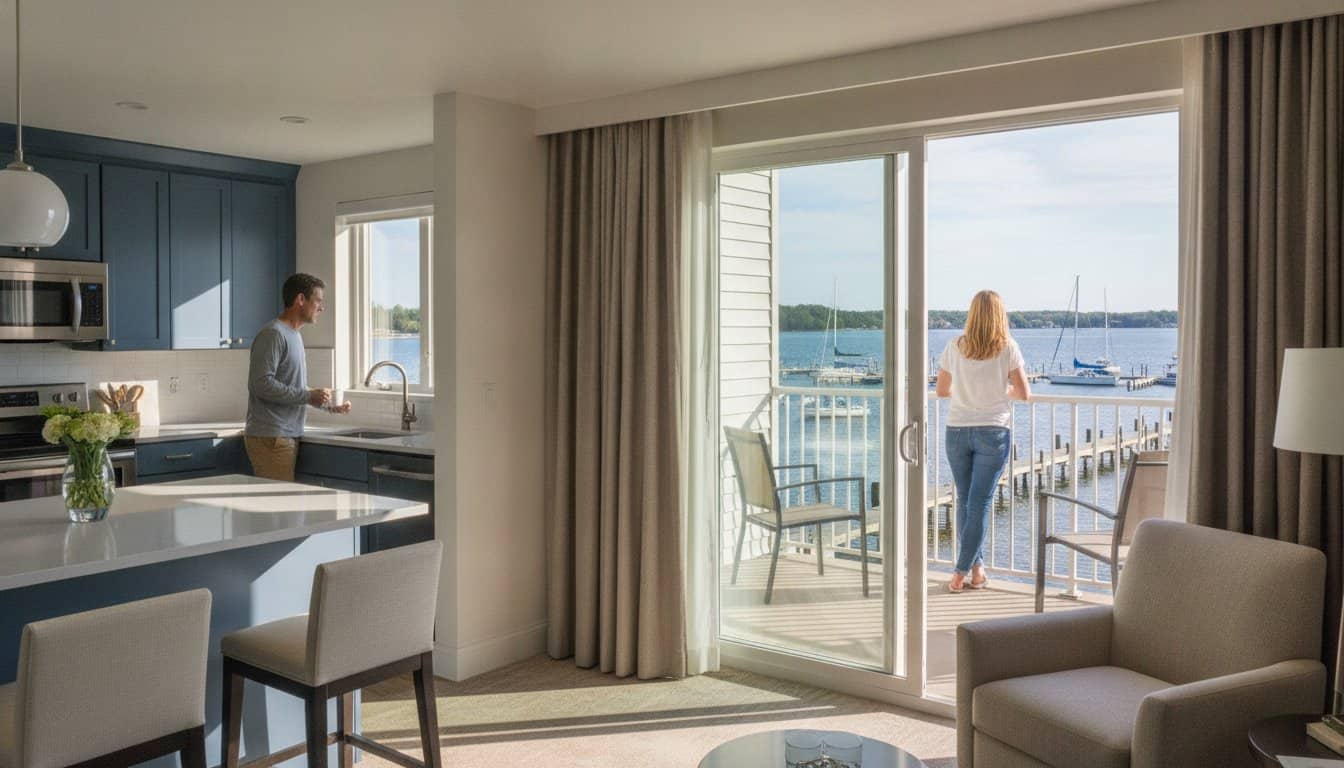
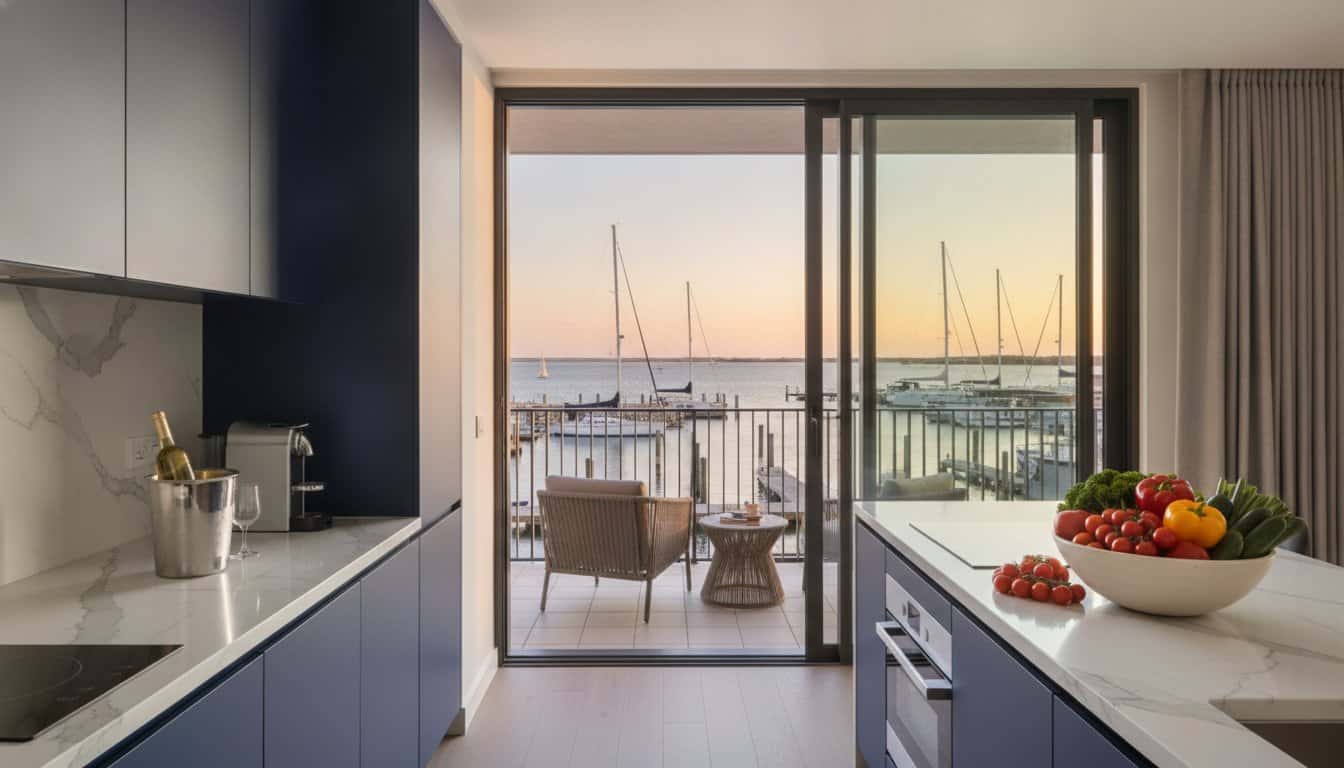
What if a hotel suite kitchen made your trip easier without turning it into a cooking vacation? A few simple meals can give you more flexibility, while leaving plenty of room for relaxed dinners out and unhurried days. This guide to using a full kitchen in a hotel suite covers what to plan, what to buy, and how to make the kitchen work around your stay.
It’s natural to wonder whether shopping and meal prep will take time away from your getaway. Keep the plan light: choose a few easy meals, buy groceries in useful quantities, and let your appetite and itinerary guide the rest. At Edgewater Inn, one- and two-bedroom suites feature fully equipped kitchens, giving you a comfortable, self-paced place to prepare meals between outings.
Use the tips below to choose straightforward dishes, make a focused shopping list, and balance in-suite meals with dining out. The goal isn’t to fill every evening with cooking. It’s to have the option when it suits you, then return to the other pleasures of your stay.
Key Takeaways
- Start with your guest count and likely meal schedule, then choose a few simple dishes before making a focused shopping list.
- Use the guide to using a full kitchen in a hotel suite to match meal plans to your suite’s details and the pace of your trip.
- Choose between cooking, assembling a simple meal, or dining out based on the time and effort you want to spend.
- Keep groceries organized around the storage options in your suite, and build a quick tidy-up into your kitchen routine.
- Edgewater Inn’s one- and two-bedroom suites feature fully equipped kitchens, offering a practical option for a stay shaped around your own rhythm.
How to Make a Full Kitchen in a Hotel Suite Work for Your Stay
A suite kitchen gives you another way to shape the day. Rather than planning every meal around restaurant hours or outings, you can prepare something simple when it fits your schedule: breakfast before heading out, a quick bite between activities, or a quiet meal after a full day. The best approach depends on your habits. You might use the kitchen mainly for breakfast and snacks, or plan to prepare several meals during your stay.
Having a kitchen doesn’t mean you need to cook everything from scratch. Treat it as one option alongside dining out and relaxing, not as the main event. The practical principle behind this guide to using a full kitchen in a hotel suite is simple: let the kitchen support your trip, rather than dictate it.
What does a full kitchen in a hotel suite help you do?
A suite kitchen can make it easier to fit meals around the parts of your stay you’re looking forward to. If the morning is reserved for an outing, breakfast in the suite lets you start at your own pace. If you return between plans, having a place to prepare a snack can make the pause more comfortable. If exploring dining options is part of your trip, you can use the kitchen less often, perhaps for breakfast or an occasional easy meal.
There’s no single routine to follow. Preparing food may suit one guest, while another would rather dine out most evenings. The benefit is having a choice, not an obligation to make every meal yourself.
Start with the selected suite’s kitchen details
Before planning meals, use the details for your selected suite as a guide to its kitchen setup. Suites are individually owned, so the published information for the suite you choose is the best reference for its appliances, cookware, and supplies. Build your menu around those details instead of assuming every kitchen has the same equipment.
Edgewater Inn’s one- and two-bedroom suites feature fully equipped kitchens, making them a practical option for stays with different meal routines. For broader context, an extended stay hotel is a lodging format associated with longer visits and, often, kitchen facilities. The label alone doesn’t tell you the exact setup of an individual suite, so use the details for your selected accommodation to guide what you plan to prepare.
Start by deciding what role you want the kitchen to play, then leave room for the rest of the trip. A modest plan might cover a couple of breakfasts and one meal in the suite, with other meals left open for dining out or changing plans. That balance keeps preparation manageable and lets the stay unfold naturally.
Plan Simple Suite-Kitchen Meals Before You Shop
A little planning can make grocery shopping purposeful instead of another vacation project. Start with the people traveling and the shape of the stay. Then choose a handful of easy meals and leave the rest of the schedule open. This guide to using a full kitchen in a hotel suite works best when your grocery list follows your plans, not the other way around.
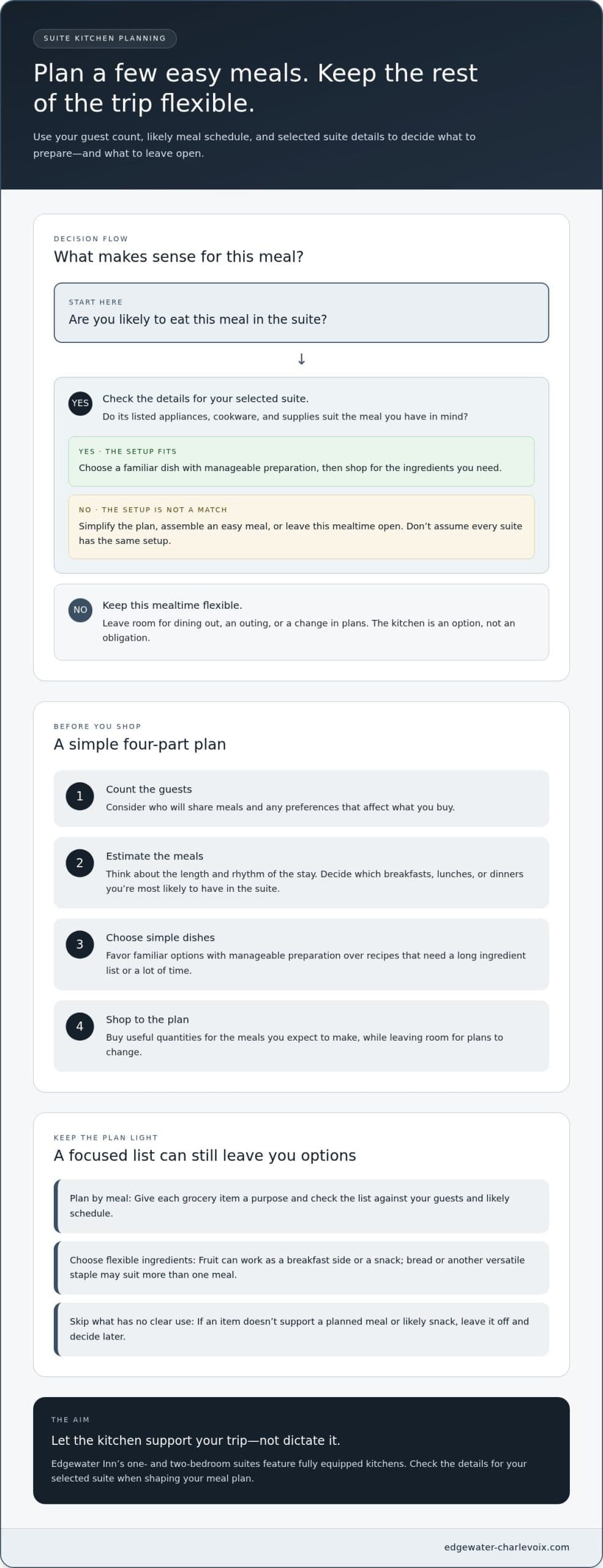
Use this short sequence before heading to the store:
- Count the guests. Think about who will share meals and any preferences that affect what you buy.
- Estimate the meals. Consider the length and rhythm of your stay, then decide which breakfasts, lunches, or dinners you’re most likely to have in the suite.
- Choose simple dishes. Favor familiar options with manageable preparation over recipes that require a long ingredient list or a lot of time.
- Shop to that plan. Buy useful quantities for the meals you expect to make, while leaving room for plans to change.
Choose meals that fit the pace of your trip
Pick a few anchor meals, not a full itinerary. A quick breakfast might suit a morning with an early start; an easy lunch can work between activities; and a relaxed dinner may feel right after a quieter day. Choose familiar foods and straightforward preparation so the meal fits around the trip. Keep other mealtimes flexible for an outing, a change in schedule, or dining out.
Ingredients that can carry over to another meal help keep your plan adaptable. Fruit, for example, could be a breakfast side or a snack. Bread or another versatile staple might work for more than one meal. Let the selected suite’s kitchen details guide your choices instead of assuming particular appliances or supplies are available.
Build a compact grocery plan
Organize your shopping list by meal so each item has a purpose. Note what you need for a planned breakfast, lunch, or dinner, then review the list against the number of guests, the length of the stay, and how often you realistically expect to prepare food. This helps you avoid buying ingredients for meals you may not have time or inclination to make.
Keep quantities proportionate, especially for ingredients that won’t be useful beyond one dish. A concise list can still allow variety when a few flexible items work across several meals. Before adding anything, ask whether it supports a planned meal or a likely snack. If not, leave it off and preserve the freedom to decide later.
Match grocery quantities to your stay and the meals you’ve planned. Use the suite accommodations page as a reference for the selected lodging details. A thoughtful, modest shop gives you a few convenient options without making cooking the center of the getaway.
Choose When to Cook in Your Suite and When to Dine Out
A comfortable meal plan leaves room for different kinds of moments. Some call for the ease of food prepared in the suite; others are more enjoyable as an outing. You can also choose a middle ground: assemble a simple meal with little preparation, then get on with your day. The best option depends on your schedule, appetite, and energy, not on a rule that every meal should be cooked or eaten out.
Use this quick comparison to decide what fits the moment:
- Cook in the suite: Choose this when you have time to prepare a straightforward meal and would enjoy a quieter pause between activities.
- Assemble something simple: This suits a light breakfast, snack, or uncomplicated meal when you want food without a longer cooking session.
- Dine out: Make a meal part of the itinerary when you’re celebrating, meeting others, or looking forward to dining beyond the suite.
Which meals are easiest to prepare in a suite?
Simple breakfasts, snacks, and uncomplicated meals are often easiest to adapt to a suite stay. Think in broad categories, such as a light morning meal or a no-fuss lunch, and choose ideas that match your appetite and available time. Keep recipe complexity in line with the equipment and supplies described for your selected suite, as well as your own preferences. Familiar choices can make preparation feel relaxed rather than like a project.
How can dining out fit a kitchen-based stay?
Save restaurant meals for the moments you want to savor: a celebratory evening, a social gathering, or a place that’s part of your plans. A meal in the suite can complement those outings, giving you another option when staying in better suits the day. To consider how dining might fit into your plans, browse the available dining options alongside your other activities.
There’s no need to decide on every meal in advance. You might start the day with something simple in the suite, then leave lunch open until you know how your plans unfold. After a full day out, choose between an easy meal where you’re staying and an evening out. Cooking isn’t automatically less costly or more convenient. The answer depends on what you prepare, how much effort it takes, and what you’d prefer to do with your time.
For a balanced approach, choose a few occasions when preparing or assembling food would genuinely help, and let the remaining meals follow your plans. That’s the heart of a guide to using a full kitchen in a hotel suite: let the kitchen add flexibility without setting the agenda. If this style of stay suits your plans, explore the available suites as you consider where you’d like to settle in.
Create an Easy Kitchen Routine for Storage, Cleanup, and Leftovers
A simple routine can keep meal preparation from spreading across the suite. Put groceries away soon after you arrive, group ingredients in a way that makes sense for your party, and take a few minutes to reset the kitchen after each meal. The aim isn’t a strict schedule. It’s to keep the space comfortable and ready for its next use.
Use this sequence as a light framework, adjusting it to the storage options and kitchen details for your selected suite:
- Unpack thoughtfully. Put groceries away soon after bringing them in, grouping items by planned use or by guest where that helps.
- Prepare only what you need. Keep the ingredients for the meal together and avoid spreading unrelated groceries across the work area.
- Put away leftovers with care. Follow the storage options available in the suite and keep remaining food easy for your party to identify.
- Reset after eating. Clear preparation surfaces and wash the items you used, leaving the kitchen ready for another meal.
Keep groceries and leftovers manageable
Buy quantities that fit the meals you’ve planned and the length of your stay. Smaller, purposeful amounts can be easier to organize than a collection of ingredients with no clear use. If several people are sharing the kitchen, grouping groceries by meal or labeling personal items can help everyone know what belongs to whom. Use the storage options described for your selected suite rather than assuming a particular refrigerator size, container, or other equipment.
Leftovers are easiest to manage when you have a likely use for them. Before saving food, consider whether someone in your group expects to eat it later. Keep remaining items organized according to the suite’s available storage, and avoid buying more groceries than your planned meals call for.
Make cleanup part of the meal plan
After cooking or assembling a meal, clear the preparation surfaces and wash the items you used. A brief reset can keep crumbs, dishes, and ingredients from accumulating, so the kitchen remains pleasant for the next person. If you’re traveling with others, agree on a simple shared routine, such as putting away groceries or washing the items used for a meal. Be considerate of the suite and follow any property guidance provided for your stay.
This kind of rhythm supports an easy, self-paced visit: meals fit into the day, and the kitchen doesn’t become a project of its own. As you plan the wider stay, the suite amenities can help you consider how the accommodation’s features fit alongside your plans. A practical guide to using a full kitchen in a hotel suite includes not just what to prepare, but how to keep the space comfortable between meals.
For a stay with room to settle into your own routine, explore the suite accommodations and plan your visit around the kitchen and other comforts that suit your needs.
Use Edgewater Inn’s Suite Kitchen to Shape a More Flexible Stay
At Edgewater Inn, one- and two-bedroom suites feature fully equipped kitchens, giving guests an in-suite option for meals as they shape their days. The kitchen can fit a quiet morning, a pause between plans, or an evening when you’d rather settle in. It doesn’t need to set the schedule. Let it serve the kind of visit you want, with time in the suite balanced by time spent enjoying the rest of your stay.
Match your meal routine to the kind of stay you want
For a short break, you might use the kitchen occasionally and keep most meals open to your plans. During a longer visit, you may find it useful to settle into a repeatable rhythm, such as preparing some meals in the suite while choosing others around the day’s activities. Neither approach calls for a fixed menu. Decide meal by meal, based on your energy, schedule, and preferences.
Other amenities can shape the day independently of the kitchen. Edgewater Inn also offers an indoor/outdoor pool and high-speed internet. Consider these features alongside your plans, separately from what you expect the kitchen to contain. A practical guide to using a full kitchen in a hotel suite is ultimately about making choices that feel comfortable for your own stay.
Plan around the suite you select
Because the suites are individually owned, use the published details for the particular one- or two-bedroom suite you select when planning meals. Kitchen contents, appliances, cookware, and supplies can vary. If a meal depends on a particular item, build your plan around what’s described for your suite; otherwise, keep the idea adaptable. This step helps you avoid packing or shopping for a routine that doesn’t fit your accommodation.
Keep the rest of the plan just as considered. Decide whether the kitchen will support a few meals or play a larger part in your stay, then leave room for outings, quiet time, and spontaneous changes. Keep the approach simple: prepare what suits the day, dine out when that feels right, and enjoy the suite without turning meal planning into a second itinerary.
Edgewater Inn’s suites bring a private residential feel together with professional management for short-term stays. Review the details for your selected suite before making plans around its kitchen. Explore Edgewater Inn accommodations and find the suite that fits the pace of your visit.
Let Your Stay Find Its Own Rhythm
Before you travel, picture the kind of pace you want: mornings with room to linger, days that unfold beyond the suite, and evenings that can be planned or left open. Let that picture guide how much you prepare. A light plan gives you options without making meals another item on your itinerary, and it can change naturally as your days do.
That’s the spirit of a guide to using a full kitchen in a hotel suite: make space for convenience, but leave the best parts of a getaway unhurried. Choose an accommodation that feels right for your plans, then let the details of your stay come together one decision at a time.
Explore Edgewater Inn’s suite accommodations and start shaping a visit that feels comfortable and flexible, with room for easy moments in the suite and experiences beyond it.
Frequently Asked Questions
Can I cook every meal in a hotel suite kitchen?
Yes, if that suits your plans and the selected suite’s kitchen details support the meals you have in mind, but there’s no need to cook every meal. You might prepare breakfast before a full day out, then decide later whether to eat in or make dining part of the evening. Keep your routine flexible, especially if your schedule or appetite changes during the stay.
What should I bring to use a hotel suite kitchen?
Bring only what you’ll use, guided by the details for your selected suite and the meals you expect to prepare. If you rely on a particular ingredient or dietary staple, consider packing that item rather than a collection of kitchen tools. A guide to using a full kitchen in a hotel suite starts with adapting your plans to the described setup, not assuming it matches your kitchen at home.
How much food should I buy for a hotel suite stay?
Buy according to the number of guests, the length of the stay, and how many meals you genuinely expect to prepare. If your plans include a shared breakfast and one simple meal, shop for those occasions rather than a full menu for every day. Choose ingredients that can serve more than one purpose, while leaving some meals open for outings or schedule changes.
Is a hotel suite kitchen the same as a home kitchen?
Not necessarily. Kitchen facilities vary between accommodations, so the details for your selected suite are a better planning reference than your home setup. Before choosing a recipe, consider whether it depends on particular equipment or supplies. If it does, pick a simpler alternative unless those details are described for your suite. This keeps meal plans realistic and avoids packing or shopping based on assumptions.
Can I save money by cooking in a hotel suite?
You may find that preparing some meals suits your budget, but savings aren’t automatic. They depend on what you buy, how often you eat out, and whether groceries get used. Buying ingredients for a meal you’re likely to prepare is different from stocking up for dishes that may not fit your schedule. Treat the kitchen as an option, then choose each meal based on convenience and preference.
What should I do with leftover food in a hotel suite?
Keep leftovers only if you can store them appropriately using the options available in your selected suite. If you expect to eat them later, set them aside so your travel party can identify them, and consider them before buying ingredients for another meal. If suitable storage isn’t part of the described setup, choose a smaller portion or a meal that won’t leave food to manage afterward.