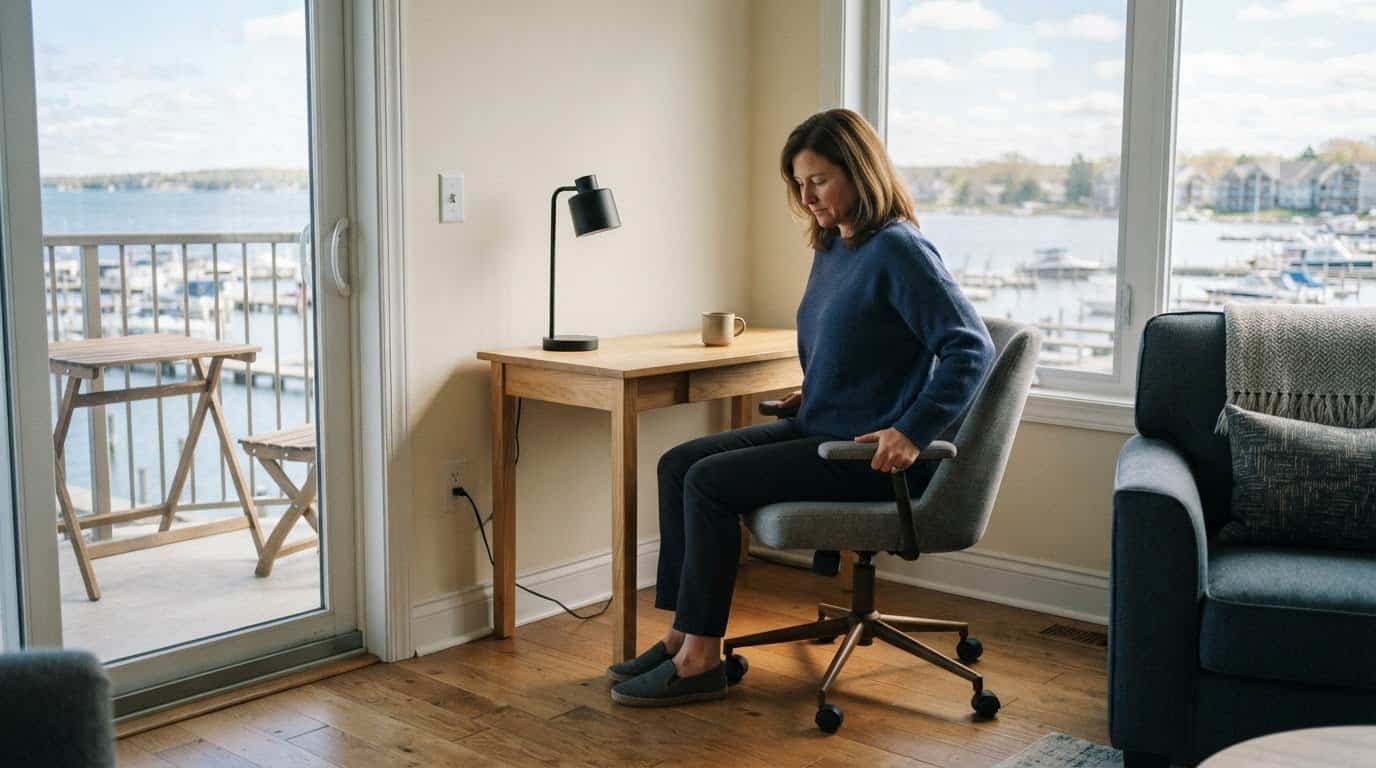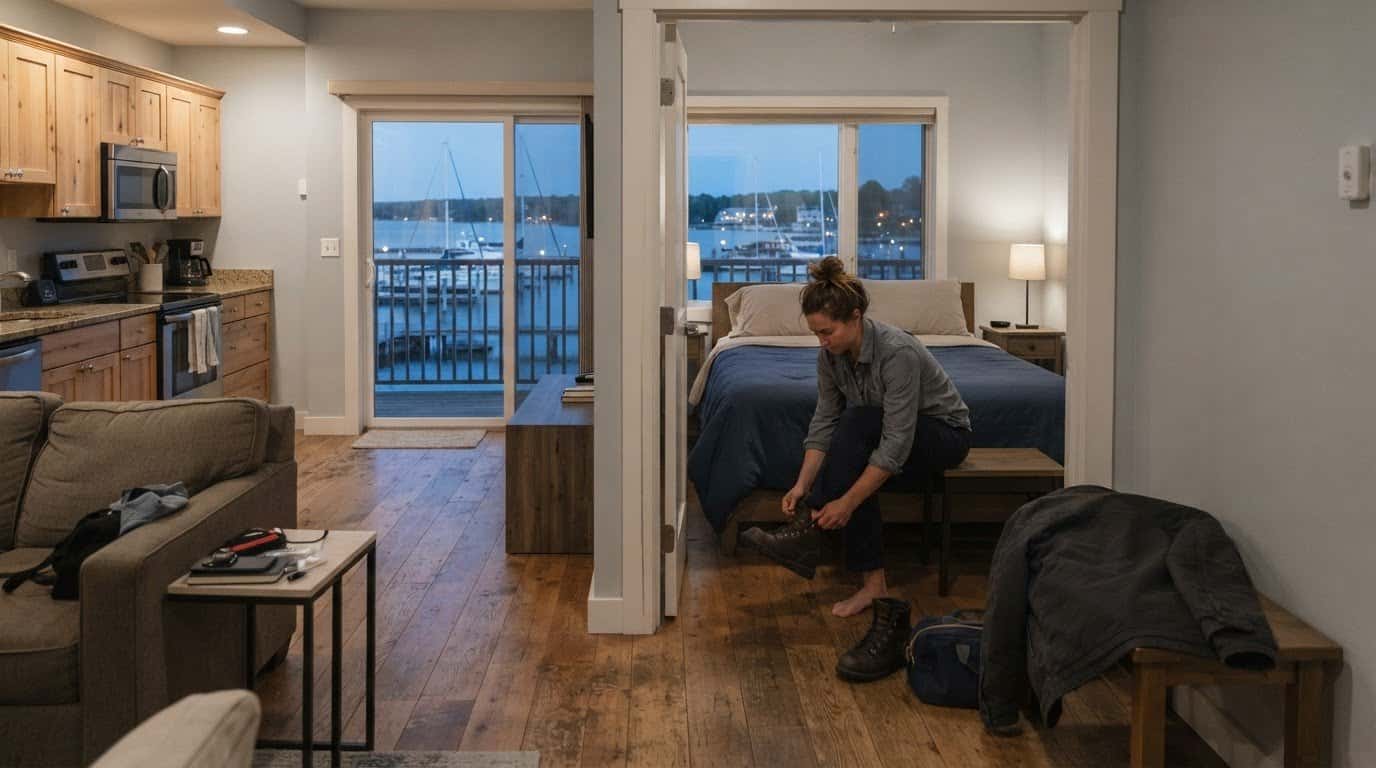
A well-appointed room can still be the wrong base for a work trip. The business travel amenities to look for depend on your schedule: flexible arrival arrangements can help with a late landing, while a suitable workspace, meeting facilities, and convenient transportation can keep the day on track.
It’s easy to focus on the room, but practical details beyond its door matter too. Amenities vary by property and the kind of stay it supports, so a feature that suits one trip may not be useful for another.
Before choosing, consider when you can check in and out, where you can work or meet, and how you’ll get to your destinations. This guide covers how to assess those details, including meeting spaces, connectivity, location, parking, and transit, so you can choose a stay that supports productive days and easier downtime.
Key Takeaways
- Choose fitness, breakfast, and dining features around your daily routine and the length of your stay.
- Match check-in and checkout options to your travel schedule to make arrival and departure smoother.
- Assess meeting spaces and audiovisual support based on whether you need a quiet place to collaborate or meet with clients.
- Map your work destinations before booking, then weigh nearby transit, parking, and airport or train-station access.
1. What are hotel amenities and why do they vary so much?
Hotel amenities are features, facilities, or services that shape a stay. They may be in-room, such as coffee or a desk; available across the property, such as parking or a fitness center; or service-based, such as room service. Offerings vary with the property, the length of a stay, and guests’ routines. A traveler driving to a client meeting may value parking, while someone flying in may prioritize airport access.
For fitness, compare the facilities with the routine you want to maintain. One hotel may have a fitness center, pool, spa, sauna, or massage services; another may offer in-room workout equipment. Breakfast can range from a sit-down meal to a quick takeaway. Dining and room service may save time when meetings leave little opportunity to go out. Check what’s available and where, rather than assuming every property offers the same features.
For video calls and business work, look for stable Wi-Fi that can handle your tasks. A guideline in the provided market facts is about 4–6 Mbps per connection for smooth video calls and streaming. Coverage in the guest room matters, as does connectivity in meeting rooms and shared spaces.
Do hotels offer business centers, meeting rooms, printing, and scanning? Some provide business centers, conference rooms, and services such as printing, copying, or faxing. Meeting-room audiovisual equipment can support presentations, while a private room offers a quieter setting for client conversations.
For frequent travelers, loyalty programs may let members use accumulated points for services or extended stays. The value depends on how often you travel and whether the rewards suit your work schedule.
To assess advertised amenities, compare the hotel’s current amenity details with recent guest reviews, paying attention to comments about Wi-Fi, meeting spaces, or fitness facilities. A property’s waterfront stay amenities can also illustrate how room comforts and shared facilities differ.
2. Flexible check-in and checkout
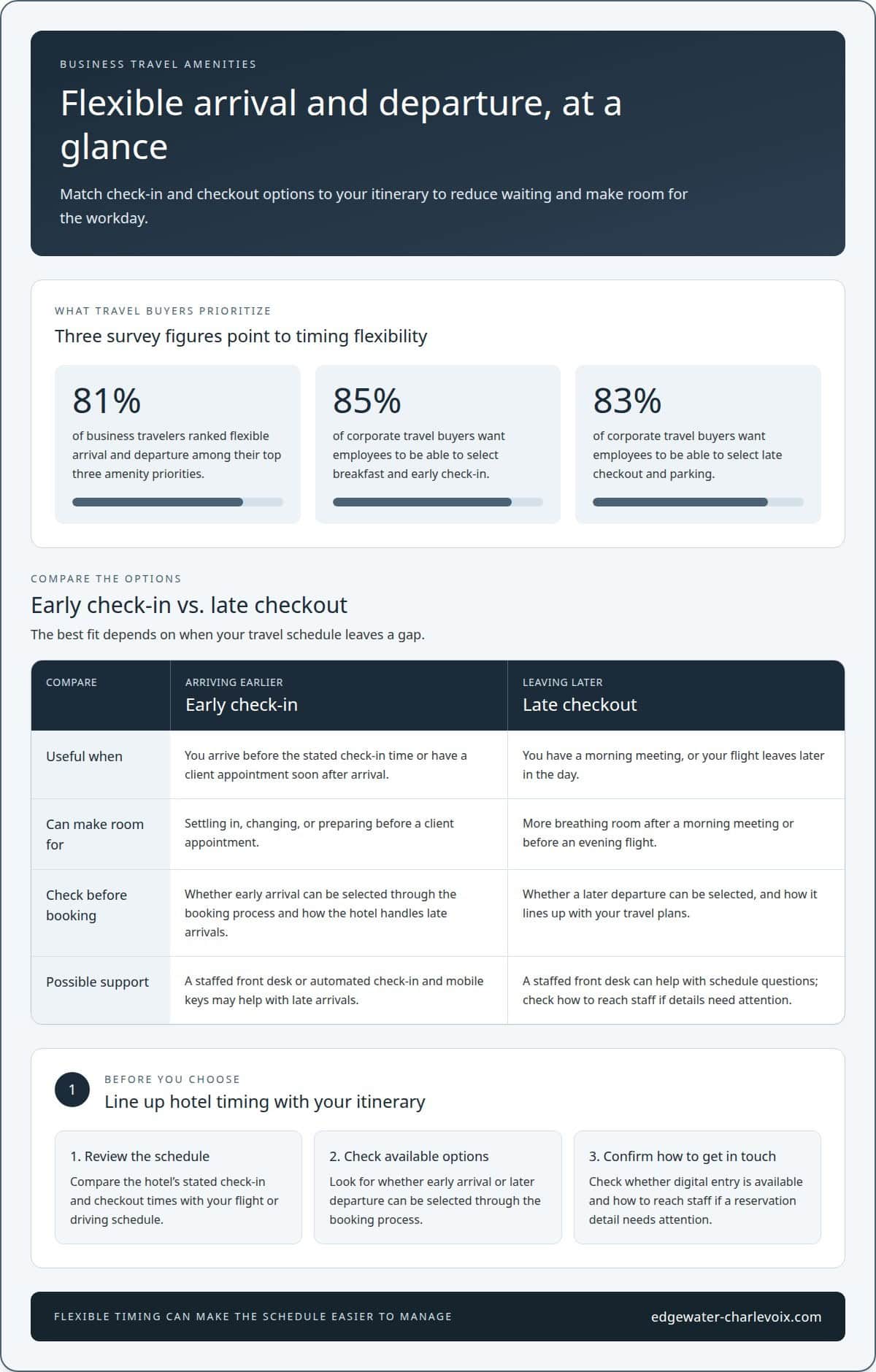
A flight delay or early arrival can make fixed hotel hours inconvenient. Flexible check-in and checkout help align the stay with a work itinerary, reducing stress between an airport transfer, conference, and first meeting. In one survey, 81% of business travelers ranked flexible arrival and departure among their top three amenity priorities. The practical benefit is simple: less waiting around an unfamiliar lobby with luggage.
Early check-in can give travelers time to settle in, change, or prepare before a client appointment. Late checkout can create breathing room after a morning meeting or before an evening flight. Corporate travel buyers also value booking-tool options: 85% want employees to be able to select breakfast and early check-in, while 83% want late checkout and parking. Those preferences show why clear arrival and departure details matter alongside a complimentary breakfast or nearby restaurant.
Concierge assistance and a staffed front desk can help guests make the most of their schedule, from arranging local transportation to finding a quiet place for a private call. Some hotels serving business travelers provide a 24-hour front desk, while others use automated check-in and checkout, mobile keys, or voice assistants. These tools can simplify late arrivals, but travelers still benefit from knowing how to reach staff if a reservation detail needs attention.
For a smooth arrival, review the stated check-in and checkout times alongside your flight or driving schedule. Look for whether early arrival or a later departure can be selected through the booking process, and whether digital entry is available. A fitness center visit or an unhurried breakfast may fit more naturally when timing is flexible. For a work trip that also calls for a more restful setting, consider a waterfront stay between meetings, where the pace can soften once the day’s commitments are complete.
3. Meeting rooms and audiovisual technology
A hotel meeting room can make a packed workday easier to manage. Among the business travel amenities to look for, a flexible conference space can support team collaboration, while a private room suits a client discussion or confidential call. Start with the meeting format: presentations, video conferences, and working sessions each call for a different setup, from a screen-facing table to seating that encourages conversation.
Before relying on audiovisual equipment, identify what the meeting requires. A slide presentation needs a display and a way to connect a laptop; a hybrid call needs reliable internet, clear audio, and a camera view that captures participants. Outlets near the table help keep laptops powered. Checking these details ahead of time can prevent a last-minute search for adapters or a scramble to rearrange the room.
Privacy matters as much as equipment. A soundproof phone booth in a hotel lobby can offer a quieter spot for a one-to-one call, while a reserved meeting room gives a group space away from lobby activity. For an interview, a private room can make it easier to hear each speaker and keep the conversation focused.
When you don’t need a conference room, a well-lit desk can serve as a compact meeting station for a video call. Position the laptop near an outlet, use a stable internet connection, and choose a background away from foot traffic. A shared lounge may suit informal planning, but it’s less appropriate for confidential discussions or calls where background noise could interrupt.
The business travel amenities to look for should match the agenda. For a team workshop, arrange seats so everyone can see the display; for a client presentation, test the screen and audio before guests arrive. If a meeting room is central to the trip, consider its location and the route from the entrance or nearby station. Preparation keeps attention on the work rather than the equipment.
4. Business traveler location and transportation
For a business trip, a convenient address can save more time than an extra hotel amenity. Map the meeting venue, airport or train station, and likely dinner location before booking. A hotel within a 10 to 15 minute search radius of your main destination is a practical starting filter. Then compare actual routes, since traffic, transit connections, and meeting times can change the daily journey.
Transportation needs depend on how you arrive and get around. Drivers can prioritize convenient parking and well-lit areas; travelers without a car may prefer public transit, taxis, or a hotel shuttle. If a shuttle is available, check its route and operating details. A ride serving the airport but not your evening destination may not solve your main transportation challenge.
Location also shapes time between commitments. A hotel near a conference venue can make an early start easier, while nearby dining can simplify a short break or late dinner. Consider neighborhood safety and the route from the hotel entrance to parking or transit, especially when returning after meetings. Hotel amenities support the stay, but they can’t compensate for a long or inconvenient commute.
What should business travelers check about cancellation policies, receipts, and corporate billing? Review cancellation deadlines and whether terms allow free cancellation up to 24 hours before arrival. For expense reporting, confirm that the booking and payment process provides an itemized receipt, and check whether corporate billing fits your company’s arrangements. Keep the reservation details and final receipt together for straightforward expense documentation.
Before finalizing accommodations, compare the route to your most important work location with the route to your arrival point. Loyalty programs may offer accumulated-point rewards, but weigh those against daily travel time and access to transit. For a work visit with room to unwind by the water, plan a waterfront stay.
Edgewater Inn
Edgewater Inn offers a waterfront setting for work trips where comfortable accommodations and room to unwind matter. Its One Bedroom Suites and Two Bedroom Suites include fully equipped kitchens and private balconies with water views, creating a residential feel. The suites can suit solo travelers or colleagues sharing a trip, especially when a quiet evening between meetings matters as much as the day’s schedule.
With high-speed internet, an indoor/outdoor pool, and convenient access to dining, shopping, and beaches, Edgewater Inn pairs practical comforts with a harbor setting. Choose a suite-style stay when it fits your plans; the property also offers Wedding Venue Packages for wedding gatherings. Contact Edgewater Inn to discuss your stay.
Make Your Next Work Stay Feel More Considered
Before your next business trip, turn your priorities into a simple itinerary: note where work takes you, how you’ll get there, and what will help you rest between commitments. Choosing the business travel amenities to look for is easier when each feature meets a real need in your schedule, rather than simply adding to a checklist. This approach can also help you decide whether a quieter, more residential-feeling stay suits your plans better than a conventional overnight stop.
For a work visit, Edgewater Inn offers a waterfront setting where professional days can give way to calm evenings by the harbor. Its accommodations provide a welcoming base for travelers seeking a change of pace. Let your itinerary guide your choice, then consider how you’d like to spend the hours outside meetings.
Contact Edgewater Inn to take the next step toward a stay that fits your plans.
Frequently Asked Questions
What are hotel amenities and why do they vary so much?
Hotel amenities are features, facilities, and services that shape a guest’s stay. They vary by property style, room type, and intended guests. An extended-stay property, for example, may emphasize a kitchen, while a city hotel may focus on shared work areas. Compare what’s in the specific room with facilities elsewhere on the property, since the two may differ.
What amenities are most important for business travelers in a hotel?
The most useful features depend on your work itinerary. A traveler meeting clients may prioritize a private place to talk, while someone moving between appointments may value transit access and convenient meals. Identify the unmet needs most likely to interrupt your workday, then prioritize them. If you have evening calls, for example, a quiet room may matter more than extensive leisure facilities.
Which hotel amenities support remote work, such as a desk, ergonomic chair, and reliable Wi-Fi?
A practical room workspace combines a stable internet connection with a desk, comfortable chair, good lighting, and accessible power outlets. Each element matters: a desk without a supportive seat may be uncomfortable for longer tasks, and an outlet nearby helps keep devices powered during calls. For back-to-back video meetings, a quiet room and a clear place to position your laptop can also help.
What transportation amenities matter for business travel, including airport shuttles and parking?
Prioritize transportation that fits your arrival and daily schedule. Drivers may need convenient parking, while travelers without a car may rely on transit, taxis, or an airport shuttle. Check whether the hotel’s options serve the places you’ll visit, not just the airport. For an early meeting, map the route at that time of day and allow for transfers or walking.
Which hotel amenities help business travelers save time, such as mobile check-in and room service?
Mobile check-in can reduce front-desk steps, while room service may simplify meals during a packed schedule. Other potential time-savers include self-service checkout, laundry facilities, and convenient access to meeting spaces. Their value depends on your itinerary: room service may help after a late meeting, while a quick checkout option can make an early departure easier.
Are breakfast, laundry, and fitness facilities included or charged extra at business hotels?
What’s included varies by hotel and booking terms. Breakfast may be part of the rate or offered separately; laundry may be self-service or handled through a paid service; and fitness access depends on the property’s facilities. Review the reservation details instead of assuming an item is included. This helps you plan meals, clothing care, and exercise without surprises during your stay.