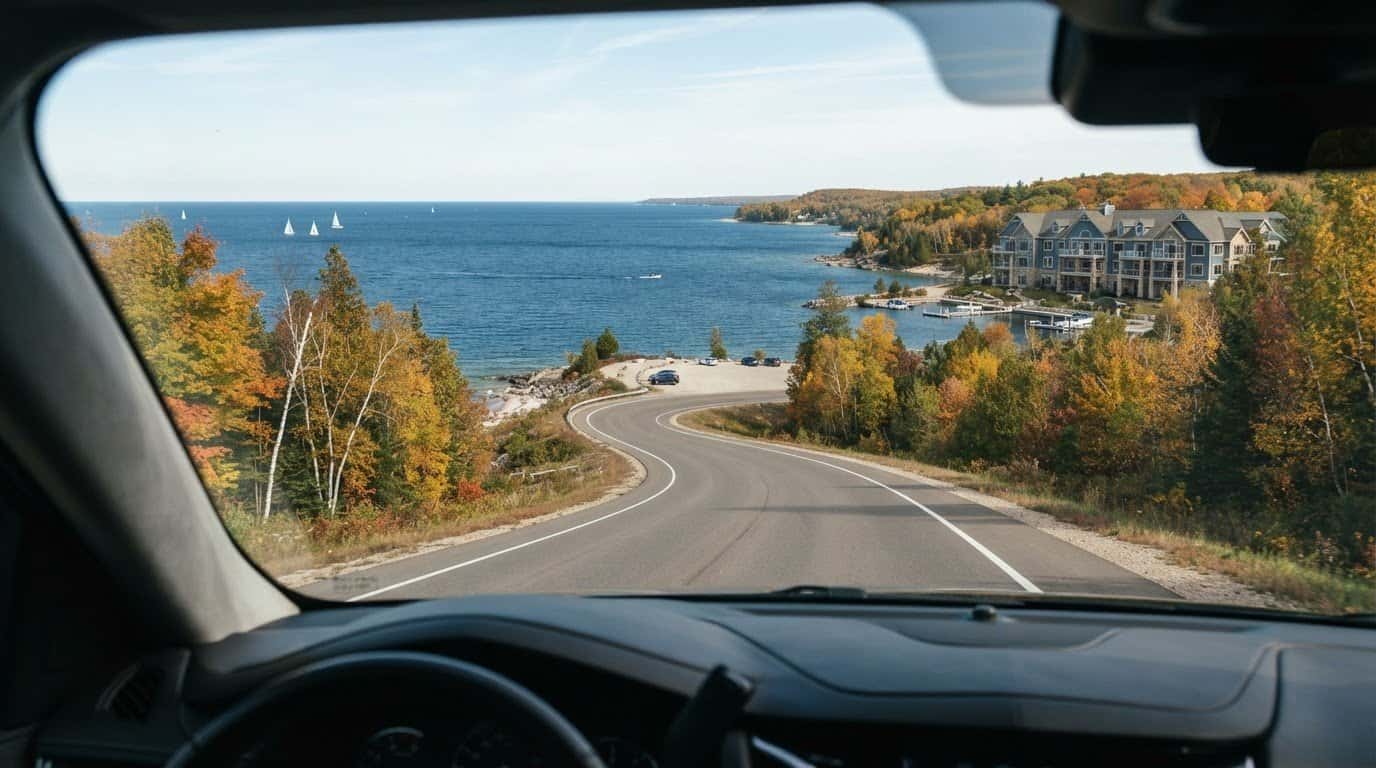
If you’re planning scenic drives, start by choosing the kind of outing you want: open views, a quiet stretch beneath the trees, or time for a few leisurely stops. The prettiest road isn’t always the best fit for your available time or preferred pace.
Before you set out, consider how long you want to be on the road, which stops appeal to you, and whether the forecast or seasonal access could affect your plans. A memorable getaway doesn’t depend on fitting in every viewpoint. It comes from choosing a comfortable pace and leaving room to enjoy the journey.
This guide will help you compare scenic drives by available time, landscape, road style, and stop options. You’ll also find practical ways to estimate the full outing, check conditions, and prepare before departure. With a little planning, the drive can feel like part of the retreat, not simply the way to get there.
Key Takeaways
- Choose a drive by the scenery you want, the road style you enjoy, and the time available, rather than relying on a single “best” route.
- Compare options using current, verifiable details: road names, driving estimates, stop choices, access, and conditions.
- Before departure, check the forecast and official road updates, then map your stops and prepare for the day.
- Allow extra time for slower roads and unplanned pauses so the outing feels relaxed instead of rushed.
- For a longer getaway, consider an overnight stay. Edgewater Inn offers one- and two-bedroom suites with fully equipped kitchens and private balconies with water views.
How to Choose a Scenic Drive That Fits Your Day
A memorable drive is shaped by more than the view. For scenic drives near Charlevoix MI, balance the scenery you want with a comfortable pace and the time you have. Instead of searching for one “best” route, compare options by experience: tree-lined roads, open-water views, changing landscapes, or places to pause along the way.
Use the same checklist for each route you’re considering: what the roadside scenery offers, what kind of road you’ll travel, where you could take a break, and how long the drive takes on a current map. Then add the time needed for your planned stops. This makes it easier to compare options using useful details rather than unsupported rankings or a drive-time estimate that assumes you stay in the car.
Match the drive to your available time
For a short outing, look for a verified route with a clear turn-around point and a stop or two that won’t make the schedule feel tight. A half-day drive can leave room for a scenic pause, a meal, and a slower stretch of road. A longer day trip may suit a route with several planned stops or changing scenery. Check a current map before settling on mileage or a driving-time estimate.
Allow time for photographs, meals, rest stops, and unexpected delays. Narrow roads and frequent places to pull over can make a drive feel slower than the map estimate suggests. Check the route in a current mapping tool, then add time for the breaks you actually want. If your schedule has no room for a longer stop or a detour, choose a simpler route or plan fewer stops.
Choose the scenery and pace you want
A scenic drive is a journey chosen for the experience along the road, not simply the fastest way to reach a destination. Decide whether you’d rather enjoy a steady stretch of open views, a shaded road beneath trees, or a route where stops and changing landscapes shape the day. Confirm each feature using reliable, current route information rather than assuming every road offers the same kind of view.
For example, M-119 is associated with the Tunnel of Trees Scenic Heritage Route. Route background can help set expectations, but current access matters too: as of September 2026, washout-related closures and detours mean the full route cannot be driven uninterrupted. Check official road updates shortly before departure, and verify that any planned stops remain accessible.
Finally, consider how you prefer to travel. A slower road may suit a day built around the landscape, while a more direct route may leave more time for a longer stop. Choose the experience first, then confirm the road, stops, and travel time on current maps.
Scenic Drive Experiences to Look For on a Michigan Getaway
Rather than treating scenic routes as a ranked list, think about the kind of outing you’d enjoy: a water-view drive with verified places to pause, a wooded stretch at an easy pace, or a longer journey that combines different landscapes and stops. The experience depends on the specific road and current access, so confirm route details before setting out.
Lakeside and water-view driving
A shoreline road may offer glimpses of open water, but don’t assume the view is continuous or that every pull-off is open to the public. Before choosing a route, check reliable maps and official information for named roads, public access points, and safe, legal places to stop. Shoreline access can vary along a drive, so plan around viewpoints you’ve verified rather than hoping to find a suitable stop along the way.
Wooded roads and slower backroad outings
Tree-lined roads invite a gentler pace, with the landscape unfolding gradually through turns and shaded stretches. M-119, known as the Tunnel of Trees, is one example, but its current access needs attention: as of September 2026, washout-related closures and detours prevent an uninterrupted drive along the full route. Check current road updates and maps before committing. Slower roads make the journey feel like the destination, while more direct routes can leave extra time for stops.
Road surface, curves, seasonal access, and places to pull over can vary. Verify each detail using current official road information and mapping, especially for narrow or less-traveled roads. The Michigan Department of Transportation explains how routes receive recognition through the Pure Michigan Byways program. Don’t assume a road has an official designation unless it’s confirmed there.
Use this comparison as a planning guide, not as a claim about any specific road. Fill in route names, access, and driving time only after checking current sources.
| Experience | Scenery | Pace | Best outing fit | Stop ideas to verify |
|---|---|---|---|---|
| Water-view drive | Shoreline glimpses, where confirmed | Flexible, depending on access points | Short outing or half day | Public viewpoints or established parking areas |
| Wooded road | Tree-lined stretches, where confirmed | Often suited to an unhurried drive | Short outing or half day | Verified pull-offs and nearby public sites |
| Changing-landscape route | A mix of scenery, confirmed by maps | Varies with road type and stops | Half day or longer | Meal breaks, viewpoints, and accessible stops |
How to Compare Scenic Drives Before You Set Out
A useful comparison doesn’t need a “best route” ranking. It needs dependable details and a clear sense of what you want from the day. For each option, note the scenery described by a reliable source, the road type, expected pace, possible stops, and any access limitations. Separate confirmed facts, such as a posted closure, from personal preferences, such as whether you enjoy winding roads or frequent photo breaks.
Compare route length, road conditions, and stops
Use a current mapping tool to check distance and estimated driving time, and remember that the estimate usually covers travel between points, not a meal, a walk, or a photography stop. Check official transportation updates for construction and closures. For a park, viewpoint, or other planned stop, verify access with the agency responsible for that site.
Make a practical checklist before choosing:
- Route: Confirm road names, distance, and driving time on a current map.
- Conditions: Check for construction, seasonal closures, and detours through reliable, up-to-date sources.
- Stops and services: Verify whether food, fuel, restrooms, viewpoints, and parking are available. Don’t assume a service is open or a viewpoint is publicly accessible just because it appears on a map.
- Designation: If official scenic status matters to you, confirm it rather than relying on a route’s nickname. The federal National Scenic Byways in Michigan listing is a reference for nationally designated routes.
Conditions can change after you plan. Recheck road updates and access information shortly before departure, especially if your route depends on a narrow road, a seasonal facility, or a particular stopping point.
Find the right balance between driving and exploring
A route can look manageable on a map and still feel full once you add stops. Choose a few places you genuinely want to experience instead of trying to visit every point of interest. A meal break takes longer than a quick roadside pause, while a photo stop may invite you to linger if the view is especially lovely.
For warm-weather outings, consider what kinds of outdoor pauses suit your plans, then confirm access and conditions before leaving. The property’s summer activity ideas can help inspire possibilities beyond the drive itself. Keep some unscheduled time in the day so you can enjoy a stop without turning the outing into a race.
The strongest comparison is both factual and personal: verify the road and its services, then choose the pace and scenery that feel right for you.
Plan a Scenic Drive Around Season, Weather, and Comfort
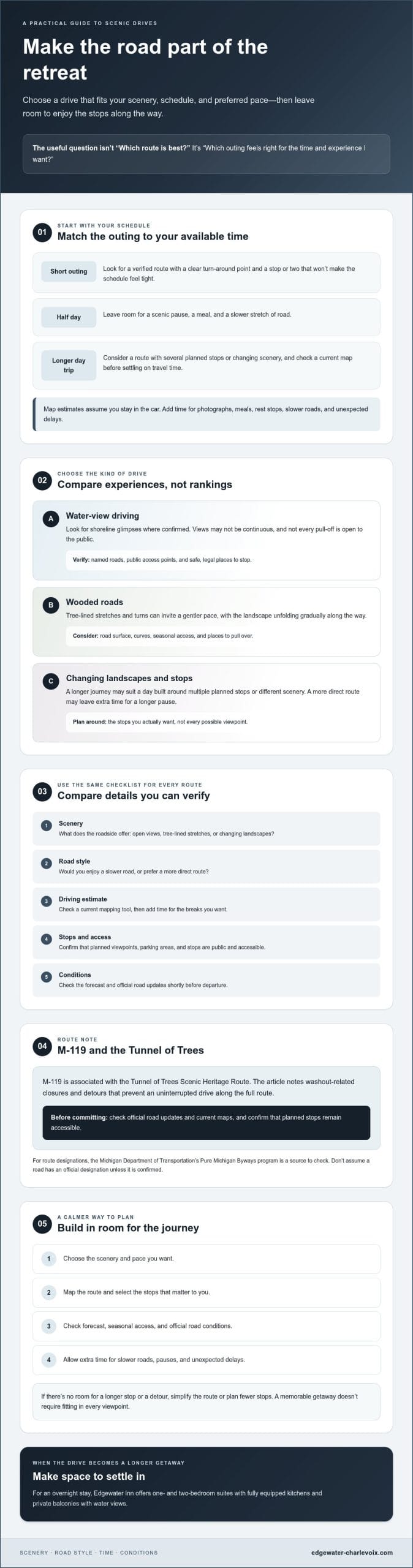
A little preparation helps preserve the unhurried feeling of a scenic outing. Start by choosing the kind of drive you want, then check the forecast and current road information, map a few stops, and gather essentials. Daylight, weather, and seasonal access can all affect how a route feels, so treat old trip reports and saved directions as a starting point, not confirmation.
Check conditions before leaving
Shortly before departure, review the forecast and official road-condition updates from the relevant transportation agency. Look for construction notices, closures, detours, and access changes affecting planned viewpoints or stops. Confirm seasonal operating details directly with the organization responsible for a park or facility. Don’t assume a road, restroom, or public access point is available year-round.
Prepare your navigation before setting out. Save the route and key stops for offline use if your map app allows it, or keep directions accessible another way in case mobile coverage is limited. Check the route again if conditions change. A detour or closed stop may call for a different plan, not a rushed attempt to make up time.
Make the outing comfortable and unhurried
Pack for the forecast and the activities you have in mind. Water, suitable layers, and charging supplies can make a long stretch more comfortable, while planned rest breaks help keep the day from feeling overfull. In cold weather, bring clothing appropriate to the conditions and check whether planned stops remain accessible. For ideas to shape a cold-season getaway, browse these winter travel activities.
Use this quick checklist before you leave:
- Choose: Select an outing that fits your available daylight and preferred pace.
- Check: Review the forecast, official road updates, closures, construction, and stop access.
- Map: Confirm the route and save directions, including a backup option if practical.
- Prepare: Bring water, suitable clothing, charging supplies, and anything needed for planned breaks.
- Adapt: Be ready to shorten or change the outing if weather or road conditions shift.
This checklist is general trip-planning guidance. Route-specific details, including road conditions and seasonal access, need fresh verification before each drive. If you’d like more time to rest between outings, explore suite options for your stay.
Turn a Scenic Drive Into a Relaxing Getaway
A longer outing can feel more rewarding when you’re not trying to fit every mile, meal, and viewpoint into one day. Weigh the mapped drive time alongside your planned stops and the amount of rest you want. If the schedule looks crowded, an overnight stay can give the route room to unfold at an easier pace.
Decide whether your drive needs an overnight stay
Consider staying overnight if the drive includes several stops, a long stretch behind the wheel, or a return journey that would leave little time to unwind. A shorter outing may fit comfortably into one day, but confirm the current route time and account for breaks before deciding. The goal isn’t to add more stops. It’s to enjoy the ones you choose without watching the clock.
Edgewater Inn offers one- and two-bedroom suites with fully equipped kitchens and private balconies with water views. A kitchen can support a flexible meal plan, while a private suite gives you space to settle in between outings. For details, explore these condominium-style vacation suites.
Keep the trip relaxed from arrival to departure
Leave open space in the itinerary for a slower meal, a longer-than-expected photo stop, or a change in conditions. Confirm your lodging details and planned stops before departure, then let the day’s pace adjust as needed. Edgewater Inn’s indoor/outdoor pool and high-speed internet are among the amenities available to add comfort to time spent back at your suite.
A restful getaway isn’t measured by how many places you reach. It’s the pleasure of having time to take in the view, pause when you wish, and return without feeling rushed. To consider a suite as a base for your getaway, explore Edgewater Inn suite options.
Make Room for a More Relaxed Getaway
The most rewarding scenic drive is one that matches your interests, available time, and preferred pace. Compare the scenery and road style, check current maps and conditions, and plan only the stops you can enjoy without rushing. If the route and breaks make a same-day return feel too full, an overnight stay can give the journey more breathing room.
For a comfortable place to unwind between outings, Edgewater Inn offers one- and two-bedroom condominium suites with fully equipped kitchens, private balconies with water views, and an indoor/outdoor pool. Whether you’re planning a leisurely drive or a longer escape, thoughtful preparation leaves more time to enjoy the moments along the way. Explore Edgewater Inn suite options for your next getaway, and start shaping a trip at a pace that feels right for you.
Frequently Asked Questions
How do I choose a scenic drive for a short outing?
Choose a route with a clear turn-around point and only a few stops that fit your available time. Check a current map for the estimated drive, then allow extra time for parking, photos, a short walk, or a break. If you’re unsure how long a stop will take, plan fewer rather than more. A simple itinerary leaves room to enjoy the scenery without hurrying back.
What should I check before starting a scenic drive?
Check the forecast, current road conditions, closures, construction, and access to any places where you plan to stop. Confirm details with official transportation sources and the agencies responsible for parks or viewpoints. Review your route in a current map, and save directions in case mobile coverage is limited. Conditions and access can change, so check again shortly before departure rather than relying only on older travel advice.
Are scenic drives enjoyable in every season?
They can be, but each season may change the views, daylight, road conditions, and availability of stops. Before choosing a route, check the forecast and confirm whether roads and planned destinations are accessible on your travel date. In colder or unsettled weather, allow more flexibility and be prepared to change plans. Don’t assume a road or facility stays open throughout the year unless current official information confirms it.
How can I estimate the time a scenic drive will take?
Use a current mapping tool to check the route’s distance and estimated driving time, then add time for the stops you expect to make. Include meals, rest breaks, parking, short walks, and photo opportunities. The map estimate is a starting point, not a full itinerary, and detours or slower roads can affect the day. Recheck the route before leaving so your plan reflects current conditions.
What should I bring on a scenic drive?
Pack drinking water, clothing suited to the forecast, a phone charging option, and any personal items needed for planned breaks or walks. Keep your route and important stop information accessible, with directions prepared in case mobile service is limited. If the weather may change, bring an extra layer and leave room to adjust your plans. Choose supplies based on the trip length, expected conditions, and travelers’ needs.
Can I plan scenic drives with children or older travelers?
Yes. Choose a route and stops that suit everyone’s comfort, mobility, and preferred pace. Check walking distances, surfaces, seating, restroom access, and parking before committing to a stop, and plan regular opportunities to rest. Keep the itinerary flexible so you can shorten the outing if needed. Confirm accessibility details with the organization responsible for each destination, since facilities and paths can vary.
How do I find safe places to stop along a scenic route?
Identify designated parking areas, public viewpoints, or established pull-offs using current maps and reliable information from the relevant transportation or site-management agency. Confirm that each location is open and accessible, and don’t assume a spot beside the road is suitable for stopping. Plan breaks in advance, especially on less-traveled routes where services or places to pause may be limited. Recheck access shortly before departure.