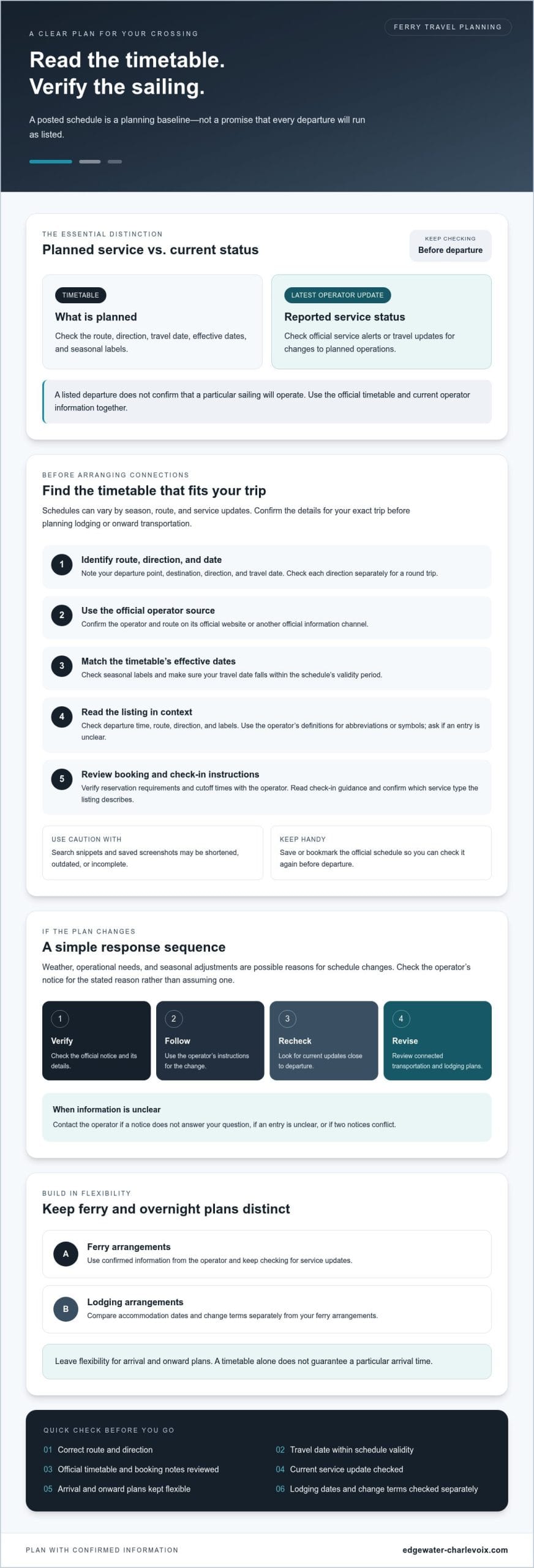
A posted ferry timetable is a planning baseline, not a promise that every departure will run as listed. If you are comparing hotels near the ferry dock to stay at Edgewater Inn, start by checking the ferry operator’s official schedule for your travel date, then look for current service updates before you make connected plans.
It can be hard to know which timetable applies or how much time to leave for arrival, boarding, and onward travel. A little preparation helps: confirm the route and direction, check the timetable’s effective dates, and read the operator’s instructions for your booking. This guide walks through those steps and explains how to respond if a departure changes.
Keep some flexibility in your plans, especially if you have transportation or accommodation arranged around a sailing. If your itinerary calls for an overnight stay, compare lodging dates and change terms separately from your ferry arrangements. That way, you can make decisions using confirmed information rather than assuming a timetable guarantees a particular arrival time.
Key Takeaways
- Match the route and travel date before choosing a timetable, then confirm it through the ferry operator’s official source.
- Use the schedule as a planning baseline, and check for current updates before departure because planned service information can change.
- Compare departure options by date validity, booking notes, and where to find updates. Leave flexibility for arrival and onward plans.
- If a departure changes or is cancelled, verify the official notice, follow the operator’s instructions, and revise connected arrangements.
- When searching for hotels near Beaver Island ferry dock, confirm lodging dates and change terms separately from your ferry arrangements.
How to Find the Right Ferry Schedule for Your Travel Date
Start with one practical question: does the timetable apply to the exact date and direction you plan to travel? Ferry schedules can vary by season, route, and service updates, so a timetable that looks relevant may not fit your itinerary. Confirm the details before arranging lodging or onward transportation.
A ferry can be part of a wider public transport system, but each operator publishes its own service information. Use this process to find the schedule that applies to your trip:
- Identify the route and travel date. Note your departure point, destination, direction, and date. Check each direction separately if you’re planning a round trip.
- Open the official operator’s timetable. Confirm that you have the correct operator and route. Check the schedule on its official website or through another official information channel.
Which timetable should you use?
Use the ferry operator’s official timetable and check its effective dates and seasonal labels. A schedule for one part of the year may not apply to another. Search-result snippets and saved screenshots can help you find information, but they may be shortened, outdated, or incomplete. Open the current official schedule, and don’t rely on a departure time unless it appears there for your travel date.
A published timetable shows planned service; it doesn’t confirm that a particular sailing will operate.
What details should you confirm before planning?
Once you’ve found the relevant timetable, match the date, direction, and departure time to your plans. Read any check-in guidance and check whether the schedule distinguishes passenger sailings from vehicle service or other service types. Don’t assume a time or note for one category applies to another.
- Route and direction: Make sure the schedule covers the crossing you intend to take.
- Date validity: Check the timetable’s effective dates and seasonal labels.
- Departure and arrival preparations: Read the operator’s check-in guidance and allow time for your arrival arrangements.
- Booking details: Verify reservation requirements and cutoff times with the operator. These can differ by service and may change.
After confirming these details, save or bookmark the official schedule so you can check it again before departure. This makes it easier to refer to current information instead of relying on a copied timetable that may no longer apply.
What Ferry Timetable Changes Can Mean for Your Travel Plan
A ferry timetable is a useful planning guide, but a listed departure isn’t proof that the sailing is operating as planned. Treat scheduled times and current service status as separate information: the timetable shows what’s planned, while the operator’s latest update describes the reported status.
Schedules may change for various reasons. Weather, operational needs, and seasonal adjustments are possible examples, not explanations for a particular route or sailing. Check the operator’s notice for the stated reason, and contact the operator if the update doesn’t answer your question.
How to read dates, seasons, and departure listings
Check the timetable’s effective dates first, then make sure your travel date falls within them. A seasonal timetable describes planned service for a defined period; a temporary notice may revise that plan for certain dates or departures. A day-of-service update gives current information about operations and may indicate that a sailing has changed or is not running as listed.
Read departure listings in the context of their route, direction, and labels. Don’t guess what abbreviations or symbols mean. Use the operator’s definitions, and ask for clarification if an entry is unclear or conflicts with another notice.
Where to check for current service updates
Look for the operator’s official service-alert or travel-update channel, if available. Check it again close to departure, even if you’ve already reviewed the timetable, and follow the instructions in the latest notice. Don’t assume that updates arrive at a particular time or through a specific notification method unless the operator confirms it.
If a change affects other arrangements, first verify the notice and its details with the operator. Then review plans such as transportation connections or lodging dates. Travelers searching for hotels near Beaver Island ferry dock should confirm accommodation plans separately rather than assuming a timetable guarantees a particular arrival time.
Remember: a schedule states the plan; a current operator update provides the reported status. For questions about passenger rights, consult a relevant source such as ABTA’s guidance on what to consider if a ferry is delayed, changed, or cancelled. Check whether that guidance applies to your journey and booking.
If your itinerary includes an overnight stay, you can also compare suite accommodations as one part of planning a more comfortable travel schedule.
How to Compare Departure Options and Build in Enough Time
When a timetable lists more than one sailing, compare each option with your full itinerary rather than choosing by departure time alone. Work backward from when you need to arrive and what happens next, such as meeting a ride, checking in, or continuing onward. This helps you see whether a sailing leaves enough time for the rest of your plans.
Use a simple comparison for each option:
- Departure time: Record the time shown for your intended direction of travel.
- Date validity: Check that the timetable applies to your exact travel date.
- Booking notes: Verify reservation requirements, check-in guidance, and cutoff times directly with the operator.
- Update source: Note where the operator posts current service information, then check it again as departure approaches.
This keeps scheduled information distinct from live updates. A timetable alone doesn’t establish how often a service runs, how much capacity is available, or whether one departure is more reliable than another. For general trip-planning context, the Washington State Department of Transportation offers a step-by-step guide for first-time ferry riders. Follow your own ferry operator’s instructions for route-specific details.
Choose a departure that fits the whole itinerary
Start with your arrival needs, then consider onward arrangements and how much flexibility you want if plans shift. Leave a reasonable buffer rather than building a tight connection around a listed sailing time. For check-in, vehicle procedures, and arrival cutoffs, follow the operator’s confirmed guidance. Don’t assume the same instructions apply to every service.
If an overnight stay would make the itinerary more comfortable, you can consider vacation rental accommodations as one lodging option. Check accommodation dates and terms separately from ferry plans.
Compare the listed options carefully
The earliest listed departure may not suit every traveler. A later option might better fit your arrival plans, while another may involve booking arrangements you haven’t confirmed. Compare the date range, departure time, booking conditions, and current operator updates before deciding. The right choice depends on your itinerary, not on an assumed “best” sailing.
Before finalizing connected plans, revisit the operator’s official information. If a departure or instruction is unclear, ask the operator directly and adjust your arrangements using the confirmed details.
What to Do if a Ferry Is Delayed, Changed, or Cancelled
A posted departure can change, so check the ferry operator’s current official updates before setting out and again if your plans are disrupted. Make sure a notice applies to your route and travel date before changing reservations or making new arrangements.
A simple response plan for a schedule disruption
Take these steps in order so you can act on confirmed information rather than assumptions while plans are shifting.
- Confirm the notice. Check the operator’s latest service update and make sure it names your route, direction, and travel date. If anything is unclear, contact the operator through an official channel.
- Follow the operator’s instructions. Ask what options are available and confirm the terms for rebooking, refunds, or cancellation directly with the operator. Don’t assume an alternative departure or a particular outcome is available until confirmed.
- Revise connected plans. Contact lodging providers, ground transportation providers, and anyone expecting you. Ask each provider about changes to your reservation and make adjustments directly with them.
Keep the operator’s notice and relevant booking details accessible while you make calls or update plans. If you’re searching for hotels near Beaver Island ferry dock, remember that lodging arrangements are separate from ferry service. Confirm dates and change terms with the accommodation provider rather than relying on the sailing schedule to guarantee an arrival time.
How to reduce avoidable travel-day stress
Before setting out, save the official travel details and the operator’s contact information somewhere easy to reach. Keep your booking information accessible too. If a connection depends on one departure, consider whether your onward arrangements can accommodate a change. A time buffer may help, but it can’t guarantee a successful connection.
If a delay or cancellation affects an overnight itinerary, review your lodging dates and contact the provider about your options. Edgewater Inn offers one- and two-bedroom suites to consider for an overnight stay. Explore the suite details and assess whether they fit your plans.
Use the operator as your source for sailing status and service instructions, then coordinate each separate reservation with its provider. A calm, step-by-step response gives you a clearer path forward when the day doesn’t follow the original timetable.
Plan an Overnight Stay Around Your Ferry Itinerary
An overnight stay can make an early departure or late arrival feel less rushed, especially when you’d otherwise need to coordinate several parts of the journey in a short window. It can also give you time to settle in before travelling or unwind afterward. First, confirm your ferry date and current schedule through the official operator, then decide which nights fit your plans.
Match your stay to the schedule you have verified
Once you’ve checked the timetable and current service updates, compare your travel dates with the accommodation dates you’re considering. Review change and cancellation terms directly with the lodging provider. Ferry and accommodation arrangements are separate, and their terms may differ.
If a kitchen would make your stay more convenient, consider a kitchen-equipped suite. Edgewater Inn offers professionally managed, individually owned one- and two-bedroom condominium suites with fully equipped kitchens. The suites also feature private balconies with water views, and the property has an indoor/outdoor pool and high-speed internet. Weigh these features against your itinerary; they don’t indicate proximity to a ferry dock.
For travelers searching for hotels near Beaver Island ferry dock, apply the same planning principle: assess location and travel logistics independently, and confirm transportation details rather than assuming a property is close to a departure point.
Make the next planning step easy
Before departure, revisit the operator’s official timetable and service updates. Confirm that the information still applies to your route and date, and follow any instructions the operator provides. If a schedule changes, contact your lodging provider directly about your reservation rather than relying on the ferry operator to adjust it.
A little flexibility can make the itinerary more comfortable. If an overnight stay fits your plans, review suite accommodation details as one lodging option. Compare available features and dates with your needs before deciding.
Set Out with a More Flexible Travel Plan
A smoother ferry trip starts with checking the official timetable for your travel date, then reviewing current service updates before departure. Compare departure options with your arrival and onward plans, and leave some flexibility in case service changes. If you’re searching for hotels near Beaver Island ferry dock, confirm a property’s location and lodging terms independently rather than assuming they’re part of your ferry arrangements.
An overnight stay can add breathing room to an early or late travel day. Edgewater Inn offers one- and two-bedroom condominium suites with fully equipped kitchens and private balconies, along with an indoor/outdoor pool and high-speed internet. These features may suit travelers looking for a comfortable place to stay as they shape their itinerary.
When you’re ready to explore a suite option, explore Edgewater Inn’s suite accommodations. Review the available details and consider whether a suite fits your travel plans.
Frequently Asked Questions
How do I find the current ferry schedule?
Start with the ferry operator’s official website or customer-service channel, then select your route and travel date. Check the timetable’s effective dates and read any notes or symbols using the operator’s definitions. Before leaving, review current service updates. Search results, saved screenshots, and third-party listings can help you find information, but they may be outdated or incomplete. Confirm details through the official source.
Can a ferry schedule change after I book?
Yes, a published timetable or actual service information may change after you book. Check the operator’s current notices before travelling and follow its instructions if a departure changes. Confirm booking terms directly with the operator, including any rebooking or cancellation options. Don’t assume a reservation guarantees a particular sailing unless the operator’s stated terms confirm it. If you’re unsure what your booking covers, contact the operator before making connected plans.
How early should I arrive for a ferry departure?
Arrival and check-in instructions vary by operator, route, and whether you’re travelling with a vehicle. Follow the official guidance for your booking rather than relying on a general arrival rule. If your timetable or reservation confirmation lists a cutoff, plan around it and allow time for the required check-in process. If the instructions aren’t clear, contact the operator before setting out.
What happens if a ferry is cancelled?
If a ferry is cancelled, check the operator’s official service notice and contact its customer-service channel to confirm current options. Ask directly about rebooking, refunds, or other arrangements, since policies vary and shouldn’t be assumed. Then contact lodging or transportation providers to update connected plans. Keep booking details accessible, and rely on the operator’s current instructions rather than unofficial posts or older timetable information.
Should I book a ferry in advance?
Whether you can or should book in advance depends on the operator, route, date, and whether you’re travelling as a passenger or with a vehicle. Check the official booking information for your travel date and confirm reservation requirements before making connected plans. Don’t rely on general claims about availability. If the booking process or requirements are unclear, contact the operator directly to confirm what applies to your trip.
How can I plan an overnight stay around a ferry timetable?
First verify the timetable and any booking instructions with the ferry operator, then choose accommodation dates that leave flexibility around your travel plans. Review the lodging provider’s change and cancellation terms separately, since they’re independent of ferry arrangements. If a kitchen or additional living space would be useful, compare suite options. Edgewater Inn offers one- and two-bedroom condominium suites with fully equipped kitchens and private balconies.
Is the published ferry timetable the same as a live departure status?
No. A published timetable shows planned service for stated dates, while a live status or service alert provides current operational information when the operator offers one. Use the timetable to plan, then check the latest official notices close to departure. If the timetable and an update conflict, or either is unclear, contact the operator before relying on the information for travel or accommodation decisions.