The hotel closest to your worksite isn’t always the best choice for focused work or a restful night. Finding a quiet hotel for a work trip means weighing the surrounding area, likely sources of noise inside the property, and how easily you can reach meetings and transportation. Practical details, such as a room’s location in the building and what guests say about the surroundings, can make a real difference.
When your schedule is full, it’s natural to want both convenience and calm. The right stay should help you settle in, sleep well, and prepare for the day without adding a difficult commute. Assess the neighborhood, room comforts, access to your worksite and transportation, and guest reviews to find a stay that suits the way you travel for work.
Key Takeaways
- Look beyond the hotel’s distance from your worksite: neighborhood character and room location can shape how peaceful your stay feels.
- Prioritize restful sleep and the everyday comforts that help you prepare for a productive day.
- Balance a calm setting with practical access to meetings, transit, dining, and other places you need to reach.
- Use guest reviews to spot recurring noise concerns and room-location clues before choosing where to stay.
1. Considering a leafy neighborhood or smaller hotel
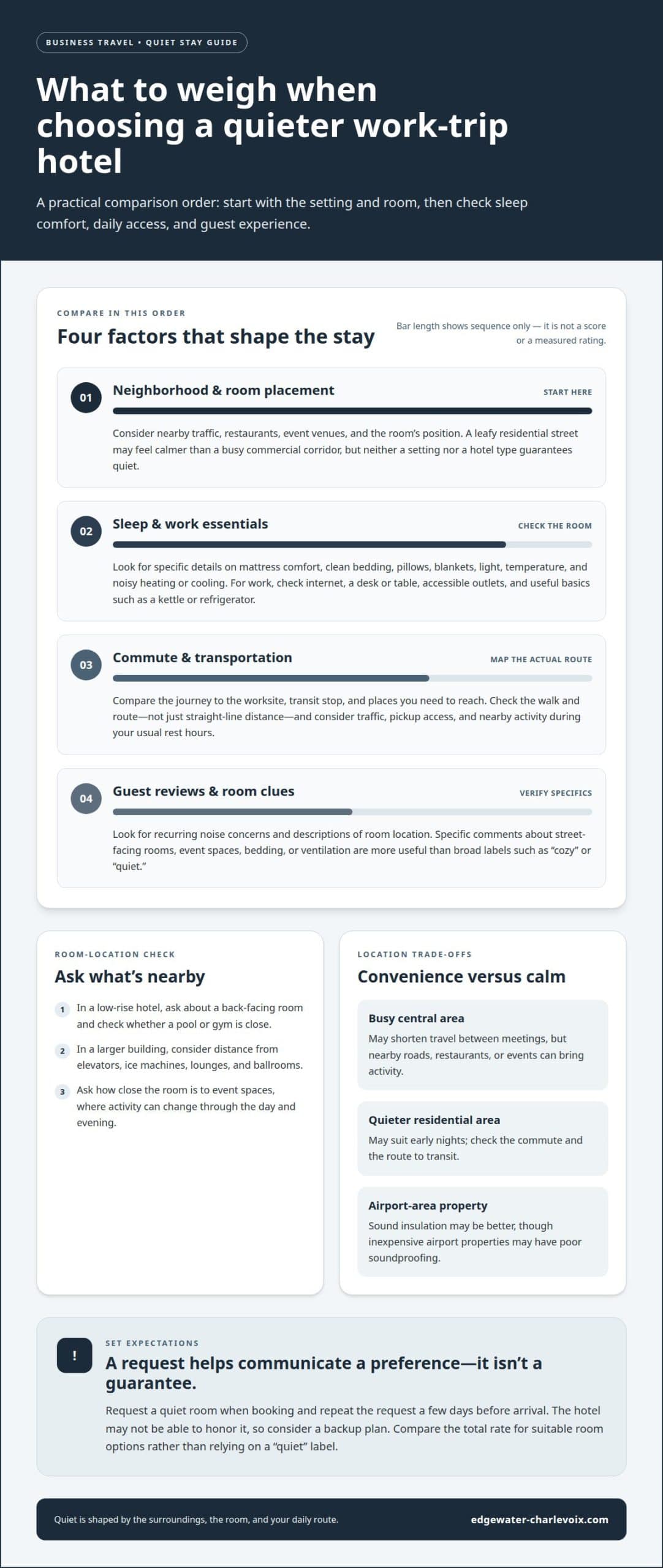
Start with the streets around the property, not just its distance from your worksite. A leafy residential area may feel calmer than a busy commercial corridor, especially after meetings end. Smaller hotels may have fewer shared spaces and less activity than large convention properties, but neither setting guarantees quiet. Consider nearby traffic, restaurants, and event venues. Even a peaceful-looking block can become lively at night.
Are extended-stay hotels or boutique hotels quieter for business travelers? Neither type is automatically quieter. The neighborhood, building layout, and guest activity matter more than the label. An extended-stay property may suit a longer visit, while a boutique hotel may offer a smaller setting. Compare the specific surroundings and room locations rather than assuming one category will be more peaceful.
Next, request a room away from likely noise sources. In a low-rise hotel, a room toward the back may be quieter, but check whether the pool or gym is nearby. In a larger building, consider rooms away from elevators, ice machines, lounges, and ballrooms. Ask how close the room is to event spaces, where activity can vary through the day and evening. If you’re finding a quiet hotel for a work trip, make your room request when booking and repeat it a few days before arrival.
How much more do quiet rooms or soundproofed hotels cost? Any added cost depends on the property, room type, sound insulation, neighborhood, and travel dates. Compare the total rate for suitable room options rather than relying on a “quiet” label. Guest descriptions can help distinguish a genuinely peaceful room from one simply positioned away from the street. For example, a back-facing room beside a pool may be less restful than one overlooking a quiet courtyard.
Business travelers can weigh a quieter location, a leafy neighborhood, or a smaller hotel when choosing where to stay. These options may influence the experience, but none guarantees a quiet stay. Consider your preference for a calmer setting, then make a separate room request to communicate the arrangement you want.
You can request a quiet room when booking, though the hotel may not be able to honor the request. Make it early to clearly communicate your preference, and have a backup plan in case the room assignment can’t accommodate it.
2. Hotel comforts and everyday essentials
A quiet neighborhood helps, but the room itself also affects how well you rest. Start with the bed: a supportive mattress, clean bedding, and pillows that suit your sleep position can make early workdays easier. Look for specific review details, such as sagging mattresses, thin blankets, or uncomfortable pillows. These are more useful than a general comment that a room felt cozy.
Quality bedding also comes down to practical details. Check whether guests mention clean sheets and enough blankets for the season. If you’re sensitive to light, look for comments about blackout curtains or bright hallway lighting. A padded headboard may add comfort, though it can’t replace a quiet room. Small details matter after a late meeting or before an early start.
Next, consider the room’s temperature and air circulation. Reviews mentioning a noisy heating or cooling unit can flag a possible sleep disruption. A loud fan or ventilation system may affect rest, even when outside sounds are minimal. Look for comments about whether guests could adjust the room temperature comfortably, especially if your work schedule requires sleep outside typical nighttime hours.
For a workday, everyday essentials can matter as much as the bed. Reliable internet supports video calls and file access, while a desk or table gives you space to review notes. Check whether outlets are accessible near the work surface. A kettle, refrigerator, or fully equipped kitchen can also make simple meals and coffee easier between meetings.
Before booking, compare the room features with your routine: a quiet place to sleep, a comfortable surface for laptop work, and useful basics for mornings. A property’s amenity details can help you assess whether its everyday comforts fit your stay. Favor specific guest descriptions over broad labels, and weigh sleep comfort alongside work needs. A beautiful room still has to support both.
3. Location near worksites and transit
Map your worksite first, then compare hotels within a practical commute. The closest address may be beside a loading area, major road, or late-night venue. A hotel a little farther away could offer calmer surroundings while keeping the journey manageable. For example, compare a property near a downtown office with one on a residential side street. Before choosing convenience over quiet, consider how often you’ll travel between the hotel and meetings.
Transit access also affects the calculation. Identify the bus or train stop you’d use, then consider the walk between the stop and hotel. A short route along a busy avenue may bring more street noise than a longer walk through quieter blocks. If you’ll rely on rideshares or a rental car, consider pickup access and the route to your worksite. Map the actual journey, not just the straight-line distance.
Nearby activity matters at different times of day. A hotel beside a convention center may be lively during events, while one near restaurants may see more evening foot traffic. Airport hotels may have better sound insulation, though inexpensive properties near airports may have poor soundproofing. Weigh that tradeoff against your schedule. A quiet residential area can suit early nights, while a central location may reduce travel between meetings and dining.
Use the same checklist for each address: distance to the worksite, transit access, nearby businesses, and likely noise during your usual rest hours. Check the route at the time you expect to travel, since morning traffic can change the appeal of a location. If your worksite is in a busy business district, a hotel just beyond its busiest streets may balance access and calm. The best fit supports your daily itinerary without putting your room beside a persistent source of noise.
For business travelers, location preferences may depend on how important convenient access to attractions, restaurants, and public transportation is. Decide which matters most for this trip, then weigh it alongside the worksite commute and noise. A hotel that suits one traveler’s routine may not suit another’s, so compare nearby options with the places you expect to visit.
4. Checking guest reviews and recommended rooms
Guest reviews can reveal noise patterns that a room description leaves out. Search for terms such as traffic, hallway, bar, construction, elevator, and ballroom. Comments that identify when the noise occurred can help distinguish occasional disruption from a recurring concern. A street-facing room may hear passing vehicles, while hallway comments can point to nearby conversations or doors closing.
Look for recurring details across reviews from different guests, not just one dramatic complaint. For example, several mentions of late-night music near a bar may matter more than an isolated comment about daytime construction. Reviews may also identify quieter room locations, helping you compare floors, wings, or sides of the building. Treat room recommendations as clues about that hotel’s layout, not universal rules.
Reviews about noise from traffic, hallways, bars, and construction are most useful when they describe the source, location, and timing. Repeated reports can show whether disruption comes from outside streets, busy corridors, nightlife, or nearby work. Match those details to your own sleep and work schedule.
Pay attention to unusual clues. A hotel may label some rooms “Quiet Room,” while reviews mentioning white-noise machines can suggest guests have needed help masking sound. Rooms near a ballroom may also face late-night disruption: garbage trucks collecting event bottles can make noise around 2 or 3 a.m. Reviews describing event activity can help you avoid that side of the property.
Room position matters, too. In a larger hotel, an upper-floor room may reduce noise from meeting rooms, restaurants, and streets, but rooftop pools, bars, or ventilation equipment can create other disturbances. A room midway down a hallway may be farther from elevators and stairways at the ends. Compare guest-recommended rooms with these layout clues, then note your preferred location when booking.
Use review patterns to narrow your choice and plan a restful stay around the room setting that suits your work schedule.
Edgewater Inn
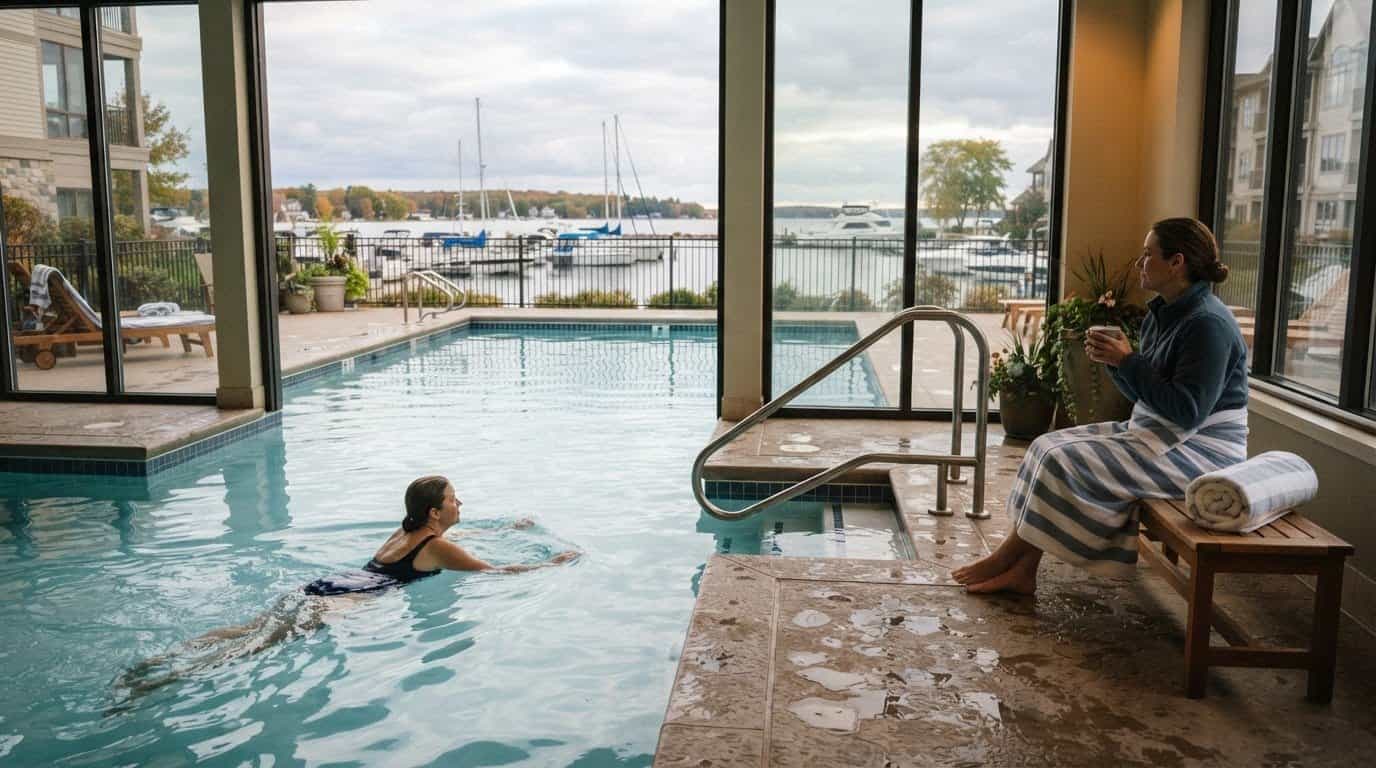
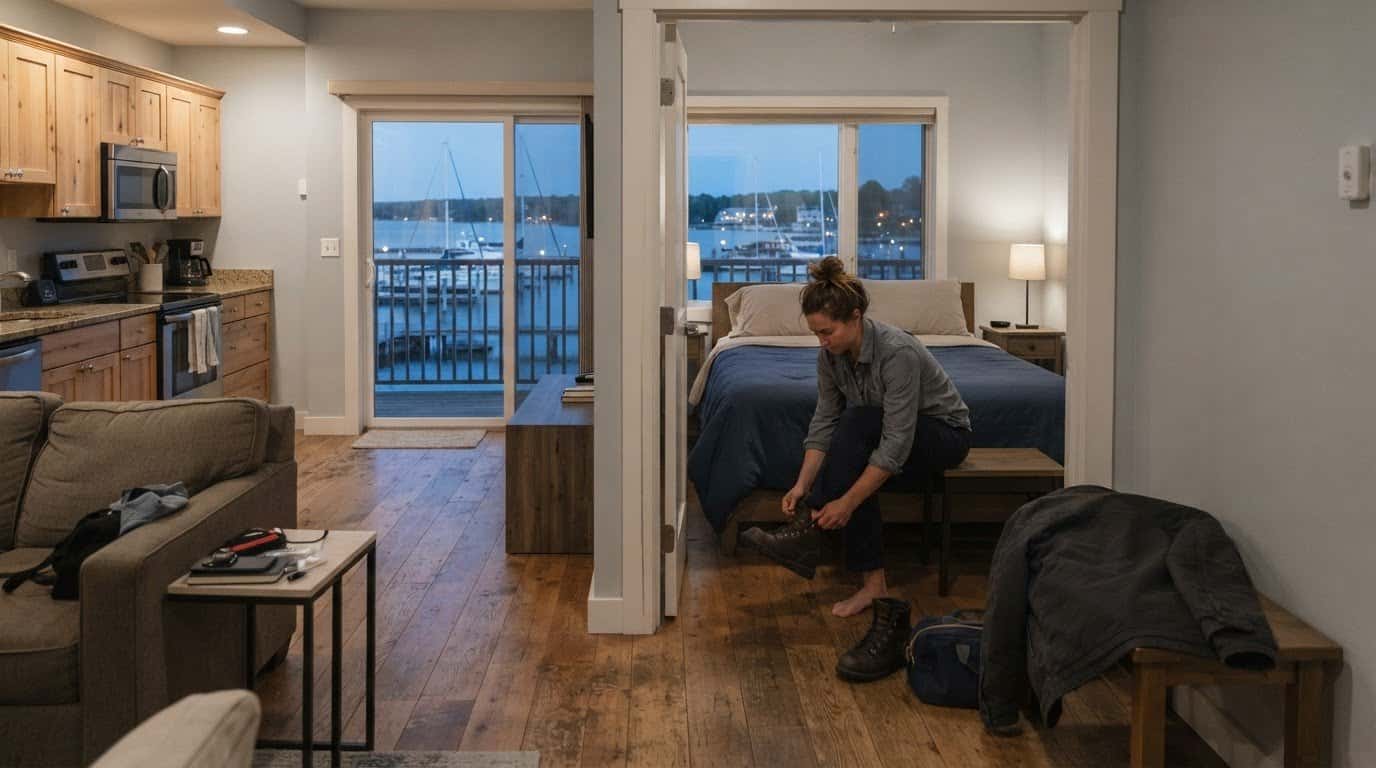
Edgewater Inn offers a welcoming place to stay while you weigh workday access against a more restful setting. On the north shore of Round Lake harbor in Charlevoix, its One Bedroom Suites and Two Bedroom Suites provide a private residential feel, with fully equipped kitchens and private balconies overlooking the water. High-speed internet supports remote work, while the indoor/outdoor pool offers a change of pace after meetings.
These suites may suit business travelers who value room to settle in and prepare their own meals, rather than a conventional hotel room. Choose the layout that fits your stay, then consider how the waterfront setting and access to downtown Charlevoix align with your work itinerary. A quiet stay depends on your room and surroundings, so use the neighborhood and review checks above when making your choice.
Please contact Edgewater Inn to discuss a stay that fits your work trip.
Plan a stay around your work rhythm
A successful work trip leaves enough room to focus, recharge, and arrive prepared for each commitment. Before booking, sketch out your days: when you’ll need a quiet start, whether you’ll return between meetings, and how you want to spend the evening. Those priorities help you choose a hotel that supports your work rather than competing with it.
Finding a quiet hotel for a work trip ultimately means matching the setting to your routine. A traveler with early calls may value a different atmosphere than someone who spends the day off-site and returns only to rest. Decide what matters most for this visit, then choose a place that feels considered from arrival through departure.
For a peaceful waterfront setting tailored to your professional needs, contact Edgewater Inn to discuss your travel plans. A more thoughtfully paced trip can begin with the right place to stay.