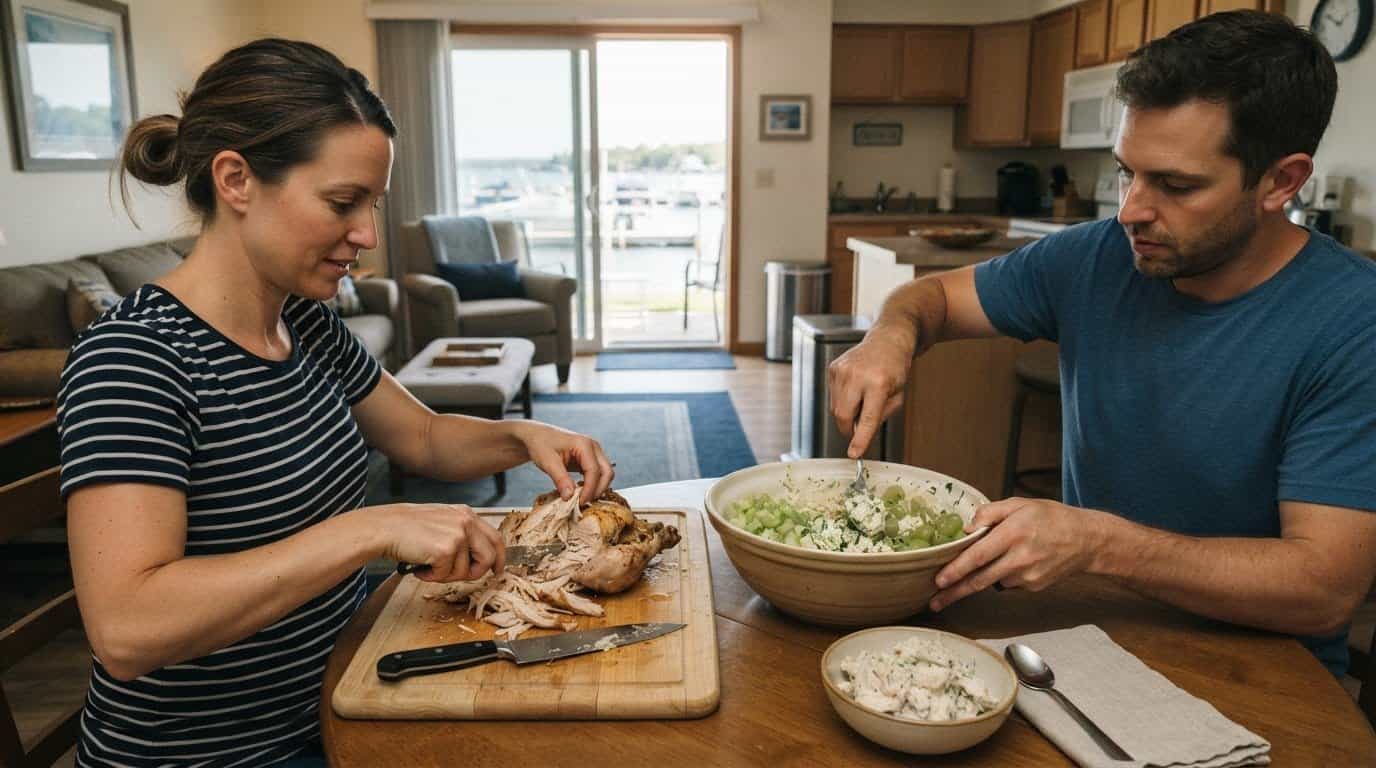
A limited vacation-rental kitchen doesn’t have to mean limited meals. The best meal prep ideas for a vacation rental kitchen use flexible recipes, shared ingredients, and a few simple preparations you can complete before or during your stay.
It’s natural to want more time for the water, the shoreline, and the pleasures of a relaxing getaway than for shopping, chopping, and washing up. A little planning can simplify breakfast and lunch, while straightforward dinners leave room to enjoy the evening.
Here, you’ll find easy vacation meals, make-ahead breakfasts, and a rotisserie chicken salad idea, plus practical ways to plan around unfamiliar or limited equipment. From one-pan dishes to ingredients that work across several meals, these suggestions keep cooking calm and adaptable, leaving more time to enjoy your stay.
Key Takeaways
- Choose straightforward meals with overlapping ingredients to make shopping and cooking simpler.
- Prepare breakfast components ahead so mornings leave more room to enjoy your getaway.
- Turn ready-made rotisserie chicken into a quick, flexible salad with a few fresh additions.
- Plan around the tools you’ll have, and favor recipes that work with basic cookware.
1. What Easy Recipes Can I Make in a Vacation Rental?
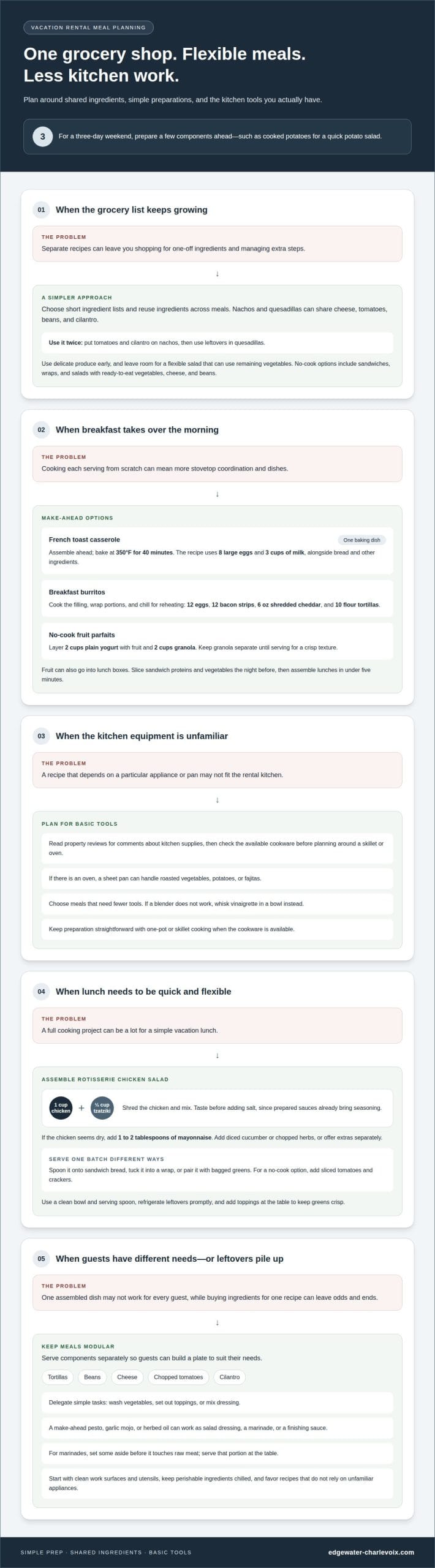
Choose recipes with short ingredient lists, shared ingredients, and one-pot or skillet cooking. Nachos and quesadillas can use the same cheese, tomatoes, beans, and cilantro while still bringing variety to dinner. White chicken chili can taste even better after a couple of days in the refrigerator. These are practical meal prep ideas for a vacation rental kitchen with basic tools.
Using ingredients across several meals can be more budget-friendly than eating out, since one grocery shop covers multiple servings. For a three-day weekend, prepare a few components in advance, such as cooked potatoes for a quick potato salad. No-cook options include sandwiches, wraps, and salads with ready-to-eat vegetables, cheese, and beans.
For safer prep in an unfamiliar kitchen, start with clean work surfaces and utensils, keep perishable ingredients chilled, and choose recipes that don’t depend on unfamiliar appliances. Check the available cookware before planning a dish around a skillet or oven. A simple menu means fewer steps and less equipment to manage.
For children or guests with dietary restrictions, serve meals in separate components. Set out tortillas, beans, cheese, chopped tomatoes, and cilantro so everyone can build a plate to suit their needs. For group-friendly cooking, delegate simple tasks such as washing vegetables, setting out toppings, or mixing dressing.
A make-ahead sauce can bring several meals together. Prepare pesto, garlic mojo, or herbed oil in advance, then use it as salad dressing, a marinade, or a finishing sauce. If marinating meat, set some marinade aside before it touches raw meat, and serve that portion at the table.
To reduce waste during a short stay, plan dishes around overlapping ingredients and use delicate produce early. For example, add leftover tomatoes and cilantro to quesadillas after using them for nachos. Leave room for a flexible meal, such as a salad that uses up remaining vegetables, rather than buying ingredients for just one recipe.
2. Easy breakfast foods for a vacation rental
A French toast casserole makes breakfast simple when several people are gathering around the table. Assemble it ahead, then bake at 350 degrees for 40 minutes. The recipe uses 8 large eggs and 3 cups of milk, alongside bread and other ingredients. Since it bakes in one dish, there’s less stovetop cooking to coordinate on a summer morning.
For a portable breakfast or lunch, prepare breakfast burritos with 12 eggs, 12 bacon strips, 6 ounces of shredded cheddar, and 10 flour tortillas. Cook the filling, wrap portions, and chill them for an easy meal to reheat. Pack fruit alongside, or set out tortillas and fillings separately so everyone can assemble a serving.
Fruit parfaits offer a no-cook option. Layer 2 cups of plain yogurt with fruit and 2 cups of granola, keeping the granola separate until serving for a crisp texture. For healthy variety, use grocery-store fruit that can also go into lunch boxes. A small container of dressing and washed greens make a quick side salad.
For a crowd, divide breakfast prep into clear tasks: one person mixes the casserole, another slices fruit, and someone else sets out plates. Make-ahead pancake mix is another flexible option. Measure the dry ingredients into a resealable bag, then store the wet ingredients in a leak-proof jar until cooking. This keeps the process organized without requiring several dishes.
Plan portable lunches while shopping for breakfast. Slice sandwich proteins and vegetables the night before, then assemble lunches in under five minutes. A few shared ingredients can serve both meals, reducing leftover odds and ends. For an unhurried course of the day, leave an evening open to enjoy nearby dining options rather than planning every meal in the kitchen.
3. Chicken salad with rotisserie chicken
Rotisserie chicken turns a vacation-rental lunch into a quick assembly rather than a cooking project. Remove the meat from the bones, shred it, and combine it with a ready-made ingredient such as tzatziki. For a creamy chicken salad, mix 1 cup of shredded chicken with one-third cup of tzatziki. Taste before adding salt, since prepared sauces already bring seasoning.
If the chicken seems dry, stir in 1 to 2 tablespoons of mayonnaise. Add diced cucumber for crunch, or fold in chopped herbs for a fresh finish. Keep the mixture simple, then offer extras separately so each person can tailor a favorite serving. A little crumbled cheese can add a savory note without requiring another cooked component.
Serve the salad in different ways to make one batch work across lunch. Spoon it onto sandwich bread, tuck it into a wrap, or pair it with bagged greens for a lighter meal. For a no-cook option, add sliced tomatoes and crackers. The same chicken salad can suit different appetites around the table.
To keep preparation tidy, use a clean bowl and serving spoon, and refrigerate leftovers promptly after serving. Prepare only as much as you expect to eat, then add toppings at the table instead of mixing them into the whole batch. This keeps greens crisp and makes leftover salad easier to reuse.
For an easy variation, swap tzatziki for another ready-made dressing or spread, adding just enough for the chicken to hold together without becoming too wet. A lemony dressing, for example, pairs well with cucumber and greens. For a richer sandwich, add cheese just before serving. Rotisserie chicken and a few additions make lunch without requiring a full set of kitchen equipment.
4. Planning for limited vacation-rental kitchen equipment
Build recipes around the tools available, not the appliances you hope to find. A sheet pan can handle roasted vegetables, potatoes, or fajitas if the rental has an oven. For breakfast, choose something that doesn’t require a blender, food processor, and several mixing bowls. Fewer tools make cooking and cleanup easier.
Before packing groceries, read property reviews for comments about kitchen supplies. Then plan a flexible menu: sheet-pan dinners, sandwiches, and salads can all work with basic equipment. If your plan depends on a blender, test it when you arrive. If it doesn’t work, whisk vinaigrette in a bowl instead.
For a familiar cooking setup, pack a small set of useful supplies: a chef’s knife, a serrated knife, and a paring knife. A 13-inch skillet can also help if you expect to cook larger portions. Add a compact food-storage container for leftovers, plus resealable bags for premeasured ingredients or marinated food. Keep the packing list tied to specific recipes, so you don’t haul tools you won’t use.
Some rental kitchens may have just one sheet pan, limited cookware, or a lightly stocked pantry. Adapt by choosing one-pot dishes and bringing seasonings in small portions. For example, premeasure a seasoning blend at home to use on roasted vegetables and in another meal. If you’re baking, measure cake ingredients in advance; packing a cake pan can simplify things when equipment is uncertain.
The clearest takeaway: prepare complex steps at home, then keep rental cooking simple. Wash and portion ingredients before departure, store them in a container, and label what each recipe needs. That leaves less chopping and measuring during your stay. For a relaxing waterfront stay, explore accommodation options.
Edgewater Inn
Edgewater Inn offers One Bedroom Suites and Two Bedroom Suites with fully equipped kitchens, making it easy to plan relaxed meals during your stay. Prepare a simple breakfast, assemble a rotisserie chicken lunch, or enjoy dinner at your own pace between waterfront outings.
For a stay where cooking is part of the plan, explore the vacation rental accommodations and choose a suite that suits your trip. Private balconies with water views offer a peaceful setting for morning coffee or an easy meal. Wedding Venue Packages are also available for celebrations that bring guests together.
For details about staying at Edgewater Inn, contact the team to discuss your plans.
Shape a Getaway at Your Own Pace
Before you travel, consider what you want your time away to feel like: unhurried mornings, shared meals without a timetable, or more hours exploring your destination. Let that intention guide how much preparation feels right. A plan should create breathing room, not turn a vacation into another schedule to manage.
Use these meal prep ideas for a vacation rental kitchen as a flexible starting point, leaving room for changing appetites, weather, and discoveries along the way. You don’t need to plan every meal before arriving. A few decisions made ahead can make it easier to adapt once you’ve settled in, while still letting the days unfold naturally.
As you picture your stay, think about the balance that suits you: quiet time indoors, meals enjoyed together, and the pleasures of the waterfront beyond your door. Ready to start planning? Contact Edgewater Inn today and begin shaping a relaxing getaway at your own pace.
Frequently Asked Questions
What Easy Recipes Can I Make in a Vacation Rental?
Try a one-pan dinner such as sweet potatoes roasted at 400 degrees until tender, about 25 minutes. For another option, cheesy taco pasta takes twenty minutes to prepare, making it practical after a day out. Choose recipes with cooking steps that match the equipment available, and keep a backup meal, such as a simple salad, for evenings when plans change.
What are easy meal prep ideas for a vacation rental kitchen?
Prepare a Caprese Orzo pasta salad ahead for a ready-to-serve lunch; it holds well in the refrigerator for two days. For a fresh side, cucumber feta salad takes 5 minutes to make. Keep salad dressing separate until serving to preserve crisp textures. These dishes can cover a meal or accompany a simple main, helping your plan flex around outings and changing appetites.
What meals can you make with limited vacation rental kitchen equipment?
If the rental has an oven and one sheet pan, make sheet-pan fajitas: bake the protein and vegetables at 400 degrees for 15 minutes, then broil for 3-5 minutes to brown them. A single pan keeps the cooking setup simple. If you have only a stovetop, choose a skillet meal and avoid recipes that depend on several pans or specialty appliances.
What pantry staples should you bring to a vacation rental?
Pack a small selection of seasonings and cooking basics that can work across several dishes, such as oil, garlic powder, chili powder, and smoked paprika. Those spices can season fish tacos without requiring a large collection. A little salt can also bring out the flavor in simple ingredients. Measure dry seasonings into small, labeled containers before leaving to keep your pantry kit compact.
What groceries should you buy for a weeklong vacation rental stay?
Plan groceries around the meals you’ll actually cook: breakfast ingredients, sandwich fillings, a few proteins, vegetables, fruit, and components for flexible dinners. Leave a night or two open to enjoy local food, and avoid buying produce for recipes that use it only once. On day one, shop for seasonal ingredients at a local farmers market or grocery store, then adapt the menu around what looks appealing.