
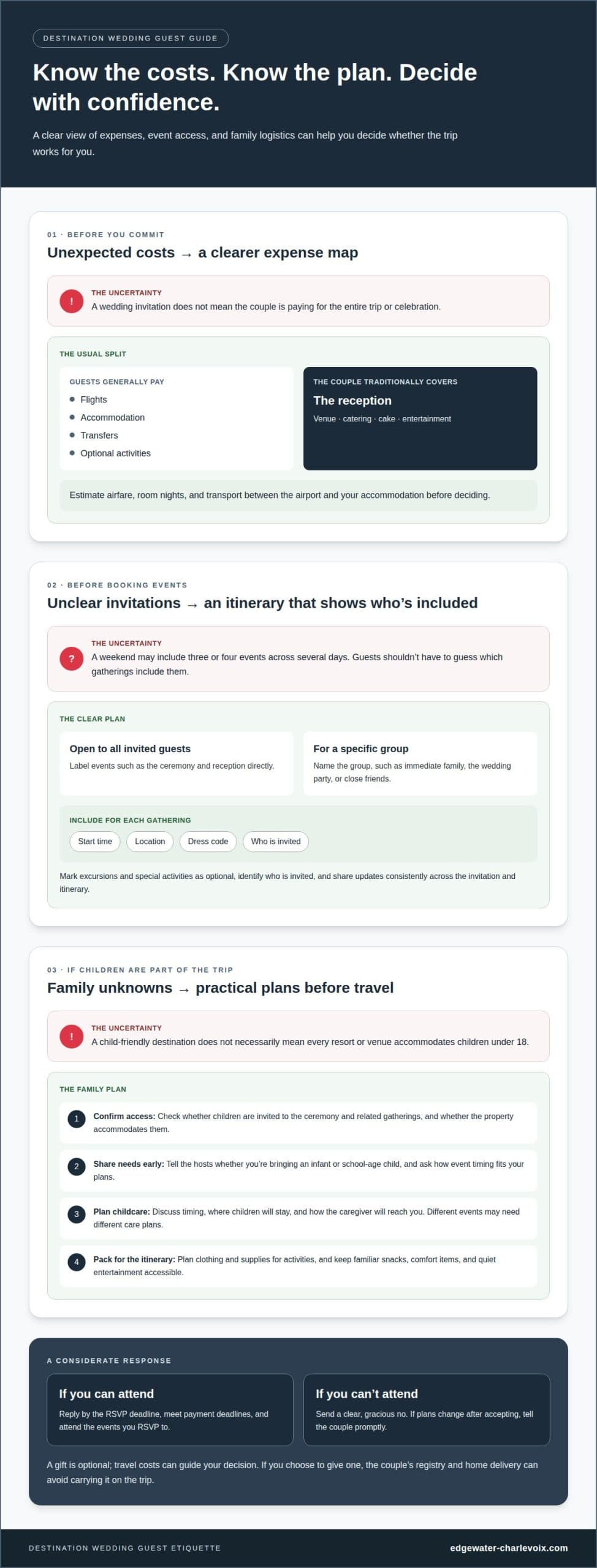
A destination wedding invitation isn’t a bill for the entire celebration. Guests generally cover their own flights, accommodation, transfers, and optional activities, while the couple typically pays for the reception. Good destination wedding guest etiquette starts with understanding the expected costs before committing, then replying by the RSVP deadline and meeting any payment deadlines. If the trip doesn’t fit your budget or schedule, a clear no is kinder than an uncertain yes.
It’s reasonable to want the weekend’s plans, costs, and guest list to be clear before you book. A thoughtful itinerary distinguishes events open to everyone from smaller gatherings, so you can plan without guessing whether you’re included. Families should consider children and childcare, too. When possible, seeing the destination and venue before making travel plans can also help guests decide what works for them.
This guide explains who typically pays which expenses, how event access should be communicated, and what to consider when children are part of the trip. It also covers when a pre-booking visit may help you decide whether the destination, venue, and travel plans are the right fit.
Key Takeaways
- Map out which travel and event expenses you’ll cover before deciding whether to attend.
- Reply by the RSVP deadline, and make your yes or no clear so the couple can plan.
- Use a detailed itinerary to see which gatherings are open to all guests and which are for specific groups.
- If you’re bringing children, plan childcare and consider visiting the destination and venue before booking.
1. Destination Wedding Etiquette: Who Pays for What?
Guests generally pay for their own flights, accommodation, transfers, and optional activities. The couple traditionally covers the reception, including the venue, catering, cake, and entertainment. Before accepting, estimate your travel expenses, including airfare, room nights, and transport between the airport and your accommodation. This gives you a clearer basis for deciding whether attending fits your budget.
Reply by the invitation’s RSVP deadline. If you can’t attend, send a clear, gracious no instead of an uncertain yes. A brief note can say you’re sorry to miss the celebration and wish the couple a wonderful day. If your plans change after accepting, tell the couple promptly.
Couples should explain which expenses guests should expect and when payments are due. Guests should meet those deadlines and attend the events they RSVP to. If the couple hosts a welcome party, ceremony, reception, or farewell brunch, check which events are included in your invitation. A rehearsal dinner may be limited to close family, the wedding party, and selected friends.
How much should guests spend on a wedding gift when they travel to attend? There’s no required amount. A gift is usually optional, and travel costs can guide your decision. If you choose to give one, use the couple’s registry and have the gift delivered to their home rather than carrying it on the trip.
Should guests use the couple’s recommended hotel or room block? It can simplify lodging plans and may lower accommodation costs, but guests generally pay for their own rooms. Compare the location and stay details with your needs before booking.
What is appropriate attire for a destination wedding and its related events? Follow the dress code on the invitation or itinerary, and check separate guidance for the ceremony and any welcome event. Pack for the destination and planned activities.
How should guests handle passports, visas, vaccinations, and travel insurance? Review entry and health requirements for the destination, allow time to prepare documents, and consider coverage for travel disruptions.
What local customs, tipping practices, and resort rules should wedding guests follow? Read the itinerary and property rules, follow local guidance, and plan tips around the services you use.
2. Communicating event access in an itinerary
A destination wedding weekend can include three or four events across several days. Give guests one itinerary that identifies the start time, location, dress code, and access for each gathering. Mark each event “all invited guests” or name the group included, such as immediate family, the wedding party, or close friends. Clear labels prevent guests from assuming every celebration is open to everyone.
For example, list the ceremony and reception as open to all invited guests, then identify a rehearsal dinner as a smaller gathering for selected groups. If a welcome party is limited to immediate family and close friends, say so directly. Couples can offer a separate welcome event for other guests, so everyone knows which plans include them and what they’re expected to attend.
Put the itinerary on the wedding website, send it with invitations, or place it in welcome bags. Include practical details alongside access notes, such as lodging, transportation, local travel information, dress guidance, and destination-specific packing suggestions. For an international wedding, explain relevant local logistics in plain language and give guests one place to find updates.
Label excursions and special activities as optional, and state who is invited. Guests who skip an activity should know they’re free to explore independently. If an event has limited places, communicate its guest list personally rather than letting a broad itinerary imply access. Hosts can also share safety concerns about local areas or excursions before guests make plans.
Keep updates consistent across the invitation and itinerary. If dinner details, transportation, or access changes, revise the main schedule and notify affected guests directly. For those unable to travel, a livestream or a personal video call can offer another way to share the ceremony. Thoughtful wedding planning details help guests move through the weekend with confidence.
3. Planning for children and childcare
A destination wedding can involve flights, hotel stays, and several events, so plan for children before accepting an invitation. First, confirm whether the resort or venue accommodates children under 18. Don’t assume a child-friendly destination means every property welcomes young guests. The couple’s invitation and itinerary should clarify whether children are invited to the ceremony and related gatherings.
If you’re bringing children, share their needs with the hosts early. For example, tell the couple whether you’re bringing an infant or school-age child, and ask how event timing fits your family’s plans. This helps hosts prepare accurate headcounts and lets you decide which activities suit your children. If a welcome dinner runs late, plan for an earlier meal or quiet time.
For events where parents want uninterrupted time, arrange babysitting in advance. Hosts may coordinate babysitting for guests bringing children, but families should discuss timing and expectations before travel. Consider which events need care, where the children will stay, and how the caregiver will reach you. Childcare for the reception may need a different plan from care during a daytime excursion.
Pack around the itinerary, not just the ceremony. A child attending a beach activity, for example, may need different clothing and supplies than one joining a formal dinner. Bring familiar snacks, comfort items, and quiet entertainment for travel delays or breaks between events. Keep essential items accessible during flights and transfers.
Couples can make family plans clearer by noting child access for each event, rather than simply labeling the wedding “family-friendly.” A traditional wedding ceremony may welcome children while a special evening gathering has a smaller guest list. Clear wording helps parents arrange care without guessing and gives children a smoother welcome into the celebration.
Before booking, make sure the accommodation plan works for your family’s sleeping routines and event schedule. If childcare or child access affects your decision to attend, tell the couple promptly. Early communication gives families and hosts time to settle practical details before travel arrangements are fixed.
4. Visiting the destination and venue before booking
A wedding website can show the ceremony schedule, reception setting, lodging details, and local travel plans. Before accepting, review these alongside your available time off, expected expenses, and any needs such as child access. If the destination is unfamiliar, visiting before booking can help you picture the route between lodging and events, the surrounding area, and the venue in person.
During a visit, walk through the guest route from arrival to ceremony and reception. Notice the distance between spaces, outdoor conditions, and nearby lodging and transport options. For example, a waterfront ceremony may look different in person than in photos, especially if guests need to move between indoor and outdoor areas. A visit can also help you decide whether friends or family will need extra travel time.
Ask the couple for the latest itinerary before arranging a visit. Use it to see which events are open to you, where they happen, and whether guests need to arrange transport. If you can’t visit, review the wedding website’s maps, venue images, lodging information, and event schedule together. These details offer a more useful picture than a single ceremony photo.
What should guests know before accepting a destination wedding invitation? Review the full itinerary, travel logistics, lodging, event access, and whether children under 18 can be accommodated. Those details help you judge the trip as a whole, not only the ceremony.
How far in advance should guests book travel and accommodations? Book flights and lodging as early as possible, once your plans are firm. Couples may send save-the-dates at least six months before the wedding, and hotel blocks can be arranged six to nine months ahead.
A visit is most useful when it answers a decision you can’t settle from the itinerary, such as whether the location suits your family or mobility needs. For couples considering a waterfront celebration, explore wedding venue options as part of planning the visit.
Edgewater Inn: Wedding Venue Packages
Edgewater Inn offers versatile wedding venue packages for couples planning a celebration in a picturesque destination setting. Set along the waterfront, its scenic harbor views give the ceremony and reception a distinctly memorable backdrop that fits any destination wedding guest etiquette.
For attendees planning their stay, Edgewater Inn’s One Bedroom Suites and Two Bedroom Suites offer fully equipped kitchens and private balconies with water views. These options can help families or traveling friends choose accommodations that suit their group and trip. Consider how the venue, lodging, event schedule, and guest travel plans come together as you shape the celebration.
If you are considering a waterfront wedding setting for your special day, contact Edgewater Inn to discuss its customizable wedding venue packages and lodging options.
Make the Trip Feel Like the Right Fit
A destination celebration is also a chance to experience a place at a gentler pace. Let destination wedding guest etiquette guide the practical choices, while leaving room to consider what would make the trip meaningful for you: sharing a quiet morning with friends, exploring the waterfront, or simply being present for the couple. When the setting and plans suit your needs, it’s easier to look forward to the occasion rather than worry over every detail.
If you’re considering Charlevoix for a wedding stay, take the next step at your own pace. Contact Edgewater Inn to plan your stay, and start imagining a celebration shaped by the water and the company you’ll share.
Frequently Asked Questions
Destination Wedding Etiquette: Who Pays for What?
Guests usually cover their travel and accommodation, while the couple traditionally pays for the reception. Practicing destination wedding guest etiquette also means reading the invitation and itinerary carefully, since they clarify which gatherings are hosted and who is included. For example, don’t assume a welcome dinner or excursion is covered simply because it appears on the weekend schedule. Ask the couple about an unclear expense before committing.
Who pays for flights, lodging, meals, and wedding activities at a destination wedding?
Guests generally pay for their flights and lodging, along with transfers and optional activities. The couple traditionally covers the reception, including its venue, catering, cake, and entertainment. For meals outside hosted events, use the itinerary to see what’s included rather than assuming every meal is provided. If an activity has a separate cost, factor it into your plans before you RSVP.
Is it appropriate to bring a plus-one or children to a destination wedding?
Bring a plus-one or children only if the invitation includes them, or the couple has approved the additional guests. If the invitation wording is unclear, ask privately before booking travel or adding anyone to your plans. For children, consider whether the venue accommodates guests under 18 and whether the planned events suit your family. Don’t treat a destination wedding as an automatic invitation for your household.
What is the etiquette for RSVPs, cancellations, and travel changes?
Send your RSVP by the stated deadline, and notify the couple promptly if your plans change. If a flight delay or cancellation affects your arrival, share the update with the designated wedding contact so the hosts aren’t left expecting you at an event. Revisit any event commitments affected by the change, and communicate clearly rather than leaving the couple to infer whether you’ll attend.
How can guests politely decline a destination wedding invitation?
Respond by the RSVP deadline with a warm, direct decline. Thank the couple for inviting you, say you’re sorry to miss the celebration, and offer your good wishes without sharing private financial or scheduling details. Avoid an uncertain response if you already know you can’t make the trip. A thoughtful note helps the couple finalize plans and feel appreciated.